On this page
If you are revising Class 12 Biology for boards or NEET-UG, the evil quartet is a short NCERT section with an example for each cause. Learn the four causes and the example that goes with each, and you will be ready for most questions on it.
What are the four causes of biodiversity loss in the evil quartet?
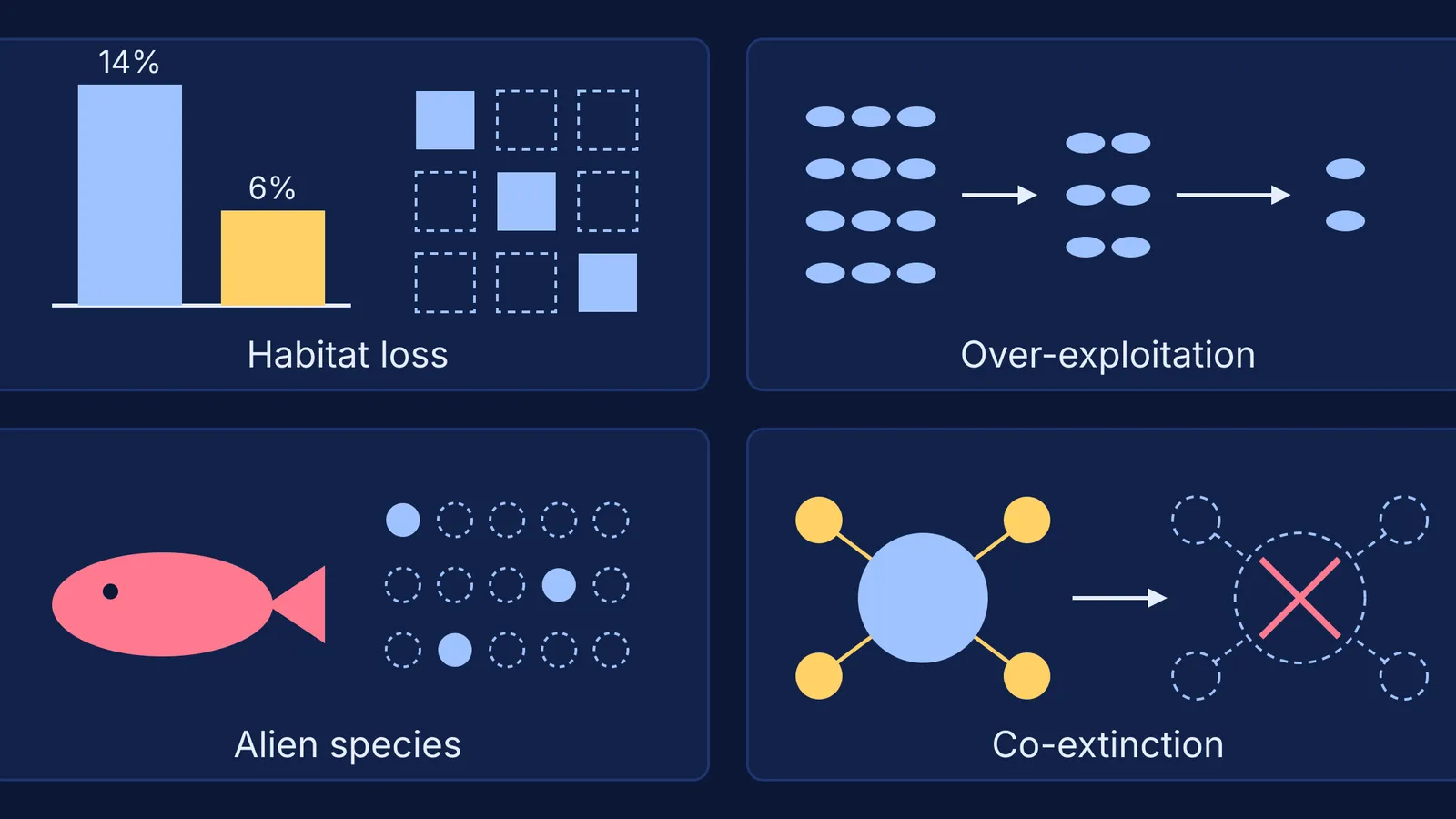
The evil quartet is the name for the four major causes of the fast rate of extinction we see today, which is largely due to human activity, according to NCERT Class 12 Biology, Chapter 13: Biodiversity and Conservation. Here are the four, with the examples NCERT gives:
Habitat loss and fragmentation. The Amazon rain forest is being cleared to grow soya beans and to make grassland for beef cattle. Pollution that degrades a habitat counts here too. When a large habitat is broken into small fragments, mammals and birds that need large territories, and migratory animals, are badly affected.
Over-exploitation. When need turns into greed. NCERT puts the Steller's sea cow and the passenger pigeon among the extinctions of the last 500 years caused by overexploitation, and notes that many marine fish populations are over-harvested today.
Alien species invasions. The Nile perch introduced into Lake Victoria in east Africa eventually led to the extinction of more than 200 species of cichlid fish. In India, NCERT names carrot grass (*Parthenium*), *Lantana* and water hyacinth (*Eicchornia*, as NCERT spells it), plus the African catfish *Clarias gariepinus*, brought in illegally for aquaculture, which threatens our native catfishes.
Co-extinctions. When a species dies out, the plants and animals that depend on it in an obligatory way die out too. When a host fish goes extinct, its unique parasites go with it.
To go through each of those extinctions one at a time, read why the dodo, quagga, thylacine and Steller's sea cow went extinct.
Which cause of biodiversity loss is the most important?
NCERT names habitat loss and fragmentation as the most important cause. Its key number: tropical rain forests once covered more than 14% of Earth's land surface and now cover no more than 6% (NCERT Chapter 13).
The 2019 global assessment by IPBES, the intergovernmental science-policy panel on biodiversity, reached a similar conclusion. It ranks changes in land and sea use as the top direct driver, followed by direct exploitation of organisms, climate change, pollution and invasive alien species (IPBES media release). The same report found that around 1 million animal and plant species are threatened with extinction, many within decades.
The IPBES list is not the evil quartet: it counts climate change and pollution as separate drivers and does not list co-extinction. In the exam, stick to the four NCERT causes.
What does co-extinction mean, with an example?
Co-extinction is when one species goes extinct because a species it depends on has gone extinct. NCERT gives two examples: a host fish and its parasites, and a plant and its pollinator that evolved together, where losing one invariably leads to losing the other (NCERT Chapter 13).
Researchers have tried to measure the effect. A 2004 study in *Science* by Lian Pin Koh and colleagues modelled partnerships such as fig wasps and figs, and parasites and their hosts, and estimated that about 6,300 dependent species are endangered along with host species already listed as endangered (Koh et al., 2004). Losing a species that many others depend on can ripple through an ecosystem, as our post on keystone species and their role in an ecosystem explains.
How do you answer evil quartet questions in the exam?
Most questions give you a case and ask for the cause, or the other way round. Do this drill: cover the answers, name the cause for each case, then check.
Amazon cleared for soya beans and cattle: habitat loss
Steller's sea cow, passenger pigeon: over-exploitation
Nile perch in Lake Victoria: alien species invasion
*Parthenium*, *Lantana*, water hyacinth: alien species invasion
*Clarias gariepinus* in Indian rivers: alien species invasion
A host fish's parasites dying out with it: co-extinction
Birds that need large territories, cut off in small forest patches: habitat fragmentation
For a 3-mark or 5-mark answer, use the same shape for each cause: name it, define it in one line, give the NCERT example. Then add one line saying habitat loss is the most important cause, with NCERT's rain forest figure.
If a term like fragmentation still feels unclear, look it up in the Fermi Concept Library, where each biology concept has its own lesson. Then move on to how we protect species, in our post on in situ vs ex situ conservation examples for NEET biology.