

On this page
When you read the Biodiversity and Conservation chapter in Class 12 Biology, you encounter a sobering statistic. According to the NCERT textbook, the IUCN Red List documents that 784 species have gone extinct in the last 500 years, including 338 vertebrates and 359 invertebrates. More than 15,500 species worldwide are currently facing the threat of extinction.
The NCERT textbook highlights a few famous examples of recent extinctions: the dodo (Mauritius), quagga (Africa), thylacine (Australia), and Steller's sea cow (Russia), along with three subspecies of tiger (Bali, Javan, and Caspian). None of these animals were lost to natural disasters or slow evolutionary changes. They were driven out by human actions.
What drove the dodo and Steller's sea cow to extinction?
Both the dodo and Steller's sea cow lived in isolation and had no natural predators, which made them completely fearless of humans.
The dodo (*Raphus cucullatus*) was a large, flightless bird native to the island of Mauritius. While sailors did hunt them for meat, the final blow came from invasive species. Ships brought rats, pigs, and monkeys to the island. Because dodos nested on the ground, these introduced predators easily ate their eggs and chicks. As documented by historical records, the dodo vanished in the late 17th century.
Steller's sea cow (*Hydrodamalis gigas*) lived in the Bering Sea near Russia. It was a massive, slow-moving marine mammal. Russian fur traders hunted them on an industrial scale for their meat and blubber. Their extinction was also accelerated by a trophic cascade: hunters killed the local sea otters, which allowed sea urchin populations to explode. The urchins then consumed the kelp forests that the sea cows relied on for food. The species was wiped out by 1768, just 27 years after it was discovered by Europeans.
Why did the thylacine and quagga go extinct?
The thylacine and quagga were both victims of agricultural expansion and systematic extermination.
The quagga (*Equus quagga quagga*) was a subspecies of the plains zebra, native to South Africa, with stripes only on its front half. European settlers hunted them aggressively for their unique hides and for meat. More critically, farmers viewed the quagga as a pest that competed with their domesticated sheep and goats for grazing land. The last captive quagga died in 1883.
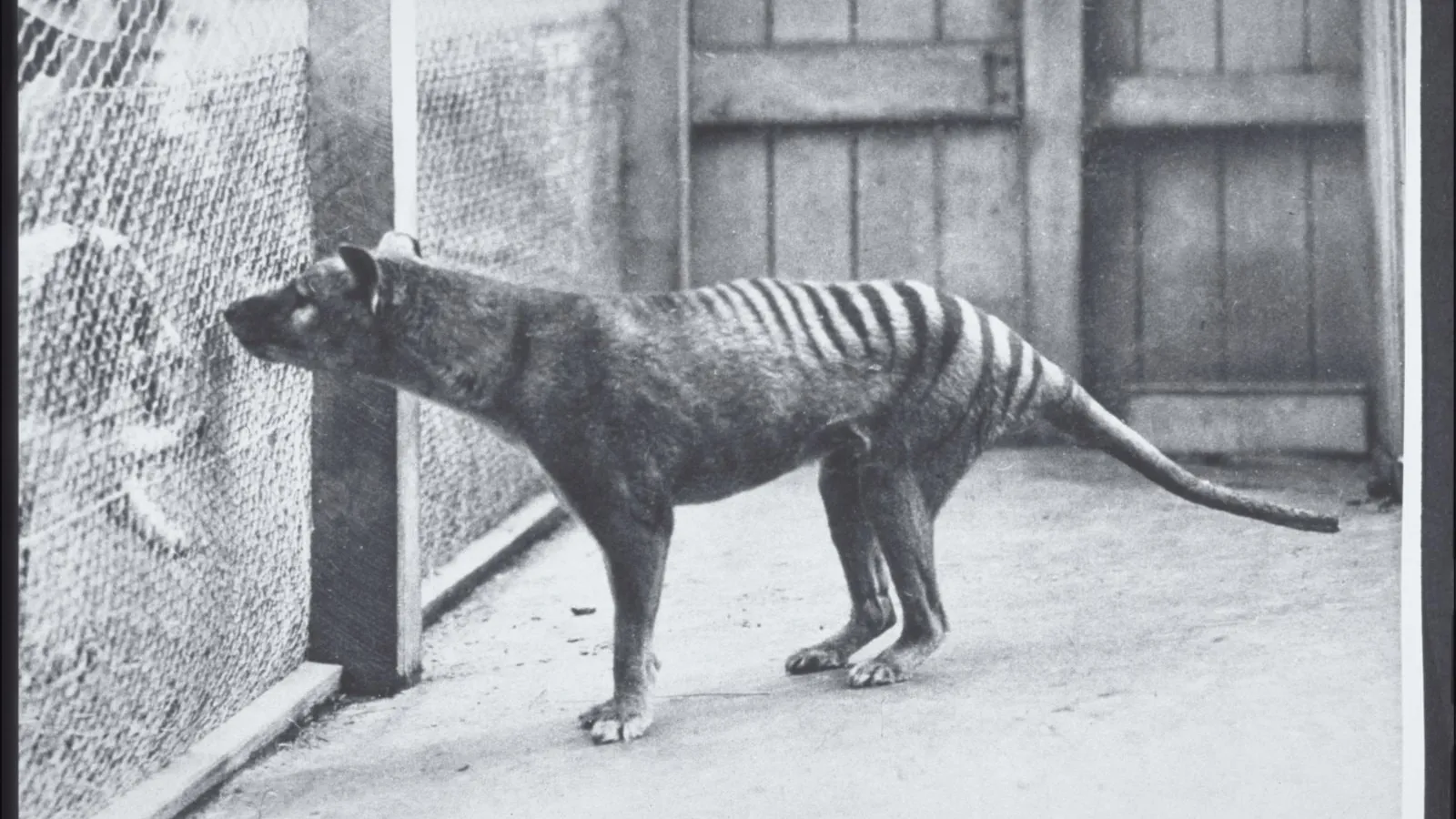
The thylacine (*Thylacinus cynocephalus*), often called the Tasmanian tiger, was a carnivorous marsupial native to Australia. As farmers cleared land for sheep, the thylacine's natural habitat shrank. The Tasmanian government and private companies falsely labelled the animal as a "sheep killer" and placed a bounty on its head. This intensive bounty hunting, combined with disease and competition from introduced dogs, drove them to extinction. The last known thylacine died in a zoo in 1936.
How to study biodiversity and conservation?
When preparing for exams, do not just memorise the names and locations. Use the "Evil Quartet" framework to link each animal to the ecological driver that caused its extinction:
Alien species invasion: The dodo (rats and pigs eating eggs).
Overexploitation: Steller's sea cow (hunted for meat and blubber) and the quagga (hunted for hides).
Habitat loss and fragmentation: The thylacine (land cleared for sheep farming).
Co-extinctions: When a host species goes extinct, its unique parasites vanish with it.
If you are trying to understand the deeper mechanics behind these population collapses, the Fermi Concept Library has every concept in physics, chemistry, biology, mathematics and computing, each with its own lesson and its place in the map. Connecting the historical facts to the core ecological principles will help you tackle assertion-reasoning questions with confidence.
To see how these concepts are tested in exams, review the Fermi Problem Library, which has worked problems with a step-by-step solver that explains the reasoning rather than printing an answer.
Read more about ecology and biology:


