On this page
Robin Klein's Amanda! is one of ten poems from the NCERT textbook First Flight that the CBSE Class 10 English Language and Literature curriculum prescribes for 2026-27 (CBSE curriculum 2026-27). It is a conversation in which only one side speaks aloud. Once you see that, the poem opens up.
What is Amanda! about?
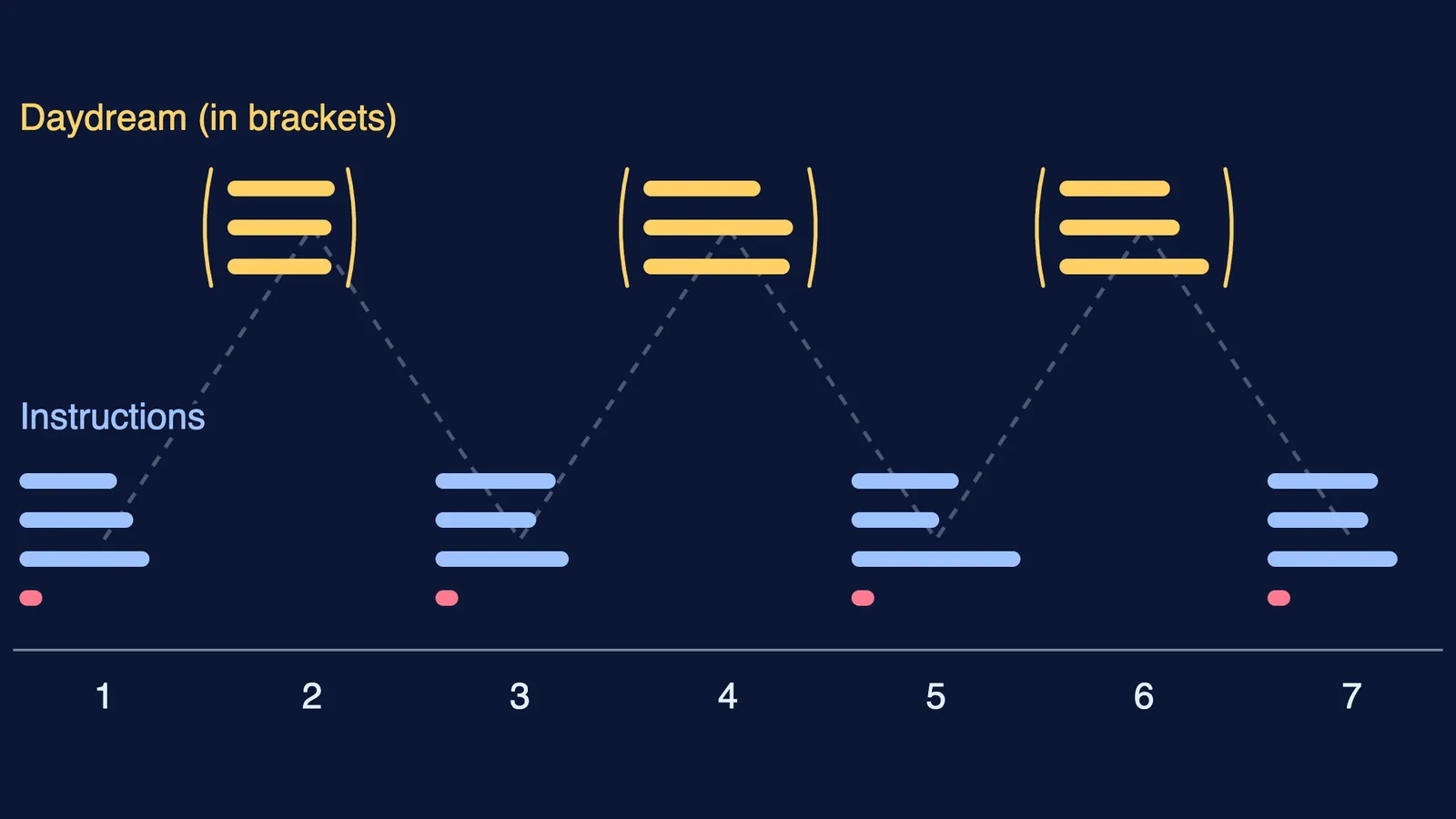
An adult, probably a parent (NCERT asks you to decide who), fires instructions at a young girl: stop biting your nails, sit up straight, finish your homework, leave the chocolate. Between those commands, in brackets, we hear Amanda's thoughts. She imagines being a mermaid alone in a calm sea, an orphan walking free down a dusty street, and Rapunzel content in her tower. NCERT's note asks you to read it aloud in pairs, taking alternate stanzas, and says you are in for “a surprise” (NCERT First Flight, chapter 4). One reading of the surprise: the two voices never meet.
What does each stanza of Amanda! mean?
In simple words, from the NCERT text (First Flight, chapter 4):
Stanza 1: Orders about nails, shoulders and slouching. Her name, alone on the last line, sounds like a sharp call.
Stanza 2: She is a mermaid in a “languid, emerald sea”, its only inhabitant. NCERT glosses languid as “relaxed”. Nobody is there to correct her.
Stanza 3: Homework, a tidy room, clean shoes. The questions leave her no time to answer.
Stanza 4: She is an orphan walking barefoot through soft dust, and “the freedom is sweet.” She does not truly wish her parents gone; she wishes for quiet.
Stanza 5: No chocolate, a reminder about acne, and “look at me”. The adult has noticed she is not listening. The acne suggests she is probably in her early teens.
Stanza 6: She is Rapunzel in a tower that is “tranquil and rare”, and she will “never” let down her hair. In the fairy tale the hair lets people climb up; Amanda wants nobody climbing in.
Stanza 7: The adult tells her to stop sulking and calls her moody, then says, that anyone would think she was being nagged. That is ironic: the whole poem is the nagging.
What poetic devices are used in Amanda!?
Repetition and refrain: her name ends most lines of the adult's stanzas, so the pressure builds.
Parenthesis: brackets mark private thoughts the adult cannot hear.
Rhyme: each daydream stanza keeps one rhyme (sea, me, blissfully; street, feet, sweet; care, rare, hair), so it sounds calm; the adult's stanzas have no rhyme beyond the repeated name.
Alliteration: “tower is tranquil”; “silence” and “sweet”.
Imagery and metaphor: “emerald sea”; “the silence is golden”.
Allusion: Rapunzel, the fairy-tale girl in a tower.
Transferred epithet: “hushed, bare feet”: her walking is quiet, not her feet.
Irony and contrast: impatient commands against slow, dreamy lines.
How is Amanda! asked in the Class 10 board exam?
The 2026-27 CBSE curriculum gives Language through Literature 40 of the paper's 80 marks (CBSE curriculum 2026-27). Amanda! can appear as:
Poetry extract: one extract out of two from poetry, 5 marks, with objective questions and short answers of 30-40 words.
Short answer: four out of five First Flight questions, 40-50 words, 3 marks each.
Long answer: one out of two from First Flight, about 100-120 words, 6 marks, possibly beyond the text.
Rehearse NCERT's own questions, such as “Why does she want to be Rapunzel?” and “Do you think Amanda is sulking and is moody?” (NCERT First Flight, chapter 4).
A worked short answer
Question: Why are stanzas 2, 4 and 6 in parenthesis? This model answer fits CBSE's 40-50 word limit (CBSE curriculum 2026-27):
The bracketed stanzas hold Amanda's unspoken thoughts. While an adult keeps instructing her, she escapes into daydreams of being a mermaid, an orphan and Rapunzel, each alone and free. The brackets show these thoughts are private and unheard, separating her inner world from the nagging.
A plan for the long answer
For NCERT's “Do you think Amanda is sulking and is moody?” in about 100-120 words (CBSE curriculum 2026-27):
Take a side first: she is less moody than worn out by constant correction.
Give two pieces of evidence: the run of orders, and daydreams where she is always alone.
Explain the irony of the last stanza.
Go beyond the text: what a child in her place needs, some space and an adult who listens.
Parents, try reading it aloud together in alternate stanzas. It is an easy way to talk about how many instructions a child hears in a day.
Next, test your device list with our guide to checking figures of speech in a poem with AI, practise the method in reading a poem closely, or revise the book's first chapter with our summary and themes of A Letter to God. When English is under control and a science chapter is the gap, Fermi's AI tutor can work out what you already know and build a plan for the session.