On this page
Choosing an engineering or science branch based on its name or the previous year's cut-offs is a common trap. You might assume a branch involves building physical machines, only to find it is entirely software-based. To bridge this gap between expectation and reality, you need to speak to the faculty who teach it.
A 2017 study of 1,725 undergraduate students found that 45.6% reported academic advising was a significant factor in their choice of major. Consequently, a large number of students end up changing their majors, with 36.9% of those who had not met an academic advisor in their first year more likely to change their major. By asking the right questions early, you can avoid this misstep.
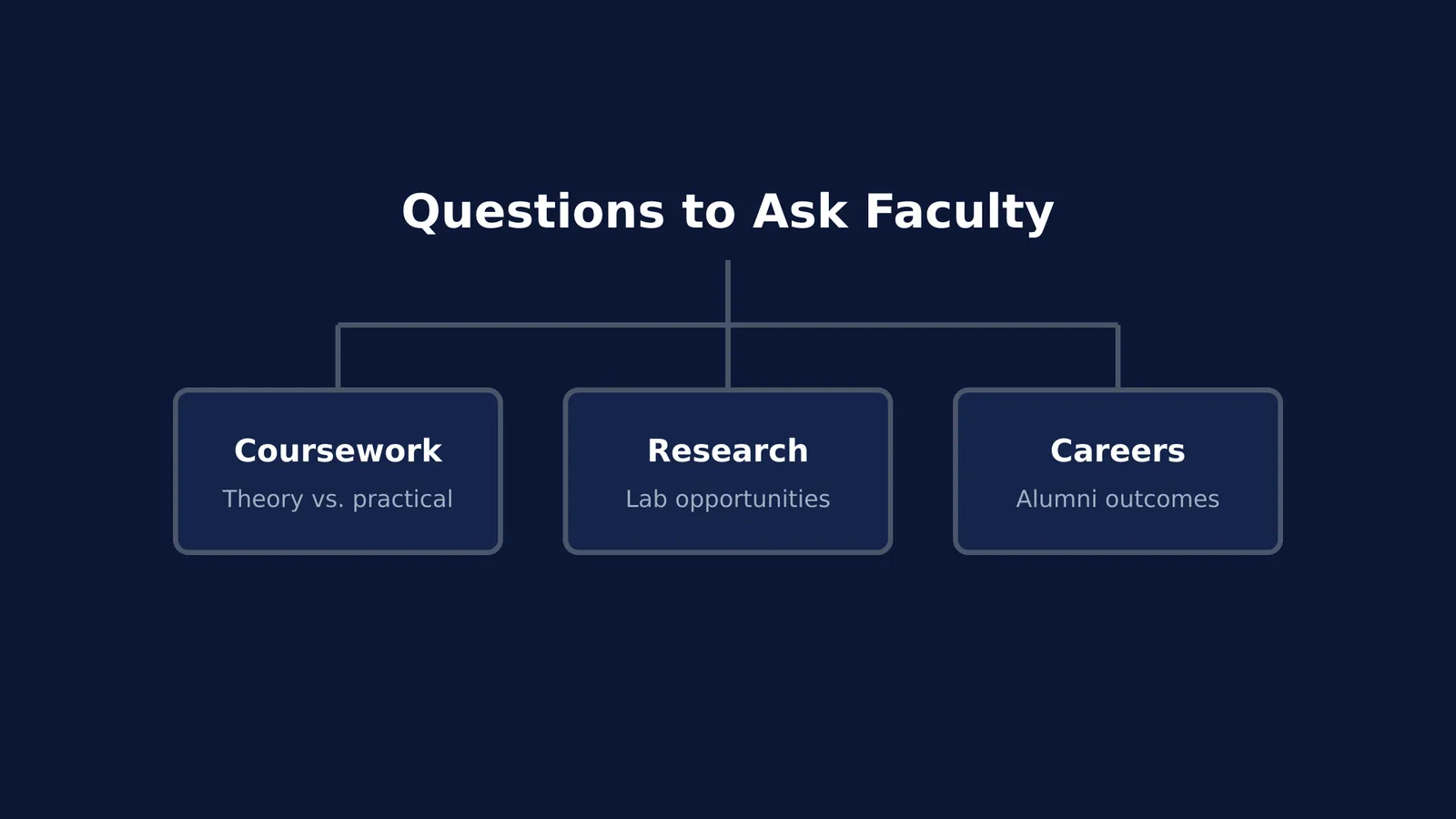
What does the daily coursework look like?
The most important thing to know is how you will spend your time between Monday and Friday. Are you going to be in a laboratory mixing chemicals, in a workshop welding metal, or in a computer lab writing code? A major might sound exciting in theory, but the day-to-day reality of the assignments can be very different.
A 2025 study tracking over 4,000 prospective students showed that having an objective major-specific fit—knowing the exact skills and expectations required—predicts motivation and success far better than a student's subjective guess. When you sit down with a professor, ask them to describe a typical week for a second-year or third-year student. Ask them:
"What percentage of the course is theoretical versus practical?"
"Will I be graded mostly on written exams, or on continuous projects and presentations?"
"What software or tools do students in this branch use every day?"
If you find that the Fermi Simulation Lab helps you understand a concept better than a textbook does, you might want to look for a branch that leans heavily on practical, visual modelling rather than rote theory.
What are the research opportunities for undergraduates?
Your learning should not stop at the syllabus. Working on a real-world problem with a professor changes how you view your subject and builds the skills employers actually want.
According to an analysis of 5,684 college graduates from the Gallup-Purdue Index, students who participate in faculty research, long-term projects or academic internships report significantly stronger mentorship and support during college. These relationships often lead to strong letters of recommendation and early career guidance. To find out if a branch offers this kind of environment, ask:
"Do undergraduate students get to assist in your lab's research, or is that reserved for postgraduates?"
"What is a recent project a third-year student built in this department?"
"Are there departmental clubs or student teams that compete in national competitions?"
For example, if you are torn between ECE or EEE, knowing which department allows first-year students to join their robotics or racing team can make the decision much easier.
Where do graduates of this branch typically go?
Many students choose a branch assuming it leads to a specific high-paying job, but industry trends shift fast. Professors keep track of their alumni, talk to recruiters, and know where the real opportunities lie in the current market.
Instead of asking a broad question like "What is the average package?", ask questions that reveal the actual career path of a typical graduate:
"Do most students in this branch take up campus jobs, or do they go for a Master's degree?"
"Which core companies come to recruit specifically for this department?"
"If a student wants to pivot to a software or management role later, does this branch leave enough time to prepare?"
Whether you are considering a minor degree in another branch to hedge your bets or diving into an interdisciplinary field like mechatronics and robotics engineering, the faculty's insight on alumni outcomes is the most reliable data you can get before you commit to four years of study.
How should I prepare for a meeting with a professor?
Professors are busy, so you need to respect their time and come prepared. Do not ask questions that you can easily find on the college website, such as "How many credits do I need to graduate?" or "What is the fee structure?".
Instead, read the department's webpage and note down the specific research areas the faculty are working on. If you see a professor is working on renewable energy systems, you can ask how undergraduate students get involved in that specific lab.
Send a short, polite email to request a brief meeting. State who you are, why you are writing, and the two or three specific questions you want to ask. This shows that you are serious and gives the professor a chance to think about their answers before you meet.
If you are stuck on a physics or maths concept while preparing for your entrance exams, Fermi's AI tutor can work out what you already know and build a plan for the session, so you sit down to a clear next step.