

On this page
If you fast during Ramadan in a board-exam year, your day already has fixed anchors: sehri, prayers, iftar and, for many families, taraweeh. In 2027 they will probably land on exam season. Ramadan is expected to begin around 8 February 2027, with the exact date confirmed by moon sighting (The National), and CBSE scheduled its 2026 board exams to start on 17 February (All India Radio News). Check your own 2027 date sheet on the CBSE website when it is out. The aim is not more hours. It is the right kind of study in the right slot.
What happens to sleep and focus when you fast?
A 2019 meta-analysis of 24 studies with 646 participants found that total sleep fell from 7.2 hours a night before Ramadan to 6.4 hours during it (Faris et al., Sleep and Breathing). The same review found only a negligible effect on excessive daytime sleepiness, so you may not feel much sleepier even though you are sleeping less.
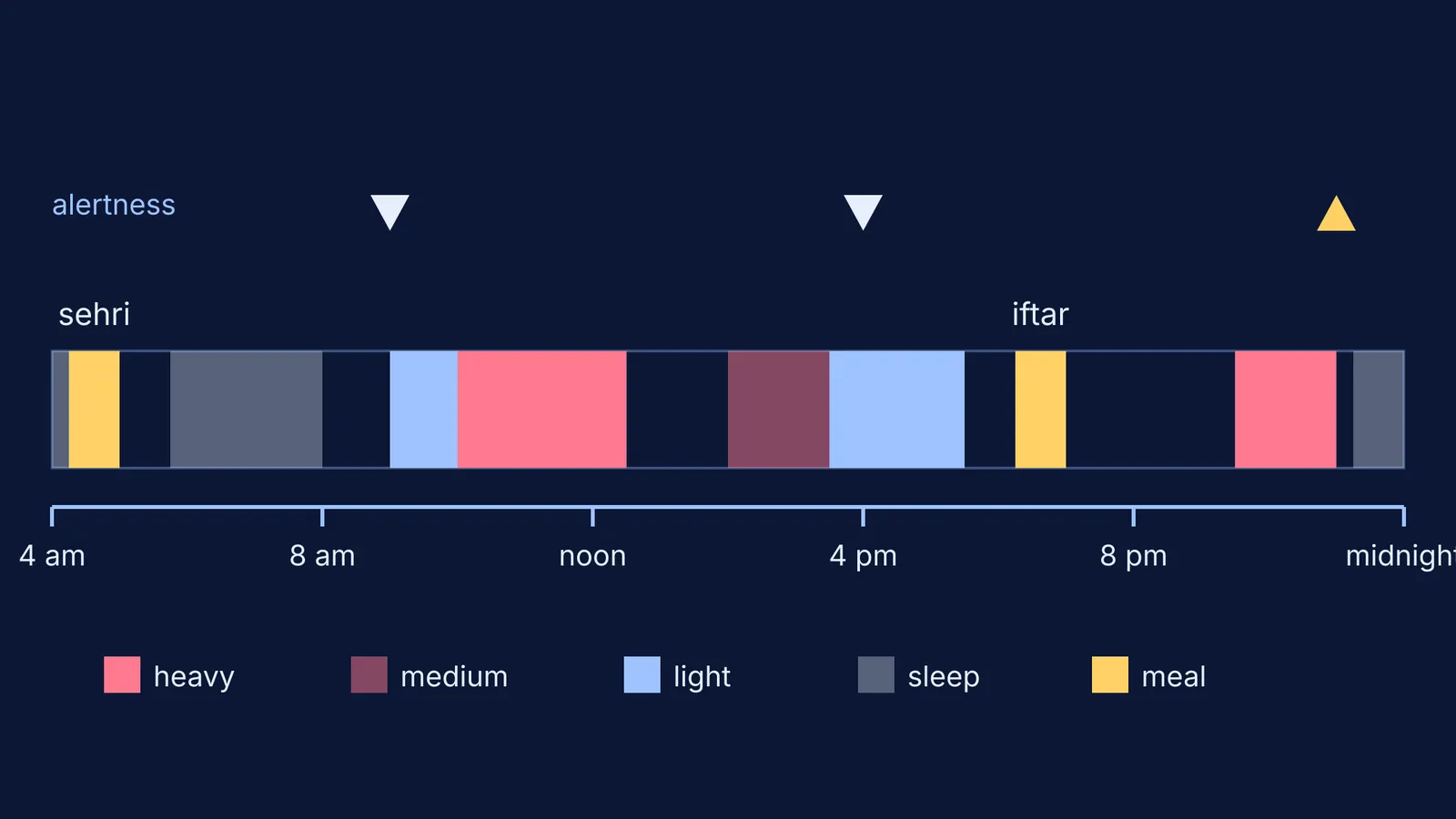
Alertness also changes shape across the day. A study that tested 10 healthy young people at six times of day during Ramadan found that, compared with before Ramadan, subjective alertness fell at 9 am and 4 pm, mood fell at 4 pm, and alertness rose at 11 pm (Roky et al., Annals of Nutrition and Metabolism). It is a small study, not one of students sitting exams, so treat it as a rough map rather than a rule.
Water matters too. Advice from the Northern Care Alliance NHS Foundation Trust says most people who fast will have mild dehydration, which can cause headaches, tiredness and difficulty concentrating; it suggests at least six to eight glasses of water between iftar and sehri and avoiding caffeinated drinks such as tea and coffee (Northern Care Alliance NHS).
When should you study heavy and light subjects during Ramadan?
First sort every task into two piles.
Heavy: a new chapter, numericals, proofs, a timed section of a sample paper.
Light: flashcards, formula sheets, labelling diagrams, re-reading notes you already understand.
Then place them with four rules.
Put one heavy block after taraweeh, when alertness rose in the Roky study.
Put a second heavy block in the late morning, after a recovery sleep.
Keep the late afternoon, before iftar, for light work.
Do nothing heavy straight after a big iftar. The same NHS page warns that overeating fried and sugary food can leave you tired and sleepy.
If you still nod off at your desk, these fixes for feeling sleepy while studying work in Ramadan too.
What does a full Ramadan study day look like?
Here is a sample day during exam leave. The clock times are examples; swap in your local sehri and iftar times and keep the order.
4:15 am: wake, eat sehri, drink water.
5:30 am: Fajr, then back to sleep until 8:00.
9:00 to 10:00: light warm-up, such as yesterday's flashcards.
10:00 to 12:30: heavy block 1, your hardest subject.
1:00 pm: Zuhr and a short rest.
2:00 to 3:30: medium block, past-paper questions in a subject you are good at.
3:30 to 5:30: Asr, then light revision of diagrams and formula lists.
6:15 pm: iftar and Maghrib. Start light, then eat the main meal. No study.
7:30 pm: a short walk, then Isha and taraweeh.
9:30 to 11:00: heavy block 2, a timed section of a sample paper, then mark it.
11:15 pm: lights out.
That gives about seven hours of sleep in two pieces and four hours of heavy work.
When a numerical stalls you in the late block, the Fermi Problem Library has worked problems with a step-by-step solver that explains the reasoning rather than printing an answer, so you can check your method and move on. In a light block, the Fermi Concept Library gives each concept its own lesson to revise from.
What changes on an exam day?
The night before, make the late block light: formula sheet, admit card, stationery. Aim for lights-out an hour earlier.
For a morning paper, skip the second sleep: after Fajr, glance at your formula sheet and get ready.
After the paper, take a nap, then do only light work until iftar.
Agree the plan with your family ahead of time so prayers, iftar and lights-out all fit.
Compare it with an ordinary Class 10 daily timetable, and since sehri and iftar shift daily, decide whether a fixed or flexible timetable suits you.
How can parents help during Ramadan exams?
Protect the 9:30 pm block from guests and TV.
Keep iftar starting light, and keep water on the desk after it.
Ask rather than tell. Try: "Which block is your hard one today, and what time do you want lights-out?"
If your child is worn out, cut a light block before you cut sleep.
If worry about exams is affecting sleep or eating, Tele MANAS, the Health Ministry's free 24x7 mental-health helpline, answers on 14416.
Tonight, write your own version of this day and try it for three days before changing it.


