On this page
A Deaf classmate joins your class, or a customer at your family's shop signs a question. A few dozen signs make that moment easier. Indian Sign Language (ISL) is a skill you can start with free government resources and short daily practice.
Why is Indian Sign Language a useful skill for students?
Sign languages are not gestures added to speech. The United Nations says that "sign languages are fully fledged natural languages, structurally distinct from the spoken languages" (UN, International Day of Sign Languages). Learning ISL means learning a new language, with new people to talk to.
The need in India is large. According to Census 2011, about 2.68 crore people in India had a disability, or 2.21% of the population (MoSPI, Disabled Persons in India 2016). Of them, 19% had a disability in hearing, according to the same report.
Few hearing people can sign back. The Ministry of Social Justice and Empowerment approved the Indian Sign Language Research and Training Centre (ISLRTC) on 28 September 2015; it now works under the ministry's Department of Empowerment of Persons with Disabilities. Explaining why it was needed, ISLRTC says India had "less than 300 certified interpreters" (ISLRTC, About us). ISLRTC now runs a Diploma in Indian Sign Language Interpretation (DISLI) and a Diploma in Teaching Indian Sign Language (DTISL) (ISLRTC). If you are drawn to medicine, teaching, law or public service, basic ISL is a practical extra.
If you are looking at volunteering ideas for high school students in India, a school for Deaf children or an ISL awareness drive is a place to use your new skill.
Is Indian Sign Language the same as sign language everywhere?
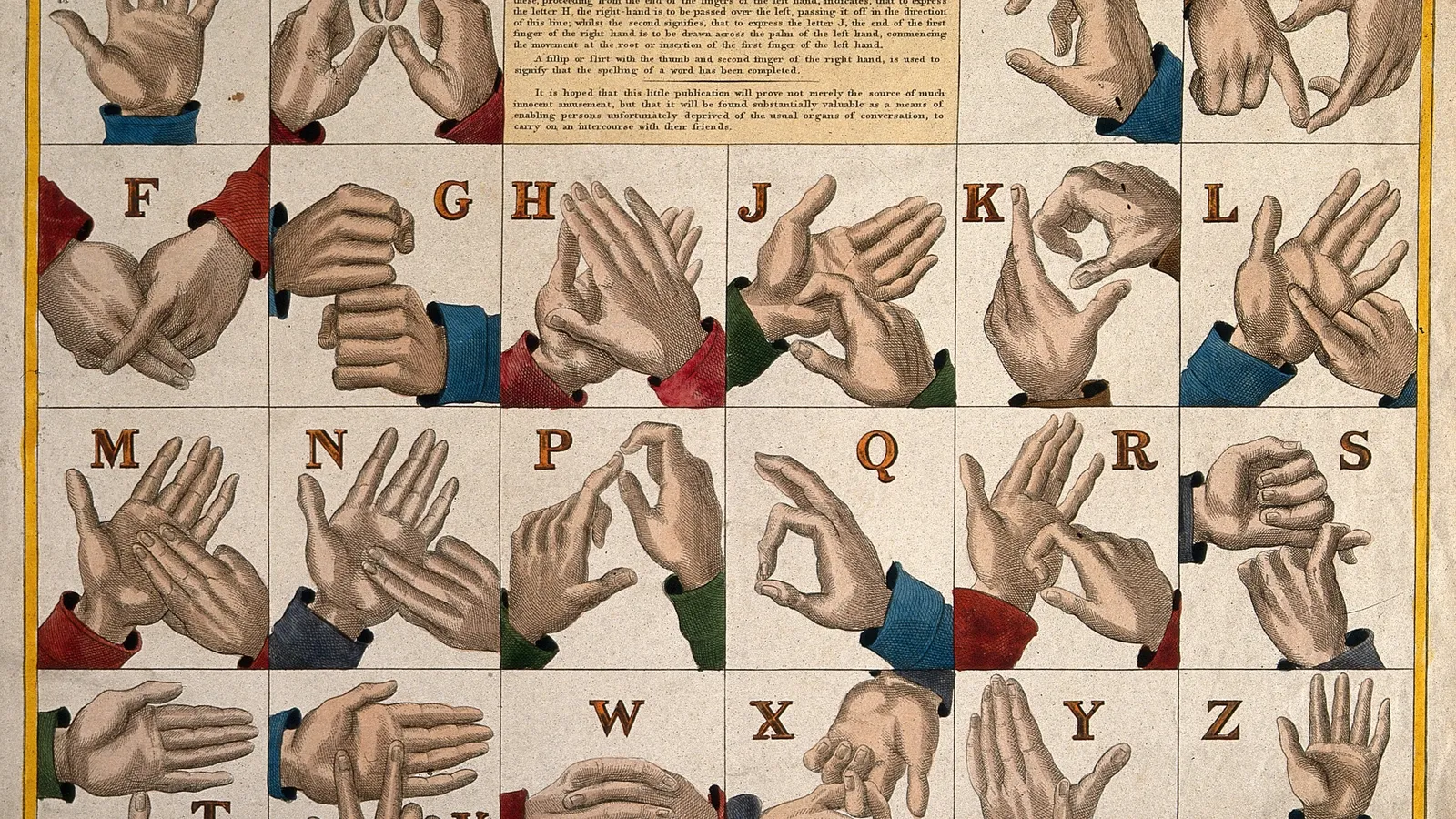
No. The UN, citing the World Federation of the Deaf, says more than 70 million deaf people worldwide use more than 300 different sign languages (UN). Even the alphabet differs: variations of the British two-handed manual alphabet are used in dialects of Indo-Pakistani Sign Language (Two-handed manual alphabets). Signs also vary by region, so learn the standard sign first, then pick up local signs from the people you meet.
Where can you learn Indian Sign Language for free?
ISLRTC online basic course. The Online Basic ISL Course in self-learning mode covers greetings, self-introduction, commonly used words and situation-based conversation. Each module includes a quiz, and the site links to a page where you can apply for a certificate.
Sign Learn app. Launched on 23 September 2022, it is based on ISLRTC's dictionary of 10,000 words, searchable in Hindi or English (The Tribune).
Dictionary videos and NCERT books in ISL. The ISLRTC home page links to its dictionary website, its YouTube channel and NCERT textbooks in ISL on DIKSHA.
NCERT's basic ISL sessions. CIET-NCERT and ISLRTC ran a five-day basic ISL course on PM e-Vidya DTH ISL Channel No. 31 from 17 to 21 February 2025, with trainers including a Deaf master trainer from ISLRTC; recordings are archived on NCERT's YouTube channels (CIET-NCERT).
Later, find a class run by Deaf signers. An app shows a sign; a fluent signer shows how people use it.
Which basic signs should you learn first?
Learn the signs you need in the first two minutes of any conversation. Look each one up in Sign Learn and copy it in front of a mirror.
Fingerspelling A to Z, so you can spell your name and any word you don't know
Hello, thank you, sorry, please
Yes, no, okay, again, slow
Name, my, your, what, where
Friend, family, school, teacher, book
Water, toilet, help, doctor
Understand, don't understand
How do you start learning Indian Sign Language in four weeks?
A short slot each day is a good start. Little and often is easier to keep up than one long Sunday session, the same idea behind any plan for learning a new skill on your own, week by week.
Week 1: Fingerspelling. Learn A to Z. Each day, fingerspell your name, your city and five friends' names without looking.
Week 2: Greetings and introductions. Do the greetings and self-introduction topics of the ISLRTC course. By Sunday, introduce yourself in ISL.
Week 3: Everyday words. Add the signs above, plus ten words from your own day, such as your subjects.
Week 4: A real conversation. Record yourself signing an introduction and compare it with the dictionary videos. Then try it with a Deaf signer, a teacher or a friend who is learning too.
If ISL makes you curious about the science of hearing, read how the cochlea turns sound into nerve signals. For other biology or physics topics, the Fermi Concept Library gives every concept its own lesson and its place in the map.
Pick one free resource above, learn your first ten signs this week, and introduce yourself in ISL by the end of the month.