On this page
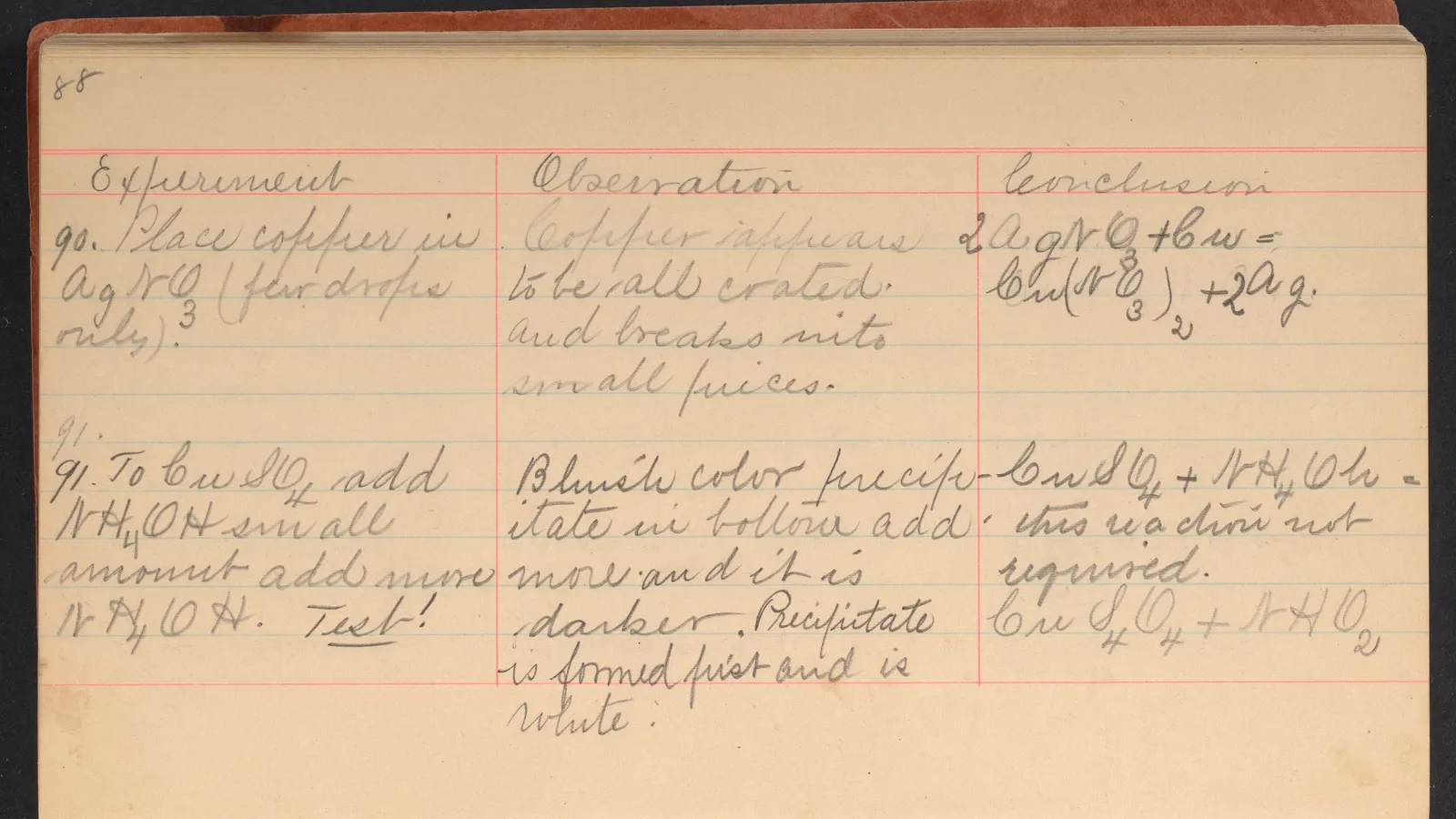
In many Indian homes the elder child's notebooks get passed down with the uniform. That is a real gift until the younger child copies the answers straight across.
Why does copying an older sibling's old answers backfire?
The clearest evidence comes from a study at MIT. David Palazzo, David Pritchard and colleagues analysed submissions to an online physics homework tutor and flagged the ones that had been copied (Palazzo et al., 2010, abstract on DSpace@MIT).
Copying homework problems that need a worked answer correlated with a two-standard-deviation decline over the semester in relative exam scores on similar problems (Palazzo et al., 2010). This is a correlation in university students, not proof that copying caused the drop.
The same paper reports that students who copied more than 30% of their problems had roughly three times the chance of failing the course. Copying also rose as each weekly deadline approached. The authors suggest that time pressure on students who start their homework late is the proximate cause, and measures of initial ability correlated with copying weakly or not at all (Palazzo et al., 2010). The study was of university students, but the lesson carries home: a younger child copying at 10 pm may well be rushed rather than lazy.
Two findings from memory research help explain why. In a classic experiment, students who took recall tests remembered prose passages better on tests two days and a week later than students who restudied them, even though restudying made them feel more confident (Roediger and Karpicke, 2006). Copying is a lot like restudying with a pen: it feels productive and leaves little behind.
A meta-analysis of 86 studies found that generating information yourself, rather than simply reading it, improved memory by almost half a standard deviation (Bertsch et al., 2007). Producing the answer is the part that helps memory, and copying skips exactly that part.
What are an older sibling's notes actually good for?
Plenty, if they are used for the right jobs:
A map of the chapter: which topics the teacher spent time on and how the ideas connect.
Diagrams and labelled figures that are hard to draw from the textbook alone.
Marked tests: the red-ink corrections show the mistakes that cost marks.
Worked examples to study before practising, not answers to copy afterwards.
Two cautions. Syllabi and textbooks change, so check old chapters against the current list from the school or board website. And an older sibling's notebook can contain their own mistakes, so treat it as a helpful witness, not the answer key.
How do you make old notebooks reference only?
Use one house rule: attempt first, open second.
Keep the old notebooks on a shelf, not on the study table.
Your child attempts the problem alone until they are properly stuck.
They write one line saying where they are stuck, such as "I don't know which equation to use".
They open the notebook to that one problem, read only the next step, and close it.
They finish the problem themselves, in their own words.
The next day, they redo it with the notebook closed.
Here is how that looks with a Class 9 question: a car starts from rest and accelerates at 2 m/s² for 5 s. How far does it travel?
The copying route: the notebook says s = ½at² = 25 m. It is copied in seconds and easily forgotten by the test.
The reference route: your child lists what they know (u = 0, a = 2 m/s², t = 5 s) but is unsure which equation fits. They open the notebook, see only s = ut + ½at², and close it. Then they work it out: s = 0 + ½ × 2 × 25 = 25 m. The next day, they try a variant with the book shut: 3 m/s² for 4 s gives s = ½ × 3 × 16 = 24 m.
This is the same idea as fading worked examples step by step: you take away the support a little at a time. If the notebook's step still makes no sense, the Fermi Problem Library has worked problems with a step-by-step solver that explains the reasoning rather than printing an answer.
What can parents say without starting a fight?
Keep it about learning, not honesty. To the younger child:
"Didi's notes are yours to use. The rule is you try first, then you look."
"Show me where you got stuck. That line is more useful to me than a finished page."
To the older child:
"When your brother asks, give him one hint or one step, not the answer."
There is more on making that teaching work in our guide to an older sibling helping a younger one. If the copying is from classmates rather than a sibling, see what to do when your child copies homework from friends.
Tonight, move the old notebooks to a shelf and agree on the one-step rule together.