

On this page
Many students revise for biology, physics, or geography exams by simply staring at the diagrams in their NCERT textbooks. You look at the cross-section of a leaf, read the labels, and tell yourself you know it. But when the exam paper asks you to draw and label it, you go blank.
This happens because reading is a passive activity. It creates an "illusion of competence"—the false belief that because something is easy to read, it will be easy to recall.
To actually remember the parts of a cell, the forces in a free-body diagram, or the layers of the atmosphere, you have to force your brain to work.
Why does redrawing diagrams from memory work?
Revising is not about putting information into your head; it is about pulling it out. This is known as retrieval practice. A 2008 study in *Science* demonstrated the critical role of retrieval practice, showing that repeated testing produced a large positive effect on delayed recall, whereas repeated studying after learning had no effect.
Drawing takes this active recall a step further. Research published in *Current Directions in Psychological Science* found that drawing to-be-learned information is a highly reliable means of boosting memory performance. The researchers proposed that drawing improves memory by promoting the integration of elaborative, pictorial, and motor codes, creating a much richer context for the brain to latch onto than simply reading or writing the words.
How to revise using textbook diagrams?
The best way to lock a visual concept into your memory is the cover-and-check method. Here is a four-step framework to apply during your next study session:
The first pass: Study the diagram in the textbook carefully. Do not just read the labels; understand how they relate to each other. Notice where the lines point. For example, in biology, does the line for the cell membrane point to the outer boundary or the inner boundary? In physics, are the arrows for tension and gravity pointing in the correct directions?
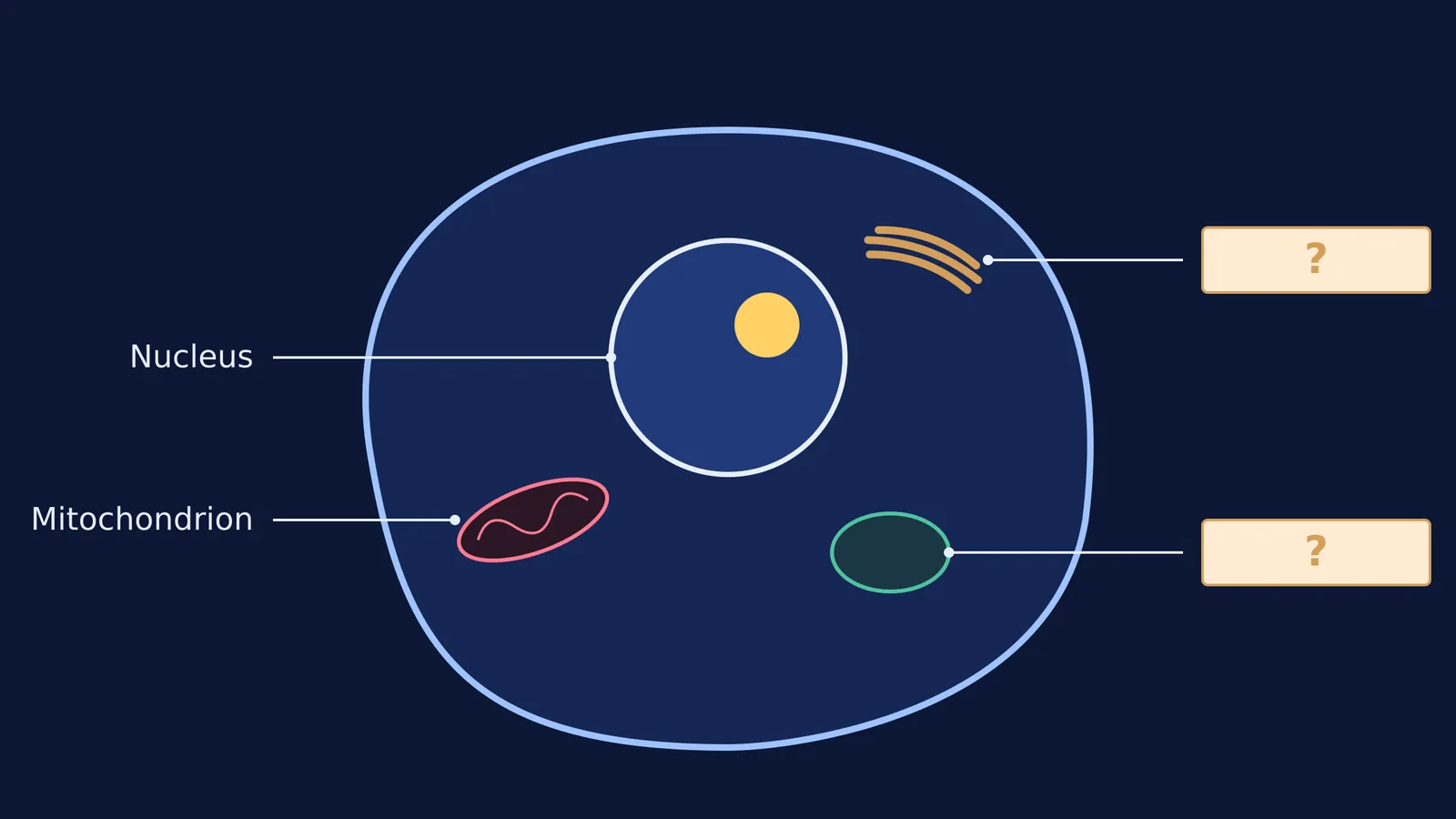
The cover-up: Take a sticky note or your hand and cover the labels on one side of the diagram. Look at the lines and say the name of the missing label out loud. Once you have guessed, move the sticky note to check. If you get it wrong, mark the label with a small pencil dot. Keep going until you can correctly name every part. If you want to test yourself dynamically, you can also Practice Labelling Diagrams With an AI Tutor.
The blank page check: Once you can correctly identify all the covered labels, close the textbook. Take a blank sheet of paper and draw the entire diagram from memory. Add every label you can remember. (This follows the same principles as The blurting method: how to revise from a blank page, just applied to visuals.) This is the hardest part, and it is where the actual learning happens. You are forcing your brain to reconstruct the visual and motor codes from scratch.
The red-pen correction: Open the textbook and compare your drawing to the original. Did you miss a label? Did you draw a part out of proportion? Did you forget the standard direction of an ocean current in a geography map? Use a red pen to correct your mistakes directly on your drawing.
What if you are bad at drawing?
You do not need to be an artist to benefit from this method. Exam graders are not looking for shading, perfect circles, or 3D effects; they are looking for accurate scientific relationships.
As long as the relative positions of the parts are correct and the labels point to the right places, a rough sketch is perfectly fine. If you want to improve your accuracy, break complex drawings down into simpler geometric shapes first, or read Bad at drawing diagrams? A simple method for biology and physics.
If you are struggling to understand the logic behind a complex diagram—such as why a circuit is wired a certain way or how a biological process unfolds—Fermi's AI tutor can build a plan for your session and teach through it, drawing the figure and checking your understanding as it goes.


