On this page
If probability is your favourite part of JEE maths, or you are an engineering student who likes testing ideas in code, you may have heard of "quant" jobs. Here is what the work is, what firms ask for in their own adverts, and how hard it is to get in.
What does a quantitative analyst actually do?
The US occupational database O*NET defines financial quantitative analysts as people who "develop quantitative techniques to inform securities investing, equities investing, pricing, or valuation of financial instruments." Its task list includes applying mathematical or statistical techniques to derivative valuation, securities trading and risk management, and maintaining the models a firm already uses.
In practice, "quant" covers a few different jobs:
Quant researcher: builds and tests statistical models that try to predict prices.
Quant trader: makes fast decisions about prices and risk.
Quant developer: writes the software that runs models and trading systems.
Risk or pricing quant: usually at a bank, works out what complex contracts are worth.
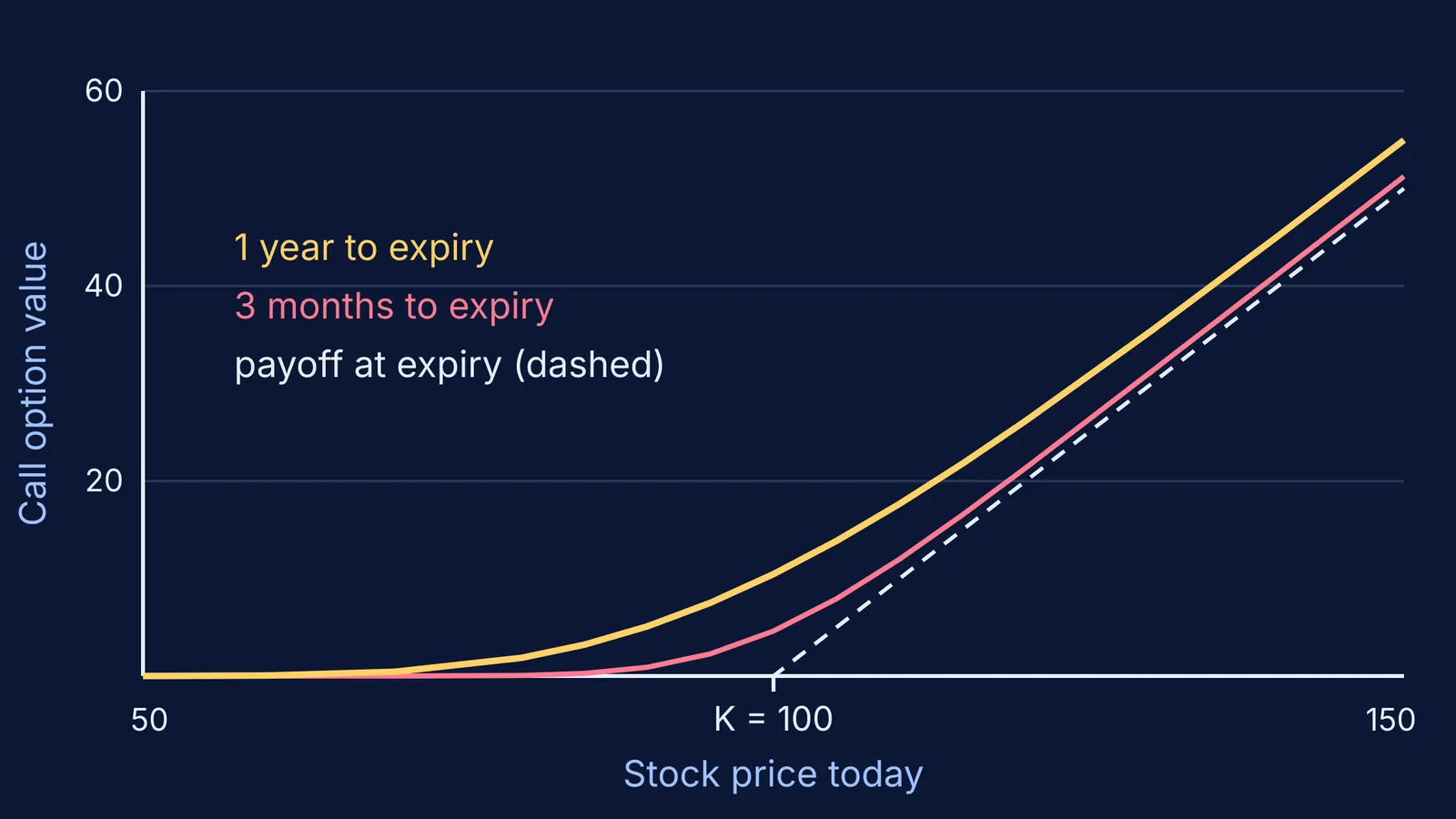
Much of this rests on the mathematics of uncertainty. A famous example is the option pricing formula Fischer Black and Myron Scholes published in the Journal of Political Economy in 1973. According to NBER, Robert Merton and Myron Scholes won the 1997 economics Nobel for their work on valuing stock options. Black had died before the award.
Which maths, statistics and coding do quant firms ask for?
The clearest answer comes from job adverts. Optiver's graduate quantitative researcher advert asks for "an academic degree in Engineering, Physics, Maths, Econometrics, Computer science or equivalent, with outstanding academic achievements." It also asks for the "ability to apply concepts of probability, calculus and linear algebra" and programming experience in any language, preferably Python.
Finance itself is often optional. Jane Street's interviewing page says: "We won't test you on knowledge of finance or economics." It also says candidates can interview in whichever programming language they know best.
That gives you three pillars to build:
Probability and statistics: expected value, conditional probability, distributions, regression, and how to test whether a pattern is real or just noise.
Calculus and linear algebra: working with matrices and vectors, optimisation, and later stochastic calculus, the maths of random motion.
Programming: usually Python for research. C++ matters for speed-critical systems.
If stochastic calculus sounds strange, our profile of Kiyoshi Itô and the mathematics of random motion is a gentle start.
How hard is it to get into quant finance?
Honestly, it is hard. O*NET puts the role in Job Zone Five, "extensive preparation needed". Among the people it surveyed, 60% said the job requires a master's degree, 35% a bachelor's and 5% a doctorate. Optiver asks for "outstanding academic achievements". Jane Street says its interviews try to see how you work through a problem with them, not what you have memorised.
A strong school or college record helps you get an interview. It does not guarantee an offer. Have a backup in mind that uses the same skills. Our comparison of actuarial science and data science careers covers two such routes.
Try a quant-style question: can you beat 3.5?
Here is the kind of expected-value puzzle that probability interviews favour. You roll a fair die and are paid the number shown in rupees. You may reroll once, but then you must keep the second roll. What is the game worth?
Without a reroll, the expected value is (1+2+3+4+5+6) / 6 = 3.5.
If you reroll, you expect 3.5 from the second roll. So keep any first roll above 3.5 (a 4, 5 or 6), and reroll a 1, 2 or 3.
Half the time you keep a roll that averages (4+5+6) / 3 = 5. The other half you reroll and expect 3.5.
The game is worth 0.5 x 5 + 0.5 x 3.5 = 4.25.
Now try two rerolls yourself, then check your answer with a short Python simulation. Testing theory against simulation is everyday quant work.
If a step like conditional expectation feels shaky, the Fermi Concept Library has a lesson for every concept in mathematics and computing. The Fermi Problem Library has worked problems with a step-by-step solver that explains the reasoning, so you can see why each step follows.
A plan from Class 11 to final year
Class 11-12: take probability, permutations and calculus seriously, not as chapters to skip.
First year of college: learn Python properly. Our 12-week plan to start competitive programming builds the speed that technical interviews reward.
Second year: choose electives in probability, statistics, linear algebra and numerical methods.
Third year: test a simple strategy on public market data, write up honestly where it fails, and apply for internships.
Final year: choose between a job and a master's in maths, statistics or financial engineering, based on the offers and feedback you get.