On this page
Sarah Gilbert is the Oxford scientist who led the team behind the ChAdOx1 nCoV-19 vaccine, the shot made in India as Covishield. The vaccine was licensed to AstraZeneca and, according to the King Faisal Prize citation, is in use in over 180 countries. Her story shows years of careful work on one tool, ready when it was needed.
Who is Sarah Gilbert?
Gilbert went to Kettering High School for Girls, took a degree in biological sciences at the University of East Anglia in 1983 and a doctorate at the University of Hull in 1986, according to the University of Bath's honorary degree oration. She joined Oxford as a post-doctoral researcher in 1994 and became Professor of Vaccinology in 2010.
Her speciality, the oration says, is viral vectored vaccines, against diseases such as influenza, Nipah, MERS and Lassa fever. The King Faisal Prize says her research included the initial development of the ChAdOx1 and ChAdOx2 vaccine technologies. In the 2021 Queen's Birthday Honours she was made a Dame for services to science and public health in Covid vaccine development, as the PA news agency reported.
How did the Oxford team build a COVID-19 vaccine so fast?
They did not start from zero. ChAdOx1 is a vaccine vector made from a chimpanzee adenovirus, a type of cold virus, described by Gilbert and colleagues in a 2012 paper titled A novel chimpanzee adenovirus vector with low human seroprevalence. Low seroprevalence means few people already carry antibodies against it.
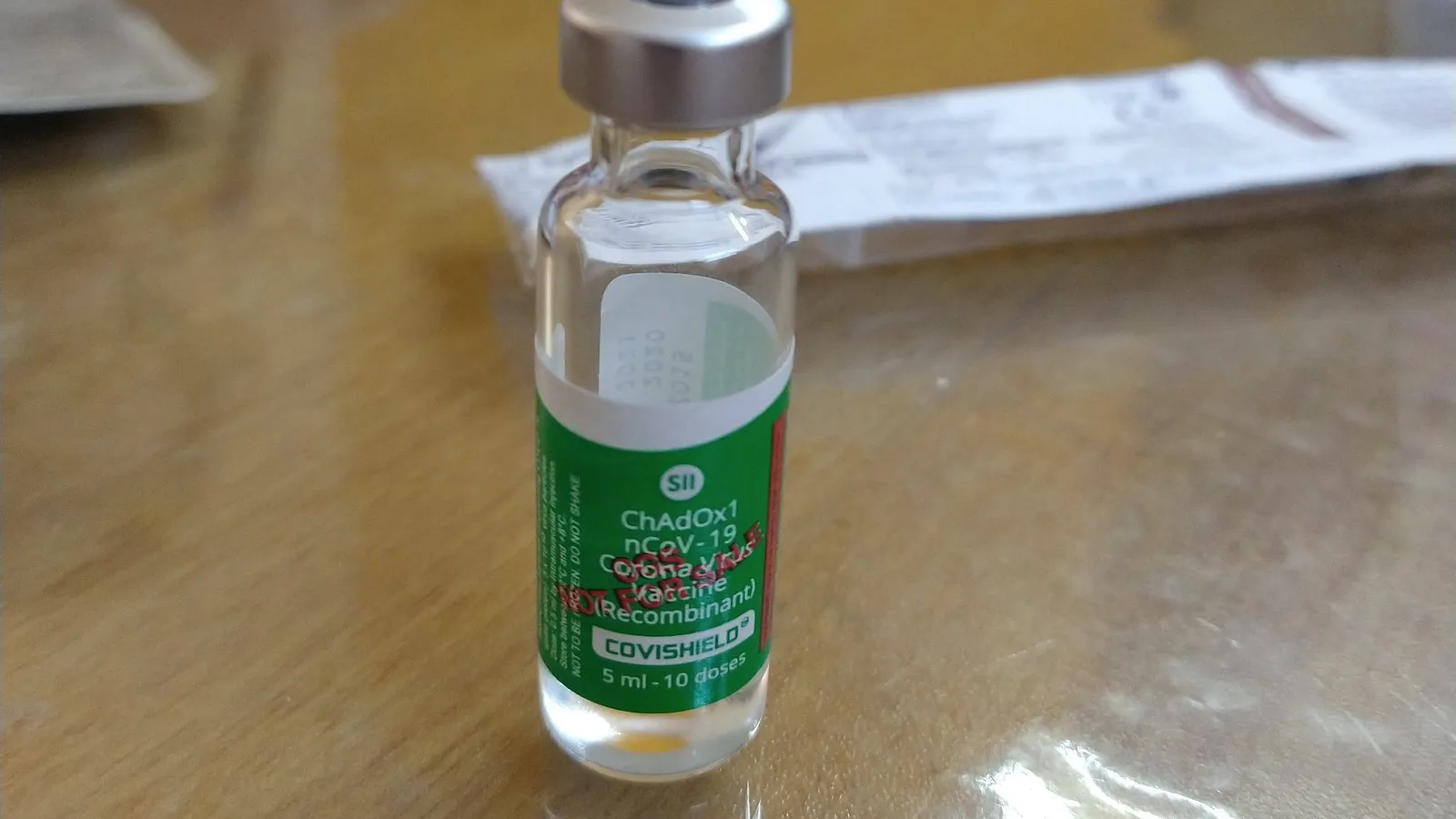
For COVID-19, the vector carried the gene for the coronavirus spike protein. India's drug regulator described Covishield as a recombinant chimpanzee adenovirus vector vaccine encoding the SARS-CoV-2 spike glycoprotein, as LiveLaw reported. The immune system learns to recognise the spike, the memory idea explained in our post on how vaccination builds immune memory.
The timeline, from the Bath oration, the first Lancet trial report31604-4) and the UK government's announcement:
January 2020: the project began once the virus's genetic code was published.
Early February 2020: the lab's version of the vaccine was tested in mice.
23 April 2020: the first human trial began enrolling volunteers.
30 December 2020: the UK regulator, the MHRA, approved the vaccine.
That first trial enrolled 1,077 healthy adults aged 18 to 55 at five UK sites, and Gilbert is among the authors of its report.
How is Covishield related to the Oxford AstraZeneca vaccine?
Covishield is the Oxford vaccine made by the Serum Institute of India in Pune, with technology transfer from AstraZeneca and Oxford. The Drugs Controller General of India approved it for restricted emergency use on 3 January 2021, using data from 23,745 participants aged 18 and over in overseas trials, according to LiveLaw's report of the regulator's statement.
On 15 February 2021, WHO listed two versions of the AstraZeneca/Oxford vaccine for emergency use, made by AstraZeneca-SKBio in South Korea and the Serum Institute of India, which allowed supply through COVAX. The Science Museum Group, which holds papers and cards sent to Gilbert, says over 3 billion doses of the Oxford/AstraZeneca vaccine have been delivered worldwide.
What did the Oxford vaccine trials show?
The main efficacy paper was an interim analysis of four trials in the UK, Brazil and South Africa; its efficacy figures came from the UK and Brazil trials. In this Lancet interim analysis32661-1), 30 of 5,807 vaccinated people got symptomatic COVID-19, against 101 of 5,829 in the control group. You can check the headline figure yourself:
Risk in the vaccine group: 30 / 5,807 = 0.52%.
Risk in the control group: 101 / 5,829 = 1.73%.
Relative risk: 0.52 / 1.73 = about 0.30.
Efficacy: 1 minus 0.30 = 0.70, or about 70%.
The paper reports 70.4%, from a fuller statistical analysis than this simple ratio. The same paper gives 62.1% for two standard doses and 90.0% for a low first dose followed by a standard dose.
What can students learn from Sarah Gilbert?
Build the tool before you need it. ChAdOx1 was described in 2012, years before COVID-19.
Go to the original numbers. A headline says 70%; the Lancet paper32661-1) tells you 30 versus 101 cases.
For two more scientists in the same story, read about June Almeida, who first imaged a coronavirus, and Katalin Karikó's work on mRNA, the other main COVID-19 vaccine technology.
If working out changes like this trips you up, the Fermi Problem Library has worked problems with a step-by-step solver that explains the reasoning rather than printing an answer. If terms like adenovirus or spike protein feel shaky, the Fermi Concept Library covers every concept in biology, each with its own lesson.
For questions about your own vaccinations, talk to a doctor. Pick one number from this post, find it in the original paper, and work it out yourself.