On this page
Choosing music after Class 12 is two decisions: which course trains you, and which kind of music work you want to be paid for.
What music courses can you do after 12th in India?
At public universities such as Delhi University and BHU, music degrees test your singing or playing as well as your marks. In Delhi University's 2025-26 undergraduate bulletin, merit for B.A. (Hons.) Hindustani Music and Karnataka Music is calculated with 50% weightage to the CUET score and 50% to a performance-based test.
The same bulletin lists these programmes at Daulat Ram College, Hindu College, Indraprastha College for Women, Miranda House and Ramjas College, and the seat counts are small: Hindu College shows 5 unreserved seats for Hindustani vocal and instrumental music.
Banaras Hindu University's 2025 undergraduate admission bulletin describes its Bachelor of Performing Arts in Vocal Music and in Instrumental Music as four-year professional courses. Admission uses the CUET subject test Performing Arts (320) plus a practical examination at BHU. You need 50% aggregate in Class 12 with music as a subject and at least 55% in the music practical. If you did not take music in Class 12, you still need 50% aggregate, plus a part-time diploma such as the Senior Diploma of Prayag Sangeet Samiti or the Madhyama of Bhatkhande Sangeet Vidyapeeth, with at least 55% in its practical.
Private conservatories work differently. KM Music Conservatory in Chennai lists a one-year Foundation Certificate and a two-year full-time Diploma linked to Middlesex University, London, plus shorter courses in audio engineering and music production.
Performance, production or teaching: which path fits you?
Performance (stage, session work, film and independent releases): your audition recording and daily riyaz matter more than your marksheet. Income often mixes shows, recordings and royalties.
Production (recording, mixing, composing for video and games): you need studio software, a trained ear and a portfolio. A short course can sit alongside a degree.
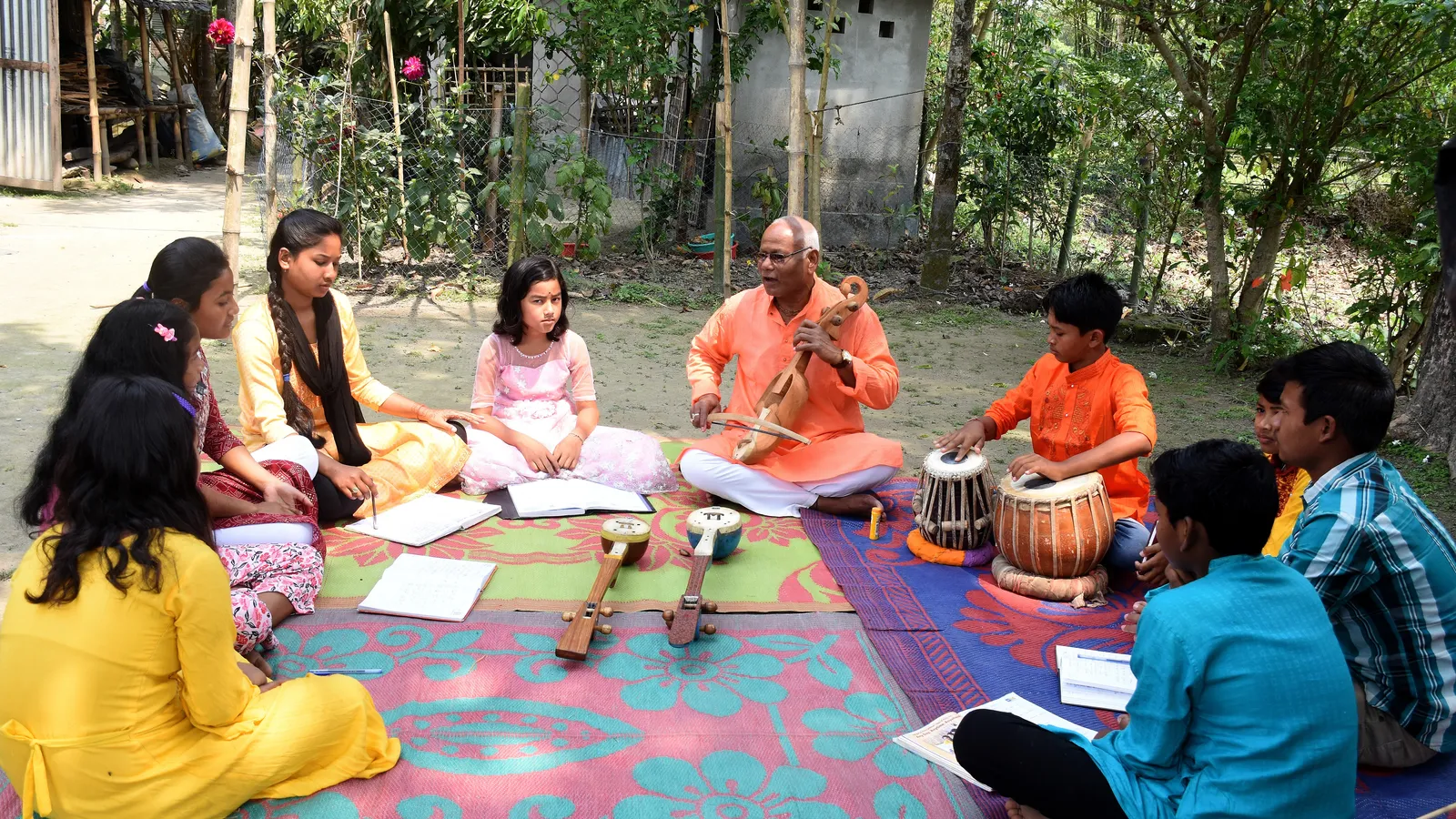
Teaching (schools, academies, private and online students): you need depth in one tradition and patience with beginners. NEP 2020 says art teachers could be shared across a school complex (para 5.5) and that schools will be encouraged to hire local experts as master instructors in traditional local arts (para 5.6).
Many musicians do all three, and industry money is spreading the same way. The FICCI-EY media and entertainment report of March 2026 found that India's music sector revenue grew 10% in 2025 and paid music subscriptions grew 37% to 14.4 million. The same report says music labels' other income climbed 26% due to events, branded content and talent management.
If you write or sing, learn how royalties work early. IP India defines a copyright society as a registered collective administration society under Section 33 of the Copyright Act, 1957, and lists IPRS for literary works associated with musical works and ISRA for singers' rights.
If you lean toward production, the physics of sound is part of the job: frequency, harmonics and resonance decide why a mix sounds muddy. The Fermi Concept Library has every concept in physics with its own lesson, and the Fermi Simulation Lab has interactive simulations for ideas that are easier to see than to read.
How can you build skills and earn while studying?
Class 12 and the summer after: pick one main voice or instrument. If music is not a school subject for you, enrol in a part-time graded diploma so a recognised exam is on record. Record one audition-length piece every month and keep the best.
First year: teach a few beginners at home or online. Teaching makes you explain the basics you skip in your own riyaz.
Second year: learn one recording program well. Record covers and one original each term, and read how IPRS and ISRA membership work before you release anything.
Third year: build a portfolio page with your strongest recordings, a teaching record and any stage work. Assist a senior musician, sound engineer or music teacher for a short stint.
What does a week look like for a first-year music student?
Riyaz every morning before college, about an hour.
Two evenings teaching beginners.
One evening recording or editing.
One weekend performance: an open mic, a college society event or a community programme.
One evening with no music at all.
Keep a ledger of every rupee earned and hour spent. After six months it shows which path pays and which you enjoy.
If the pressure of choosing an unusual career starts to affect your sleep or mood, talk to someone you trust. Tele MANAS offers 24x7 tele-mental health services on the toll-free number 14416.
This week, open the current DU and BHU bulletins, note the practical test you would face, and record your first audition piece.