On this page
Your first lecture in an Indian medical college will probably not be anatomy. Every MBBS batch starts with a foundation course set by the National Medical Commission (NMC). Here is what happens in it, how it is checked, and how to use those weeks well.
How long is the MBBS foundation course?
The length has changed, so seniors may give different answers. The 2019 Foundation Course booklet from the Medical Council of India, now hosted by the NMC, describes a "one month exclusive" course of 175 teaching hours at the start of MBBS.
The NMC's CBME Curriculum 2024 guidelines, dated 12 September 2024, apply to batches admitted from 2024-25. They describe Phase I as 12 months "including Foundation Course of two weeks and university exams". The same document says the goal of the foundation course is "to prepare a learner to study medicine effectively".
Colleges design their own modules within these rules, so your college's timetable is the final word on dates.
What modules are in the foundation course?
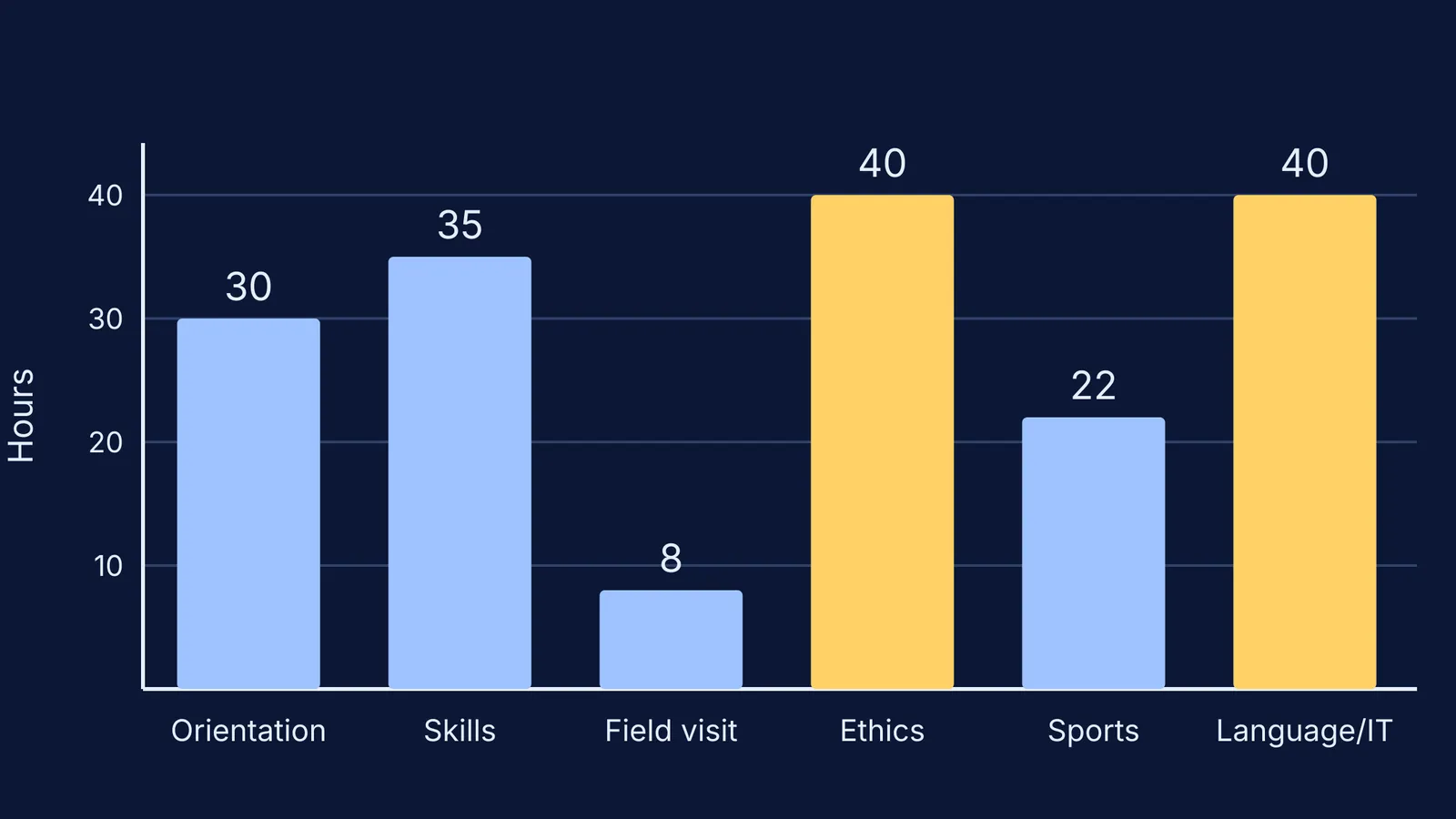
The 2019 booklet split its 175 hours into six blocks (NMC booklet, Table 1). The 2024 course is shorter but lists similar objectives, so these blocks are still a useful guide:
Orientation (30 hours): the campus, rules, the role of doctors in society, the history of medicine and the MBBS curriculum. The booklet says this should be completed as one block in the first week.
Skills (35 hours): first aid, basic life support, universal precautions, biomedical waste handling, immunisation and documentation, practised in a skills lab or simulated setting.
Community orientation (8 hours): a field visit to a community or primary health centre, where you meet health workers, patients and families.
Professional development and ethics (40 hours): professionalism, the white coat ceremony, teamwork, disability competencies, cultural competence, stress and time management, and how to learn.
Language and computer skills (40 hours): English, the local language and basic computer skills, chosen by need.
Sports and extracurricular activities (22 hours).
The 2024 guidelines add topics to this list. They name mental health, AYUSH systems and visits to health centres in orientation, and "use of information technology, and artificial intelligence" among the skills. They keep 4 hours a week of sport protected and suggest holding local-language, English and computer sessions in the last two hours of the day (CBME 2024).
How is the foundation course assessed?
Neither NMC document sets an exam for the course. What the rules do set is attendance. The CBME 2024 guidelines require a minimum of 75% attendance for every student, certified by the Principal or Dean.
The 2019 booklet adds detail on marks. Your faculty mentor may record feedback or grades, especially for skills training, but your performance "will NOT contribute towards internal assessment marks" (NMC booklet, section 7).
Your mentor is assigned during these weeks. The 2024 guidelines set a ratio of one mentor to three mentees, and say you stay connected with the same mentor until you complete your internship. They also ask every college to hold a meeting with parents or guardians.
What should you do in those first weeks?
The course is low-stakes, so use it to set up habits before the anatomy, physiology and biochemistry workload arrives. Here is a two-week plan:
Days 1-3: Save your timetable and the coordinator's name. Walk the campus once: library, skills lab, dissection hall, hostel office, health centre. Write down the attendance rules.
Days 4-6: In skills sessions, practise basic life support until you can do the steps without prompts. Ask to repeat anything you only watched.
Day 7: Meet your mentor once they are assigned. Script: "I'm from a [state board/regional-medium] background. Which first-year topics do students like me usually find hardest, and what should I read in the first month?"
Days 8-10: Whenever your field visit happens, note three things a patient said about getting care. They make good material for later ethics discussions.
Days 11-14: Pick one language or computer gap and work on it daily. Start a weekly review slot you will keep once lectures begin.
If your biology or chemistry basics feel shaky going into biochemistry and physiology, the Fermi Concept Library has a lesson for every concept in biology and chemistry, so you can fill specific gaps in short sessions.
The career pathways session is a good moment to read what comes after an MBBS in India. These weeks are also when friendships form, so see how to make friends in your first-year hostel. Parents can prepare with how to talk to your child about ragging before college.
The government's Tele MANAS helpline offers 24x7 tele-mental health counselling on the toll-free number 14416.
Before day one, find your college's foundation course timetable and put the attendance rule at the top of your notes.