

On this page
Books on the pillow, a plan to just finish this chapter, and an hour later you are half-asleep. That is not only a willpower problem. Beds are strong cues for sleep.
Is it bad to study in bed?
For most serious study, probably yes, though the evidence is indirect: it comes from sleep science rather than from studies of students' marks.
Stimulus control therapy is an insomnia treatment, first proposed by psychologist Richard Bootzin, that aims to strengthen the bed and bedroom as cues for sleep and weaken them as cues for arousal, according to a protocol chapter by Bootzin and Michael Perlis. The chapter shows reading, watching TV, working and worrying in bed as examples of poor stimulus control. Its sample dialogue even uses studying: asked what would happen if they studied in bed, a patient guesses they would probably fall asleep, and the therapist agrees that the cues for sleeping in bed are stronger than the cues for studying.
The American Academy of Sleep Medicine's 2021 clinical practice guideline suggests that clinicians use stimulus control on its own as a treatment for chronic insomnia in adults.
So studying in bed may cost you twice: focus can drop in the moment, and over weeks the bed may start to mean textbooks and stress, which could make it harder to switch off at night.
When is studying in bed fine?
No study draws an exact line, so treat this as a practical rule of thumb: short, low-effort tasks probably do little harm in bed, especially earlier in the day and sitting up rather than lying flat. If you already have trouble sleeping, the stimulus control instructions are stricter and ask you not to read in bed at all.
Fine in bed, kept short:
flipping through flashcards or formula sheets you already know
skimming a chapter summary before you study it properly
Keep for a table or desk:
numericals and derivations in physics, chemistry and maths
mock tests and timed practice
a first reading of a new chapter, and making notes
anything late at night, when you are already tired
If you keep yawning over the page even at a desk, our post on why you feel sleepy while studying covers other causes worth checking.
Does where you study affect what you remember?
Somewhat. A review and meta-analysis by Steven Smith and Edward Vela found that the surrounding place reliably affects memory, but the effect shrinks when learners focus on the material itself or mentally picture where they learned it. What matters more is a spot that keeps you alert and on task, and for many people a bed works against both.
How do you set up a study spot in a small room?
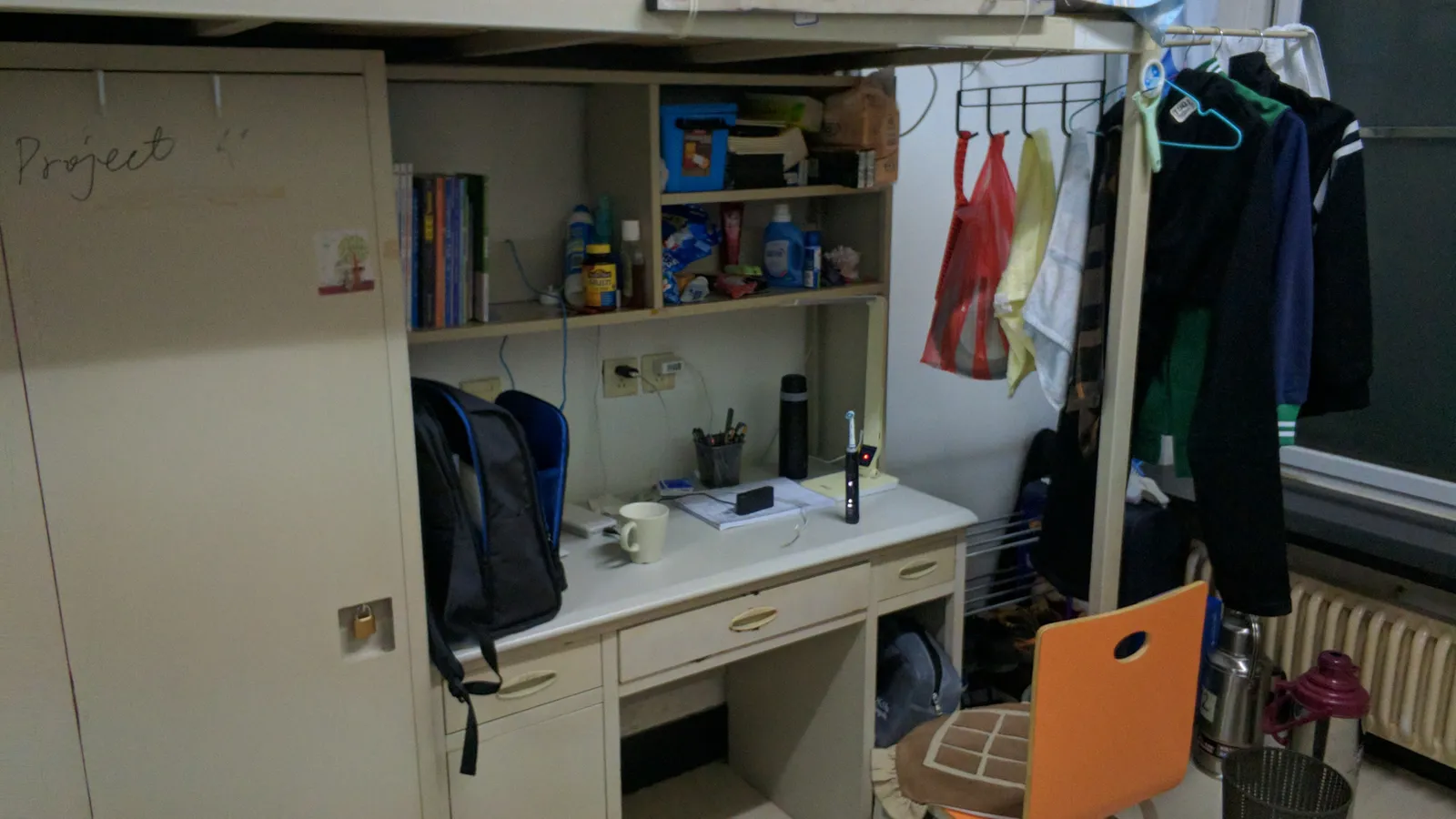
Plenty of students share a room where the bed takes most of the floor. You do not need a study room, just one place that means work.
Pick one surface and keep it for study. A small folding table, a wall shelf at desk height, or one end of the dining table at fixed hours all work.
Sit upright, off the mattress. If the bed edge is your only seat, use a firm cushion behind your back and keep the table in front of you.
Light the page, not just the room. See our guide to study lamps and lighting at home.
Start and stop with a small ritual. Open the same notebook to begin; clear the table to finish.
Keep the phone across the room while you work, and face away from the bed if you can.
In a hostel or PG room, our hostel room study setup post covers sharing with a roommate.
What does a better evening look like?
Say you are in Class 11, share a room with a sibling, and have only a folding table.
After school, do the hardest work first at the table, such as rotational motion numericals.
For breaks, leave the room rather than lying on the bed.
Next, read the new chemistry chapter and make notes, still at the table.
Before dinner, clear the table: study is over.
After dinner, if you want, sit up on the bed with flashcards and the light on. Stop when you start rereading the same card.
If you sit down at the table and do not know where to start, Fermi's AI tutor can work out what you already know and build a plan for the session, so the table means a clear next step. When a numerical goes wrong, the Fermi Problem Library has a step-by-step solver that explains the reasoning rather than printing an answer.
What if you still cannot sleep?
If you struggle to sleep most nights for weeks, or exam stress feels heavy, talk to a doctor or an adult you trust. In India, the government's Tele MANAS mental health helpline is toll-free on 14416.
Tonight, try one change: move your hardest task to the table and leave only flashcards for the bed.


