

On this page
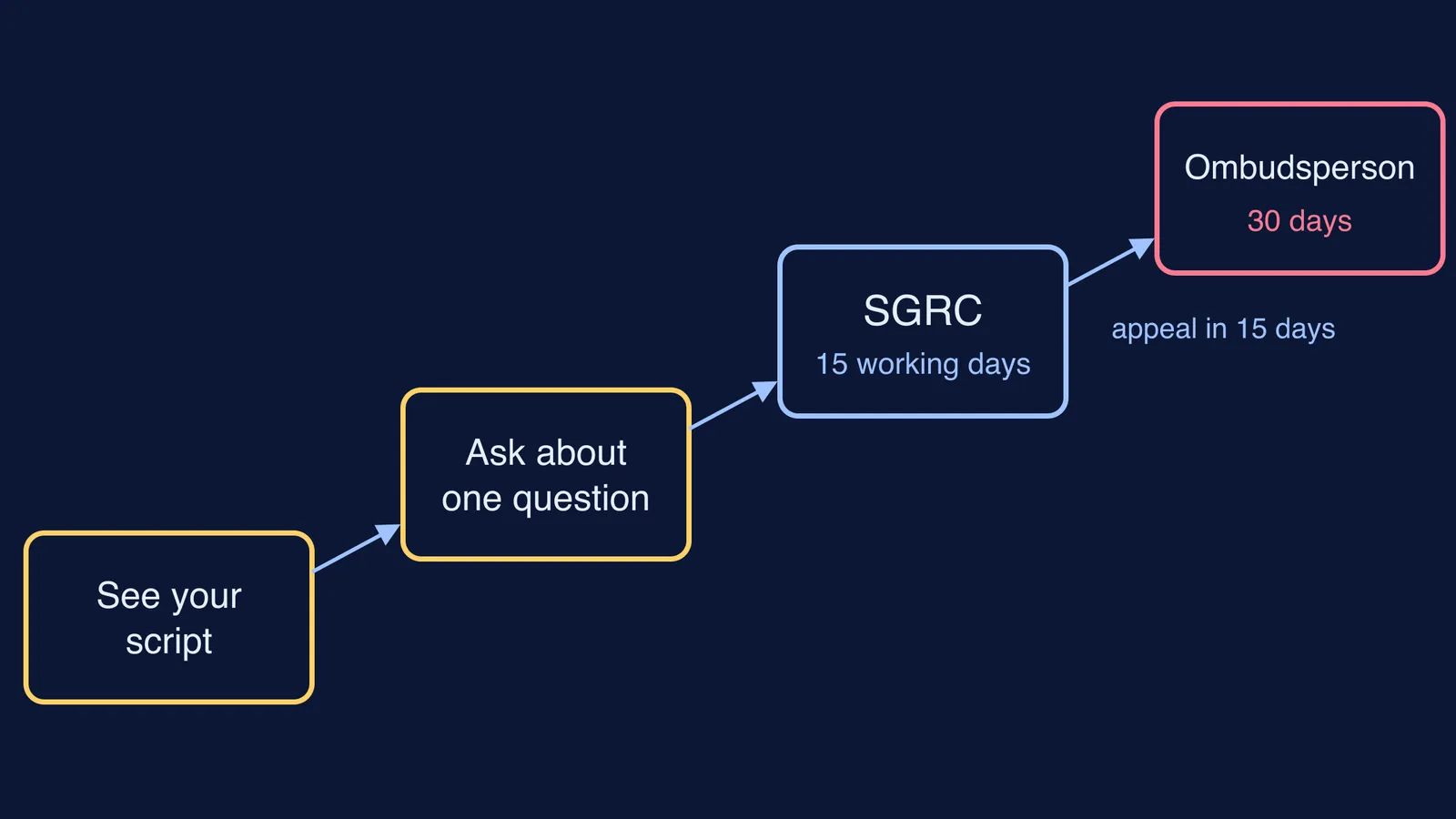
Your semester marks are out, and one subject looks wrong. Most students either do nothing or march into the staff room upset. The approach that works has three parts: see the script, ask about one specific question, and use the official process if you need it.
Do you have a right to see your answer sheet in college?
In most cases, yes. The UGC's Guidelines for Students' Entitlement say students are entitled to "fair, transparent and timely evaluation", including fair provisions for re-checking or re-evaluation and for grievances about evaluation. The same document says students are entitled to a copy of their answer scripts after results are declared.
The law backs this up. In CBSE v. Aditya Bandopadhyay (2011), the Supreme Court held that an evaluated answer book is "information" under the RTI Act, so an examinee can inspect it or take certified copies. The ruling covers seeing the script, not revaluation. Whether your marks can be changed depends on your university's rules.
For end-semester university exams, look on your university's exam portal for "photocopy", "re-totalling" or "revaluation". These usually carry a fee and a short deadline after results.
What should you check before you ask?
Go through the script calmly, with the question paper beside it. Sort what you find into one of three kinds, because each needs a different request.
Totalling or missed answer. Marks were added wrongly, or a page or sub-part was never marked. This is the easiest to fix and the least awkward to raise.
Marking against the key. You wrote the expected answer or method, but got fewer marks than the scheme allows. Compare your answer line by line with the solution your professor shared.
Judgement. You think your answer deserved more, but it differs from the expected one. This is the hardest case to make.
If, after checking, you find your answer really was wrong, that is useful too. Work out why: a wrong method, a missing concept or a careless slip. The Fermi Problem Library has worked problems with a step-by-step solver that explains the reasoning rather than printing an answer, so you can see where your method went off track.
How do you ask a professor to recheck your paper politely?
Ask in person during office hours, or by email, soon after scripts are returned. Our guide to using professor office hours covers how to book that time. Bring the script and the question paper. If you write, keep it short, like this:
"Dear Prof. [surname], I'm [your name], roll number [your roll number], in your Thermodynamics section. Thank you for returning our mid-semester scripts. In Question 4(b), I used the energy balance from Lecture 6 and reached the same final answer as the solution you shared, but I was given 2 out of 6 marks. Could you look at it again when you have time? I'm also happy to understand what was missing so I can improve. Regards, [your name]."
Notice what it does. It names the exact question, states the fact, asks a question instead of making a demand, and leaves room for the professor to be right. For the format and subject line, see our five-part template for emailing a professor.
Things to avoid: comparing your marks with a friend's, mentioning parents, writing late at night while angry, or copying in the HOD on your first message.
What if the professor says no?
Accept a clear explanation, even if you don't like it. If the issue is about a university exam, or you still believe the evaluation was unfair, use the official route.
The UGC (Redressal of Grievances of Students) Regulations, 2023 list "non-transparent or unfair practices adopted by the institution for the evaluation of students" as a grievance. Every college must have a Students' Grievance Redressal Committee (SGRC) and an online portal for complaints. The SGRC should send its report "preferably within a period of 15 working days" of receiving the complaint. You can appeal to the university Ombudsperson within 15 days of receiving the SGRC's decision, and the Ombudsperson should make all efforts to settle it within 30 days.
One limit matters: the regulations say the Ombudsperson will not take up revaluation or re-totalling requests unless you show a specific irregularity that materially affected the result. So keep your evidence: the script, the key, your email and the reply.
If a low mark leaves you with a backlog, our guide on clearing a failed subject in first semester has a plan for the re-exam. If the result is weighing on you heavily, talk to someone you trust, or call Tele MANAS on 14416, the government's toll-free mental health helpline.
This week, open your script, mark one question, and write that short email.


