On this page
If you took PCM, like clothes and do not see yourself sketching all day, there is a side of fashion built for you: how garments get made. Fabric, machines, cost, quality checks and the supply chain. In India, a well-known degree for it is the B.FTech at the National Institute of Fashion Technology (NIFT).
What is fashion technology, and how is it different from fashion design?
NIFT's B.FTech (Apparel Production) is a four-year programme run by its Department of Fashion Technology that "prepares graduates for the global apparel and textile industry through an integrated understanding of apparel engineering, manufacturing and business management" (NIFT, Apparel Production). That page lists these subjects:
garment engineering and product engineering
manufacturing systems and production management
quality assurance
merchandising and sourcing
logistics and supply chain management
sustainability and responsible manufacturing
Graduates go into production, quality, merchandising, sourcing, operations and entrepreneurship. Design is a separate degree: NIFT's B.Des has seven specialisations, from Fashion Design to Textile Design (NIFT UG programmes). Put simply, design decides what a garment looks like; technology decides how thousands of them get cut, sewn, checked and shipped on time and on budget.
Where do physics, chemistry and maths show up?
More often than you might expect:
Maths: costing a garment, planning how many machines a line needs, and sampling a batch to decide whether it passes quality checks.
Physics: sewing and cutting machines are mechanics, and how fabric stretches, drapes and recovers is materials behaviour.
Chemistry: cotton, polyester and nylon are polymers, and dyeing, printing and finishing are chemical processes.
If fibres interest you more than garments, read what you actually study in textile engineering or this map of careers for students who love chemistry. To brush up on polymers first, the Fermi Concept Library has a lesson for every concept in chemistry, physics and mathematics.
Can you get into fashion technology after PCM?
Yes. The NIFTEE 2027 Information Bulletin from the National Testing Agency says B.FTech needs Class 12 from a recognised board with Mathematics, or a 3- or 4-year engineering diploma. It does not ask for physics or chemistry by name, so go by the current bulletin rather than older summaries. It also sets the age limit for bachelor's programmes at under 24 years on 1 August of the year of admission, relaxed by 5 years for SC, ST and PwD candidates.
Key dates, from NTA's public notice of 16 October 2026:
applications are open on the NTA NIFTEE portal
the last date at the normal fee is 16 November 2026, or 21 November 2026 with a ₹5,000 late fee
the entrance exam is on 10 January 2027
The bulletin shows two later doors too. M.F.Tech accepts B.E. or B.Tech graduates, so you can do engineering first. M.F.M (fashion management) accepts a degree in any discipline. And B.FTech applicants with Mathematics can also take the Creative Ability Test to be ranked for B.Des; see career paths after a B.Des.
What is on the B.FTech entrance test?
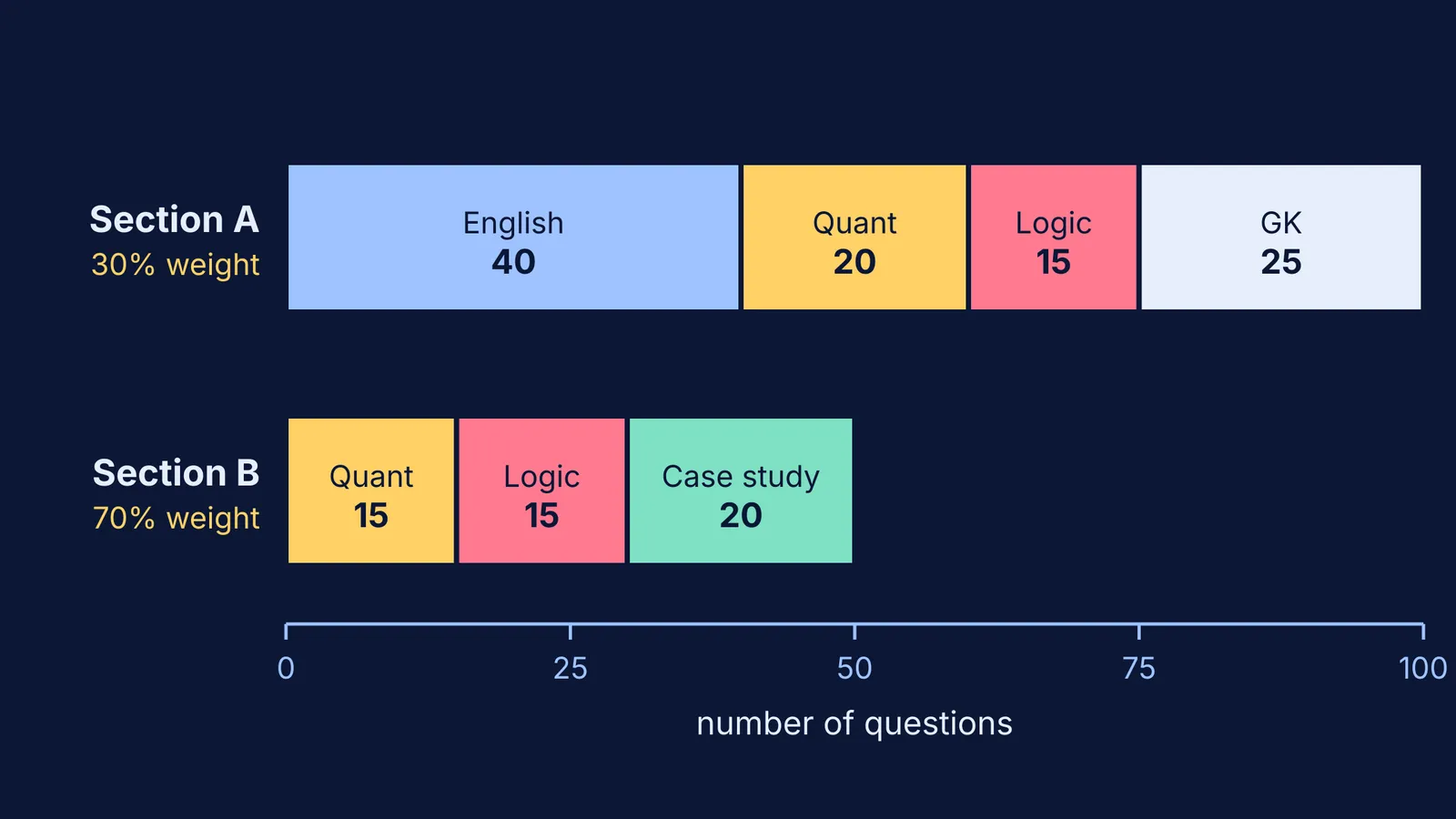
B.FTech applicants take only the computer-based General Ability Test, in two sections (NIFTEE 2027 bulletin, Chapter 3 and Annexure II):
Section A, 100 questions in 120 minutes: 40 communication and English, 20 quantitative, 15 analytical and logical, 25 general knowledge and current affairs.
Section B, 50 questions in 60 minutes: 15 quantitative, 15 analytical and logical, 20 case study.
Each right answer earns 1 mark and each wrong one costs 0.25. Worked example: in Section B you attempt 40 questions, 30 right and 10 wrong. Your score is 30 minus 2.5, so 27.5 out of 50. Four wrong answers cancel one right one, so before guessing, check whether you can rule anything out.
A 10-week plan for 10 January
By 16 November: read NIFT's Admission Guidelines 2027, apply, and decide between B.FTech alone or B.Des too.
Weeks 1 to 6: 40 minutes of quantitative and logical practice a day. For every miss, find the step where your method went wrong.
Every day: 20 minutes of news, including business stories about clothing brands, exports and factories, for general knowledge and case studies.
Weeks 5 to 9: two case studies a week, answered in your own words before you look at the options.
Weeks 8 to 10: full timed mocks, 120 minutes then 60, marked with the 0.25 penalty.
For step 2, the Fermi Problem Library has worked problems with a step-by-step solver that explains the reasoning, so you can see where a method broke.
Before you pay the fee, open the bulletin's eligibility table and read it together at home.