On this page
When you think of engineering, computer science or mechanical branches might come to mind first. However, the Indian textile and apparel industry is the country's second-largest employer after agriculture. According to Invest India, the sector employs over 45 million people.
Despite the scale of the industry, many students are unsure about what a B.Tech in Textile Engineering (often called Textile Technology) entails. If you are exploring your options, it helps to know exactly what happens inside the classrooms and laboratories of this branch.
What is Textile Engineering?
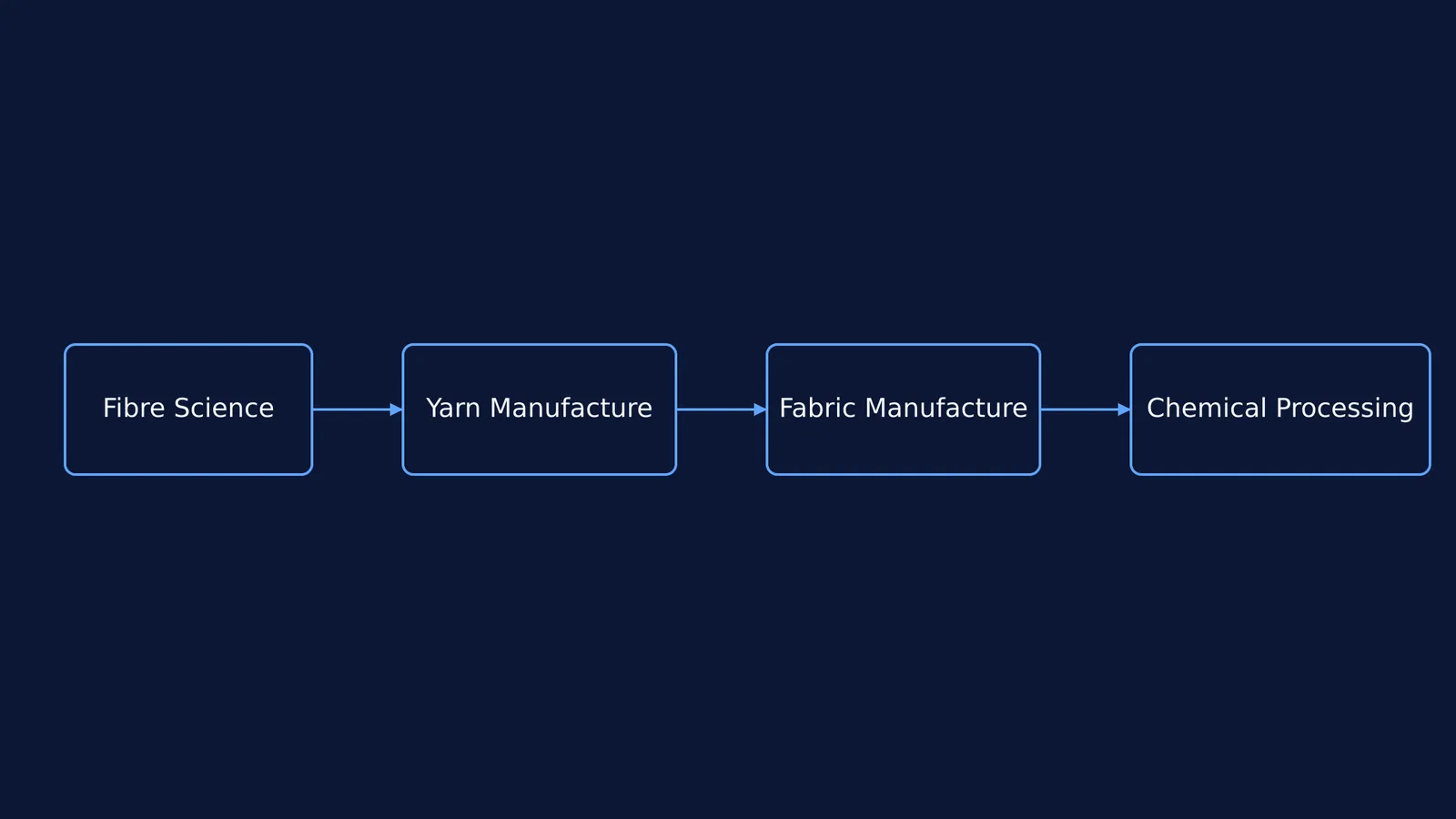
Textile engineering is the application of scientific and engineering principles to the design, control and operation of textile processes and machinery. It covers the entire journey of a material: from raw natural or synthetic fibres, to spun yarn, to woven or knitted fabrics, and finally to dyed and finished garments.
Historically, it focused heavily on the mechanics of looms and spinning wheels. Today, it incorporates polymer chemistry, advanced materials science and computer-aided design.
Textile engineering course: what you study?
A standard four-year B.Tech curriculum in India, followed by institutions like the IITs, NITs and state universities under the AICTE model curriculum, is divided into foundational science, core textile processes and modern electives.
Years 1 and 2: The Foundation
Like most engineering disciplines, the first year covers basic engineering mathematics, physics, chemistry, programming and engineering drawing. By the second year, students shift to the foundational building blocks of the industry:
Fibre Science: You study the physical, chemical and structural properties of natural fibres (like cotton and wool) and synthetic polymers (like polyester and nylon).
Yarn Manufacture: This covers the machinery and physics behind converting raw cotton bales into continuous yarn through spinning, carding and drafting.
Years 2 and 3: The Core Processes
In the middle of the degree, the focus moves from yarn to fabric.
Fabric Manufacture: You learn the mechanics of weaving, sizing, warping and knitting. This is heavily mechanical, dealing with the motion and tension of thousands of threads simultaneously.
Chemical Processing: This is the chemistry side of the branch. You study how fabrics are pre-treated, bleached, dyed, printed and finished to make them waterproof or flame-retardant.
Textile Testing: You learn statistical quality control and use laboratory instruments to test the tensile strength, colour fastness and durability of fabrics.
Year 4: Specialisation and Technical Textiles
The final year is usually reserved for industrial training, major projects and electives.
One of the most important electives today is technical textiles. This is a fast-growing niche that focuses on the performance of a fabric rather than its appearance. The Indian government is heavily promoting this segment, projecting the overall textile market to reach $350 billion by 2030. Applications include:
Medical textiles: Surgical sutures, implants and antibacterial fabrics.
Automotive textiles: Seatbelts, airbags and tyre cords.
Geosynthetics: Fabrics used in civil engineering to reinforce soil and prevent erosion.
If you want to explore the mechanical and chemical principles behind these materials, you can bring a topic to Fermi's AI tutor. It works out what you already know from school physics and chemistry, builds a plan for the session, and teaches through it—drawing the figure, writing on a board, and checking your understanding as it goes.
What does a textile engineer do?
Graduates of this branch do not typically sew or design fashion garments; they manage the industrial processes that make the materials. Career paths generally fall into these areas:
Production and Mill Management: Overseeing the operations, efficiency and maintenance of spinning or weaving machinery on the factory floor.
Quality Control: Working in laboratories to ensure that batches of fabric meet strict international safety and durability standards before they are exported.
Research and Development: Working with chemical companies or specialised textile manufacturers to invent new synthetic fibres or eco-friendly dyeing processes.
Technical Sales and Sourcing: Bridging the gap between the factory and fashion brands, advising buyers on fabric specifications, costs and lead times.
The scope of the branch is closely tied to the manufacturing sector. As the industry moves towards sustainable materials and high-performance technical fabrics, the demand for engineers who understand both the mechanics of production and the chemistry of the fibres continues to grow.