
On this page
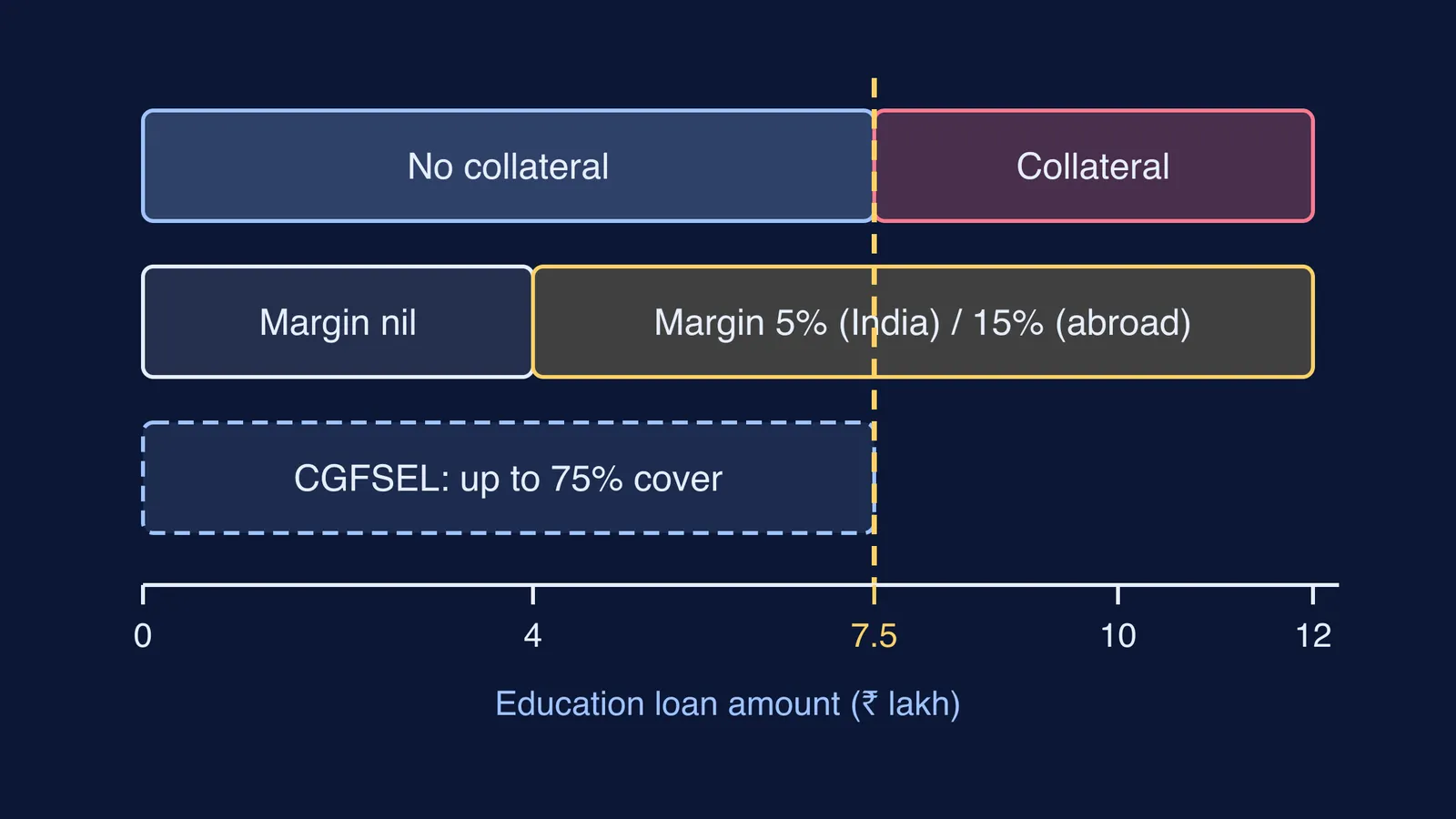
If your family has no property to pledge, the number to remember is ₹7.5 lakh. Below it, a parent or guardian signing as co-borrower is usually enough. Above it, banks ask for collateral, unless your college is on a special list.
Up to how much can you get an education loan without collateral?
Under the standard scheme most banks follow, the answer is ₹7.5 lakh. SBI's Student Loan Scheme page states that loans up to ₹7.5 lakh need only a parent or guardian as co-borrower, while larger loans also need tangible collateral security. Bank of Maharashtra's Model Education Loan Scheme draws the same line and says eligible loans should be covered under the government's guarantee fund scheme for education loans.
Also check the margin, the share of costs your family pays. In both banks' terms, the margin is nil up to ₹4 lakh, and 5% for studies in India or 15% for studies abroad above ₹4 lakh.
What is CGFSEL, and who does it protect?
CGFSEL, the Credit Guarantee Fund Scheme for Education Loans, is a government fund that repays part of a bank's loss on a bad education loan. Its scheme text, published by Punjab National Bank, says it came into force on 16 September 2015 and sets a maximum loan of ₹7,50,000 "without any collateral security and third party guarantee".
The guarantee covers up to 75% of the amount in default, and the scheme is run by the National Credit Guarantee Trustee Company (NCGTC). The same document caps interest on covered loans at 2% a year above the bank's repo-linked lending rate.
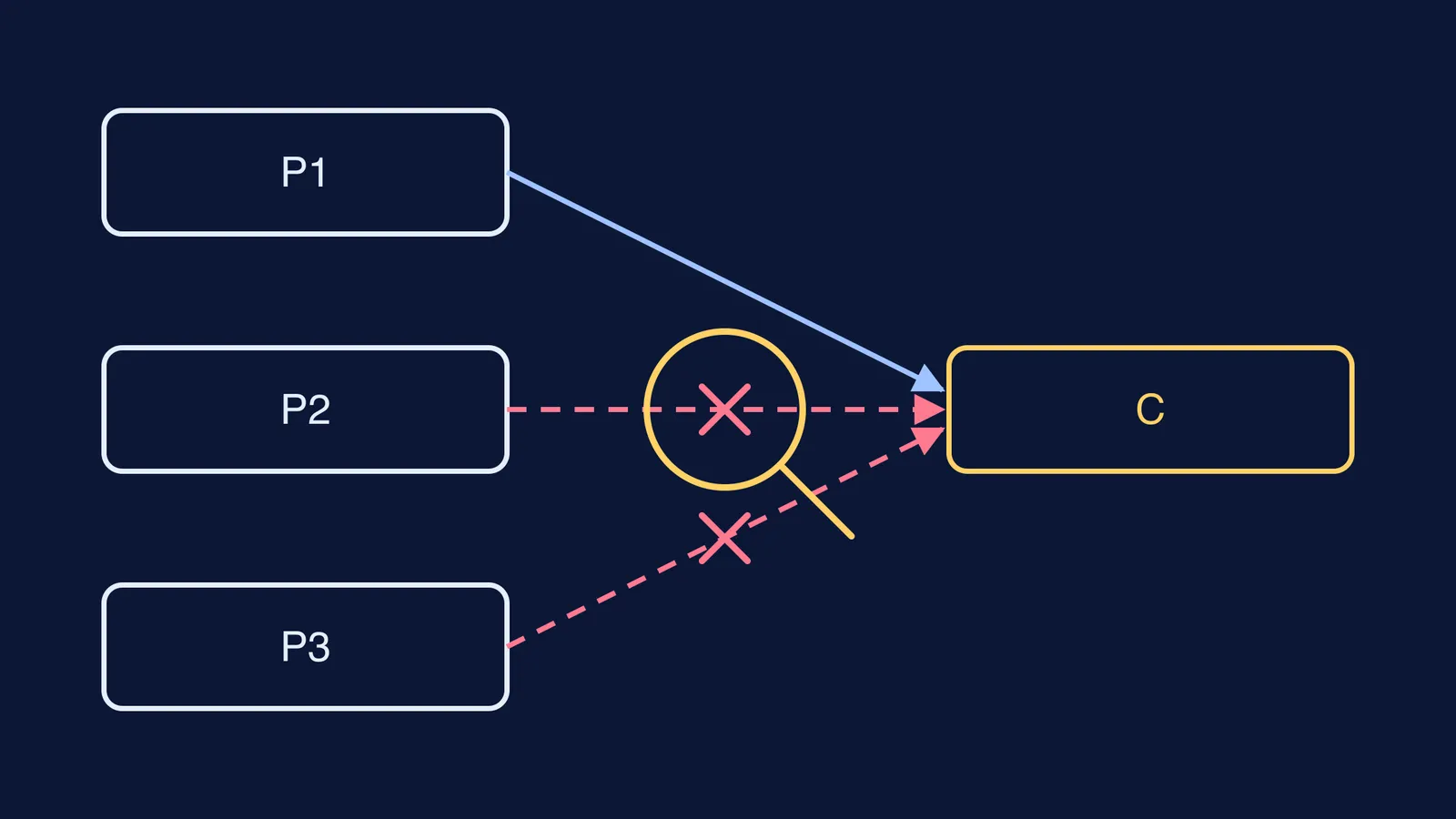
The guarantee protects the bank, not you. Under the scheme text, a covered loan is non-dischargeable and the bank registers both borrower and co-borrower with a credit bureau, so you still owe what you borrow.
Why does the no-collateral limit differ by bank and course?
Two things lift the ₹7.5 lakh default.
The first is PM-Vidyalaxmi. The Union Cabinet approved the scheme on 6 November 2024: students admitted to a Quality Higher Education Institution (QHEI) can get a collateral-free, guarantor-free loan to cover the full tuition and other course expenses. QHEIs are picked from NIRF rankings, and the list, which started with 860 institutions, is to be updated every year. Loans up to ₹7.5 lakh carry a 75% government credit guarantee. Families earning up to ₹8 lakh a year who get no other government scholarship or interest subvention can get a 3% interest subvention during the moratorium on loans up to ₹10 lakh.
The second is the bank's own premier-institute product. SBI's Scholar Loan terms (November 2024 version) allow up to ₹50 lakh without security for its List AA institutes, ₹40 lakh for List A, ₹30 lakh for List B and ₹7.5 lakh for List C. Banks keep different lists, so limits for the same college can differ.
A worked example shows how close to the line a loan can land. Say your four-year course will cost ₹8 lakh in total (an illustrative figure) at a college that is not on any special list.
The cost is above ₹4 lakh, so the 5% margin for studies in India applies. If the bank takes it on the full cost, your family pays ₹40,000.
That leaves a loan of ₹7.6 lakh, just over the line, so the bank can ask for collateral.
If the family pays ₹50,000 instead, the loan stays at ₹7.5 lakh, inside the no-collateral limit.
What documents should you take to the bank branch?
SBI's document list is a useful model.
Mark sheets for Class 10, Class 12 and graduation (if any), and your entrance exam result
Proof of admission and the college's schedule of expenses
Scholarship or free-ship letters, and a gap certificate, if they apply
Co-borrower income proof: salary slip and Form 16 or ITR, or business address proof and ITR if self-employed
Last six months' bank statements for all applicants' accounts
Property papers, only if the loan needs collateral
The Apply Now button on SBI's page leads to the PM-Vidyalaxmi portal, so register there before your branch visit. Our guide on how to apply for an education loan step by step walks through the portal.
What should you ask at the branch?
Take these questions, written down:
"Is my college on your premier list, or a PM-Vidyalaxmi QHEI?"
"Up to what amount is this loan without collateral, for this course?"
"What margin will we pay, and is this loan covered under CGFSEL?"
"What is the interest rate, and does interest build up during the moratorium?"
For the last one, read what the moratorium period costs, and check whether your family income qualifies for the education loan interest subsidy.
Once the loan is sorted, the next worry is the first-year syllabus. Fermi's AI tutor can work out what you already know and build a plan for the session, so you start with a clear next step.