On this page
Every few minutes your phone might have something new: a message, a like, a video. Not knowing which one is coming may matter more than any single notification. Here is what the research actually supports, what it doesn't, and a set of phone rules you can start tonight.
Does phone use affect dopamine?
Probably, in the same ordinary way that other rewarding activities do, though no study we found has measured dopamine while people use their phones. In 1998, researchers using PET scans found evidence that dopamine is released in the human striatum while people play a video game, with the biggest effect in the ventral striatum. The authors described it as, to their knowledge, the first time a behaviour had been shown to release dopamine in humans.
Phones are harder to study in a scanner, but social feedback on a phone-style app does engage reward-related brain regions. In a 2016 brain-imaging study that simulated Instagram, teenagers who saw photos with many likes showed more activity in regions involved in reward, social thinking and attention than when photos had few likes. They were also more likely to like those photos themselves.
Note what this study measured: brain activity, not dopamine levels. Headlines often skip that step.
What does dopamine actually do?
Two findings explain most of the phone story.
First, dopamine neurons signal prediction errors. A classic paper by Schultz, Dayan and Montague in Science describes dopamine neurons whose output apparently signals changes or errors in the prediction of rewarding events. A reward you didn't see coming produces a bigger signal than one you expected.
Second, dopamine is about wanting, not liking. Berridge and Robinson00019-8) found that rats with up to 99% of dopamine removed from key brain areas still showed normal pleasure reactions to sweet tastes. They concluded that dopamine is needed for "wanting" rewards, but not for "liking" them.
Put these together and the phone makes sense. You don't know whether the next buzz is your best friend or a sale alert. That uncertainty can keep the wanting high, even when checking turns out to be dull.
Which dopamine claims are myths?
"Dopamine is the pleasure chemical." The evidence above points to wanting and learning, not pleasure itself.
"Your phone gives you a drug-like dopamine hit." The video game study found dopamine release during an ordinary goal-directed task. None of the studies we read measured dopamine during phone use or showed that phones damage the dopamine system.
"A dopamine detox resets your brain." We found no study measuring such a reset. What you can change is the cues around you.
"Switching notifications off completely is best." Not quite, as the next section shows.
How do you set phone rules that help you study?
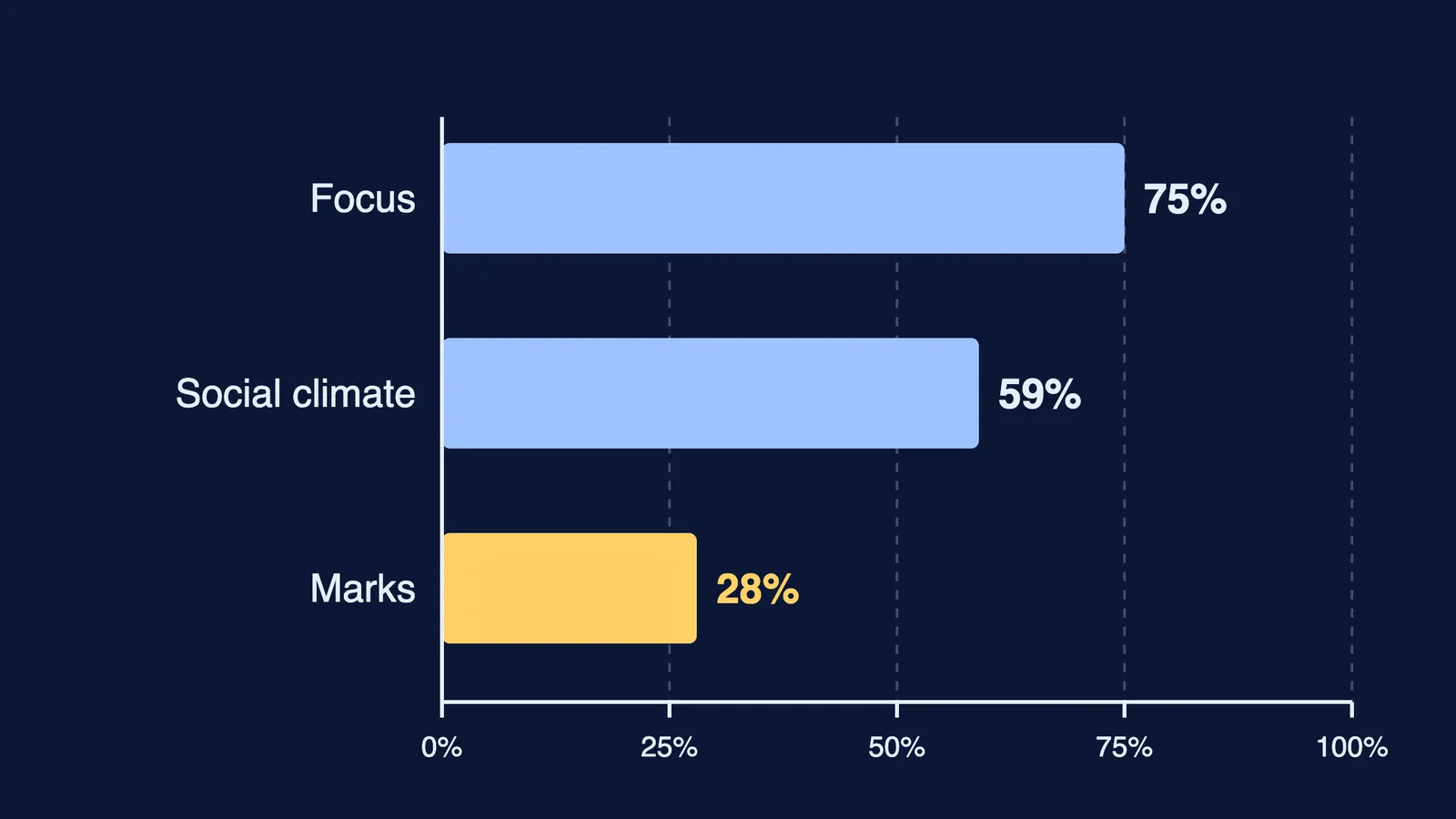
In a randomised field experiment with 237 people, those whose notifications were batched three times a day felt more attentive and productive, were in a better mood and felt more in control of their phones than people who got notifications as usual. People who got no notifications at all saw few of those benefits and reported higher anxiety and fear of missing out.
So the goal is predictable checking, not zero checking. Here is a plan built on that idea.
Batch it. Pick three check-in times a day, for example after school, after dinner and before your wind-down. Use Focus or Do Not Disturb mode for the rest.
Move the cue. Keep the phone out of sight while you study. Our post on what studies say about keeping your phone in another room covers the evidence.
Make checking boring. Turn off badges and previews, so the phone gives you less to wonder about.
Test it on yourself. Try a one-week notification experiment and note how many pages you finish per session.
Protect sleep. Charge the phone outside the bedroom; here is how families handle the phone at night.
A worked example: a Class 12 student studying 6 pm to 9 pm sets one check at 7:30 pm for ten minutes and another at 9 pm. Friends are told, "I reply at 7:30 and 9." The phone sits on the kitchen shelf in between.
Often you reach for the phone because the next step in your work is unclear. Fermi's AI tutor can work out what you already know and build a plan for the session, so you sit down to a clear next step.
For parents, a script to try instead of confiscation: "I'm not taking your phone. Let's agree on three check times and where it stays while you study, and we'll try it for a week."
When is it more than a habit?
If phone use comes with constant low mood, panic when you're away from it, or sleep that has fallen apart for weeks, talk to someone you trust or a doctor. In India, the free Tele MANAS helpline is on 14416 or 1800-89-14416.