
On this page
Applying abroad from India is not one big exam. It is a chain of small deadlines across two school years. Here is the order, built around 2027 entry, with every official deadline checked against its source.
When should you start planning to study abroad?
Start in Class 11. Most applications ask for three things that take time to build: your school record, a teacher's reference, and your own writing. Class 11 is when teachers get to know your work, and early enough to fix a weak subject.
If a physics or maths topic never quite made sense, fix it now, not in the busy months of Class 12. The Fermi Concept Library has a lesson for every concept in physics, chemistry, biology, mathematics and computing, each with its place in the map.
What should you do in Class 11?
April to June: choose countries before colleges. The UK uses one central system, UCAS; many US colleges use the Common App or their own portal.
July to September: decide which tests your countries need. If you are aiming at the US, read when Indian students should take the Digital SAT and book a date that avoids your school exams.
October to December: start a simple log of activities, projects and competitions, with dates and what you actually did. Essays and recommendations draw on it later.
January to March: protect your Class 11 final marks. Everything else can wait a few weeks.
What is the Class 12 timeline for UK and US applications?
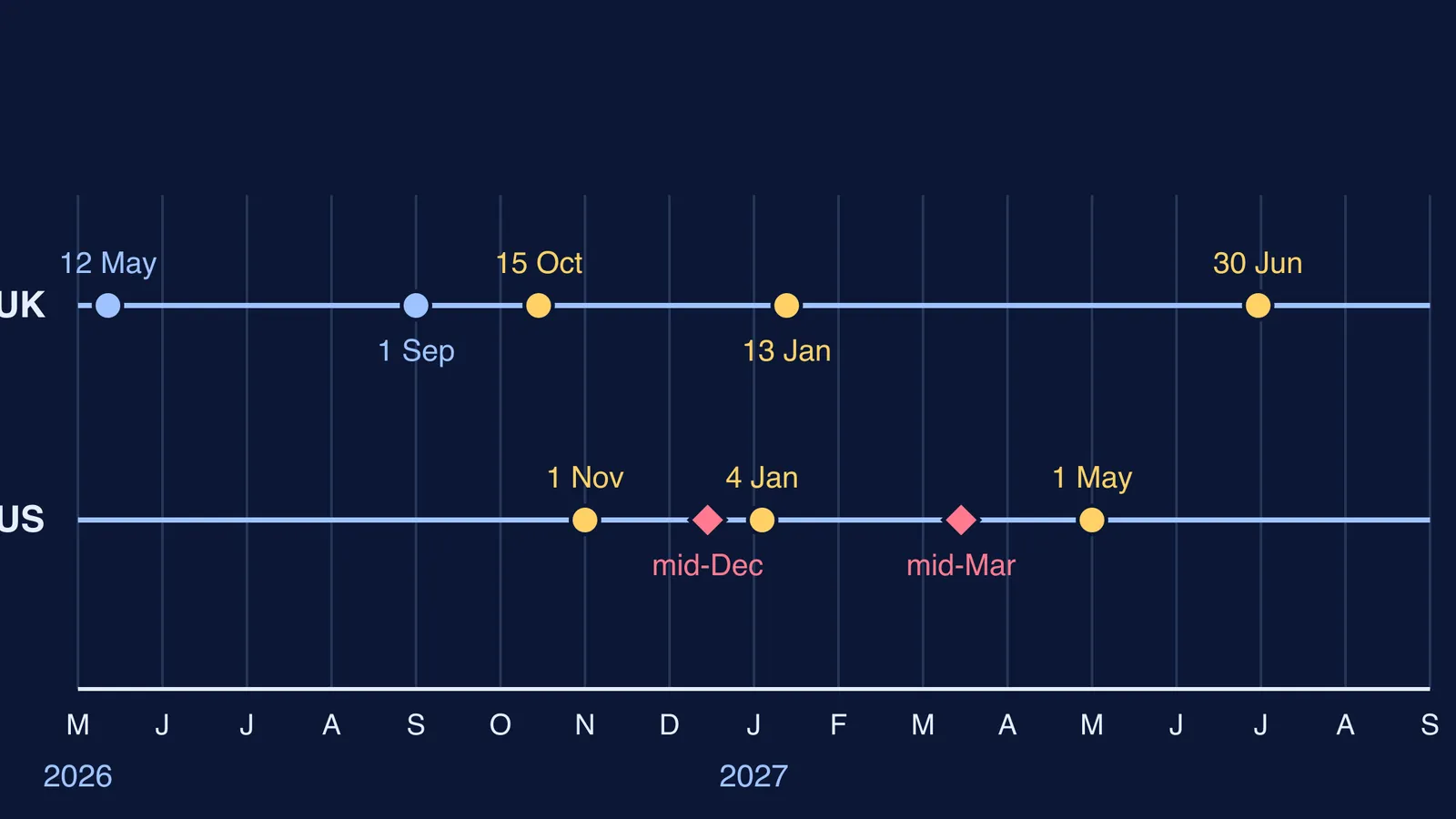
The UCAS dates for 2027 entry are fixed and public. Applications opened on 12 May 2026. Completed applications can be sent from 1 September, and you need a reference before you can send yours. The deadline for Oxford, Cambridge and most medicine, dentistry and veterinary courses was 15 October 2026 at 18:00 UK time. The equal consideration deadline for most other courses is 13 January 2027 at 18:00 UK time. For more detail, see our guide on how to apply to UK universities through UCAS from India.
In the US, each college sets its own dates. The Common App opened its 2026-27 season with over 1,200 member institutions. As one example, MIT's first-year deadlines are 1 November for Early Action, with decisions in mid-December, and 4 January for Regular Action, with decisions in mid-March. Admitted students reply by 1 May.
Put together, a Class 12 year looks like this:
April to May: ask two teachers whether they will write a reference, and ask the school office which documents it can issue and how long each takes.
June to August: draft your personal statement or essays, and finalise your list of universities.
September to October: send UCAS applications for early-deadline courses.
November: US early deadlines, such as MIT's on 1 November.
December to January: US regular deadlines and the UCAS deadline on 13 January.
February to March: board exams. Check every portal once a week, not every hour.
March to May: decisions arrive; compare offers and reply before each college's date.
The board exam months and the application months overlap, so plan revision tightly. Fermi's AI tutor works out what you already know and builds a plan for the session, so an evening between deadlines starts with a clear next step.
When do you apply for a student visa?
Only after an offer. For the UK, you need an offer from a licensed student sponsor, and the UK government says the earliest you can apply from outside the UK is 6 months before your course starts. You will usually get a decision within 3 weeks.
For the US, the college issues a Form I-20 once you are accepted. According to Study in the States, you need information from it to pay the I-901 SEVIS fee, and you are expected to bring the original I-20 to your visa interview. Guidance from 2023 lets consular officers issue a student visa up to 365 days before your programme starts, but you can enter the US no earlier than 30 days before it. Our guide on preparing for a student visa interview after Class 12 covers the interview itself.
What should be on your application checklist?
Copy this onto one page and tick it off:
Passport valid well past your course start date.
University list, with each deadline written in Indian time.
Test dates booked and scores sent where asked.
Two teachers agreed to write references, asked two months ahead.
School documents requested, as each university lists them.
Essays drafted in your own words and read by one adult.
Offers answered before each reply date.
Visa papers ready: offer or Form I-20, and fee receipts.
Pick your countries this month, then put the first three dates from this timeline in your calendar today.