On this page
Your Class 9 child asks why an ice cube floats, and you last thought about density decades ago. Asking an AI to teach you first is a sensible move, as long as you keep the right order: you learn, you check against the book, and then your child does the thinking.
Can I use AI to understand my child's homework before helping?
Yes, and the order matters more than the tool. In a 2025 field experiment published in PNAS, Hamsa Bastani and colleagues gave nearly a thousand high school maths students access to GPT-4 tutors. Students using a plain ChatGPT-style version scored 48% higher while they had it during practice, but once access was taken away they scored 17% lower than students who never had it. A second version, with prompts designed to safeguard learning, largely removed that harm. The authors' explanation: without guardrails, students used the AI as a crutch.
When the AI explains the topic to you, your child still gets to do the thinking. When it hands your child the answer, the learning can be lost. Your help also has to be the right kind. A meta-analysis by Patall, Cooper and Robinson found that training parents to be involved in homework led to higher homework completion and fewer homework problems among elementary school children. It also found that different types of involvement relate differently to achievement, and that the type of involvement changes as children move through school.
What should I ask the AI first?
Give it context before the question. Tell it your child's class, board and chapter, then ask for an explanation aimed at you, not at your child. Try these, in order:
“My child is in Class 9, CBSE, and the homework is about why things float or sink. Explain it to me in plain words, at Class 9 level only.”
“What should a student already know before this topic?”
“Show me one worked example, but use a different object from the one in my child's question.”
“What mistakes do students usually make on this?”
“Ask me three short questions to check that I've understood.”
Don't skip the last one: if you can't answer the AI's questions, you aren't ready to ask your child any.
For a structured lesson rather than a chat, the Fermi Concept Library gives every concept in physics, chemistry, biology, mathematics and computing its own lesson and its place in the map.
How do I check the AI's explanation against the textbook?
The Bastani team's abstract makes the point plainly: generative AI is fallible, and users must check its outputs. Your child's textbook is what the teacher marks against, and NCERT puts its textbooks for Classes 1 to 12 online as PDFs, so you can open the same chapter in a minute.
Run a five-point check:
Words: does the AI use the same terms as the book, such as “density” or “buoyant force”?
Definition: does the book's definition say the same thing as the AI's, even if the wording differs?
Method: is the method one the chapter teaches, or something from a later class?
Units and symbols: do they match the book's?
References: if the AI quotes a page or exercise number, find it yourself. AI tools can make up NCERT page numbers that look convincing.
If the AI and the book disagree, the book and the teacher win.
How do I help without giving the answer?
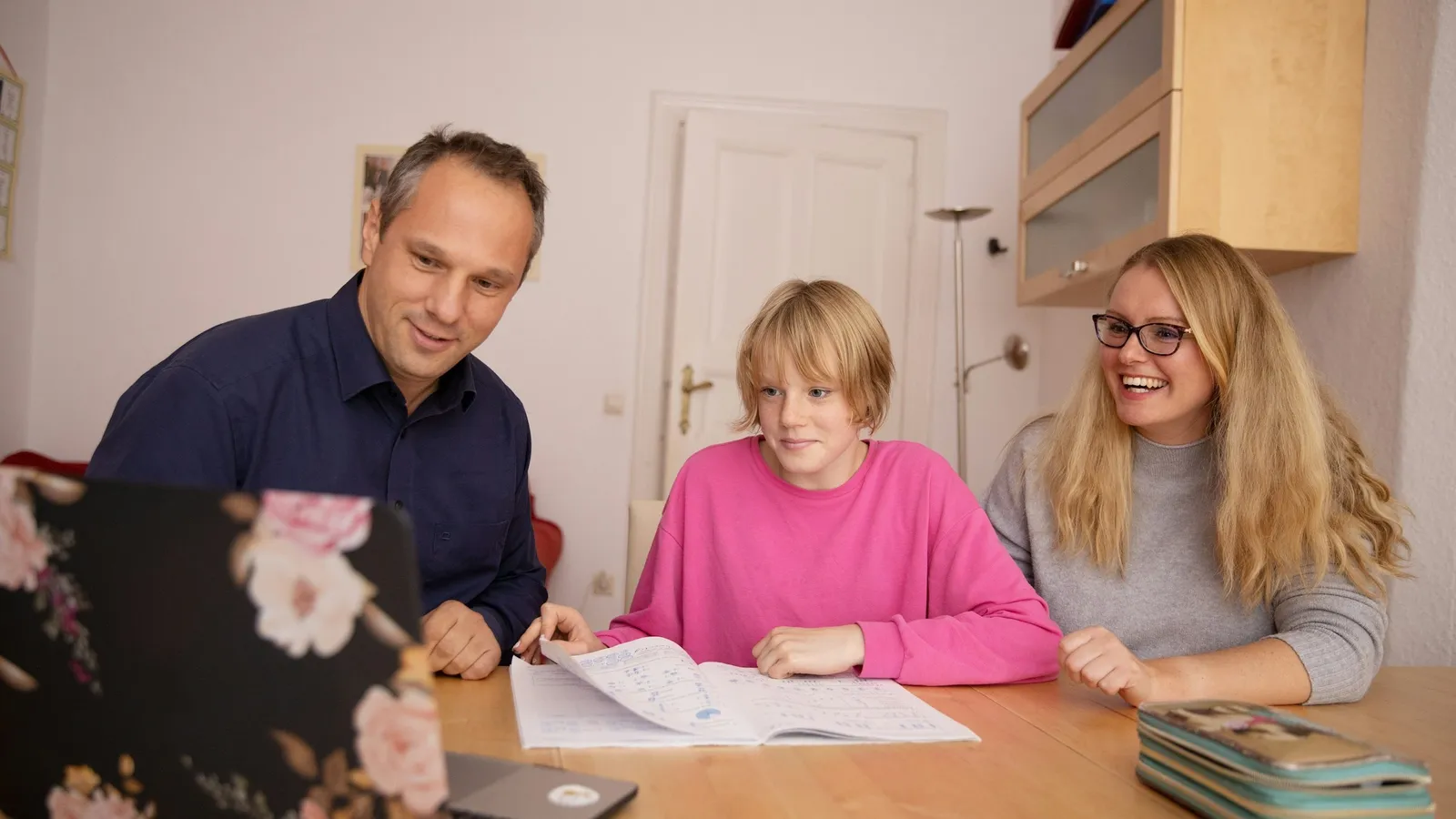
Sit beside your child, not across the table, and ask before you tell. Here is a script for the floating question:
Start with their idea: “What do you think decides whether something floats?”
Point to the book, not to you: “Which page talks about density? Read me the line.”
Give the smallest hint: “Which is heavier: a bucket full of water or the same bucket full of ice?”
Let them connect it: “So what does that tell you about ice and water?”
Ask them to explain it back: “Tell me the answer as if I'm your younger cousin.”
If they are still stuck after two hints, step up one level at a time. Our guide to the AI hint ladder for hard problems shows how to grade hints, and this one covers when to correct your child's homework and when to leave it.
If your child also uses AI directly, choose a tool that teaches rather than answers. Fermi's AI tutor notices where a student is stuck and decides whether to explain, ask or show, checking understanding as it goes.
What if my child is younger than 13?
Keep the AI on your side of the table. UNESCO's 2023 guidance on generative AI in education recommends an age limit of 13 for the use of AI tools in the classroom. For a younger child, use the AI to prepare yourself, then teach with the book, a notebook and things from the kitchen.
Tonight, pick one topic from your child's homework diary, try the five prompts on yourself, check the chapter, then close the laptop and sit with your child.