On this page
A request for a tattoo or a nose stud often arrives as a demand ("everyone in my class has one") and gets a reflex answer ("not in this house"). Both end the conversation. Curiosity works better: what they want, where on the body, and why now tell you how permanent and how risky the request is.
Is a tattoo or piercing safe for a teenager?
Most go well in clean conditions, but complications are real. The American Academy of Pediatrics (AAP) published its first clinical report on body modification in young people in Pediatrics in October 2017. Among people who get a piercing other than the earlobe, about 1 in 3 end up with a complication, according to the AAP's summary of that report. The same summary cites a 2014 survey in which 76% of 2,700 people said they believed a tattoo or piercing had hurt their chances of getting a job.
Unclean needles carry infection. The WHO's hepatitis B fact sheet lists tattooing and piercing among the ways the virus spreads. In India, anyone who has had a tattoo must wait 12 months before donating blood, under NACO guidelines and the 2020 amendment to the Drugs and Cosmetics Act, as a 2022 study in the Asian Journal of Transfusion Science notes.
Then there is permanence. The AAP's parent page on tattoos says removal is "difficult, expensive, and only partially effective".
What should I say when my teenager asks for a tattoo?
Start with questions, not a verdict, and hear each answer out before you reply:
"What exactly do you want, and where?"
"Why this design, and why now?"
"How would you feel about it at 25, in an interview, or in a family wedding photo?"
"Who would do it, and how did you find them?"
"What would you do if it got infected?"
Then say where you stand, honestly. A script many families can use: "I'm not saying yes today, and I'm not saying never. This is permanent, so let's give it time and do the checks together. If you still want the same design after the wait, we'll talk again and decide."
Earlobe piercing, which many Indian families do in childhood, can usually move faster; other piercings and every tattoo deserve the slower route. For the tone of the talk, see how to talk to a teenager without arguing.
How long should the waiting period be?
This is a family decision, not a medical rule. What matters is that the wait is agreed, written down and kept by both of you. A plan we suggest:
Tattoo: three months. Your teen draws the design, chooses the spot and keeps the drawing as their phone wallpaper. If they still want the identical design at the end, you visit studios together.
Piercing other than the earlobe: four weeks, plus a plan for the healing time.
Earlobe piercing: a week, to choose a clean place.
Natural henna (mehndi) is a familiar way to try a design on the skin during the wait. Avoid "black henna": the US FDA says it is often blackened with a coal-tar hair dye containing PPD, which can cause dangerous skin reactions in some people. Henna typically gives a brown, orange-brown or reddish-brown colour, the FDA notes.
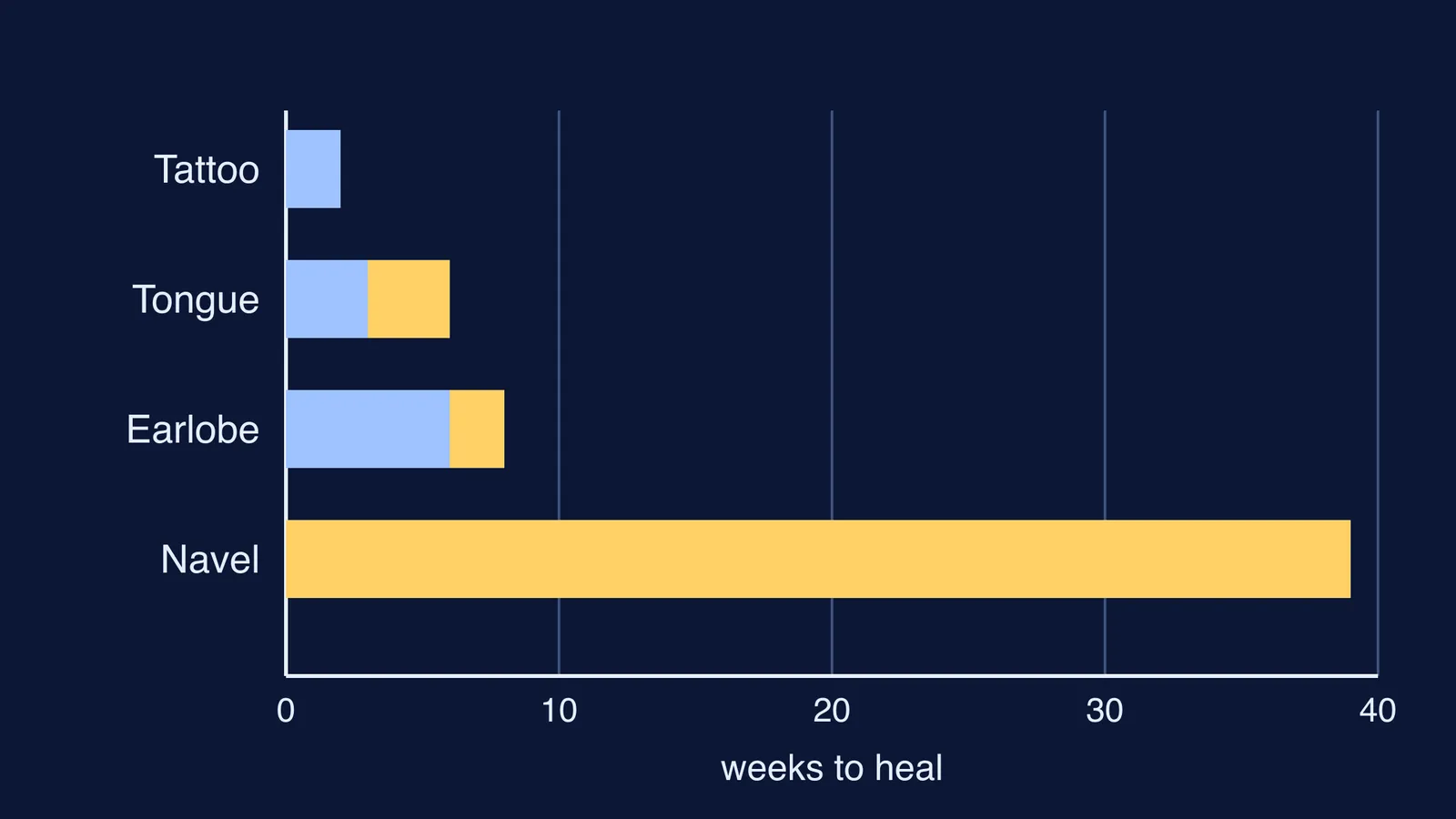
Plan the date around healing. A review in American Family Physician gives healing times of 3 to 6 weeks for a tongue piercing, 6 to 8 weeks for an earlobe and up to 9 months for a navel piercing. The AAP's tattoo page says tattoos generally take about 2 weeks to heal. Keep those weeks clear of board exams, sports trials and school trips.
What hygiene checks should we do at the studio?
Go together and look before you book. The AAP's tattoo advice for parents sets the standard; use it as your checklist:
New, sterilised, disposable needles.
The artist washes and dries their hands and puts on a new pair of disposable gloves.
New ink for each client; extra ink is never poured back into the bottle.
A room as clean as a dentist's clinic.
Your teen's hepatitis B and tetanus vaccinations are up to date; check the vaccination card with your doctor.
Add two of your own. Ask the studio what it needs from under-18s; a studio that asks nothing about age is a warning sign. And decide in advance which doctor you would call if the area swells, bleeds or looks infected.
What if the answer is still no?
Give the real reason and set a date to revisit. A no with a reason and a date is easier to accept than a closed door. Our post on a teen who wants hair dye against school rules uses the same give-and-take.
If your teen gets curious about how skin heals during the wait, the Fermi Concept Library covers every concept in physics, chemistry, biology, mathematics and computing.
The AAP report also separates body art from self-injury. If you notice cuts or burns, or your teen seems very low, speak to your doctor or call Tele MANAS on 14416, the government's toll-free mental health helpline.
This week, ask the five questions, write the waiting deal on one page, and put the review date on the family calendar.