
On this page
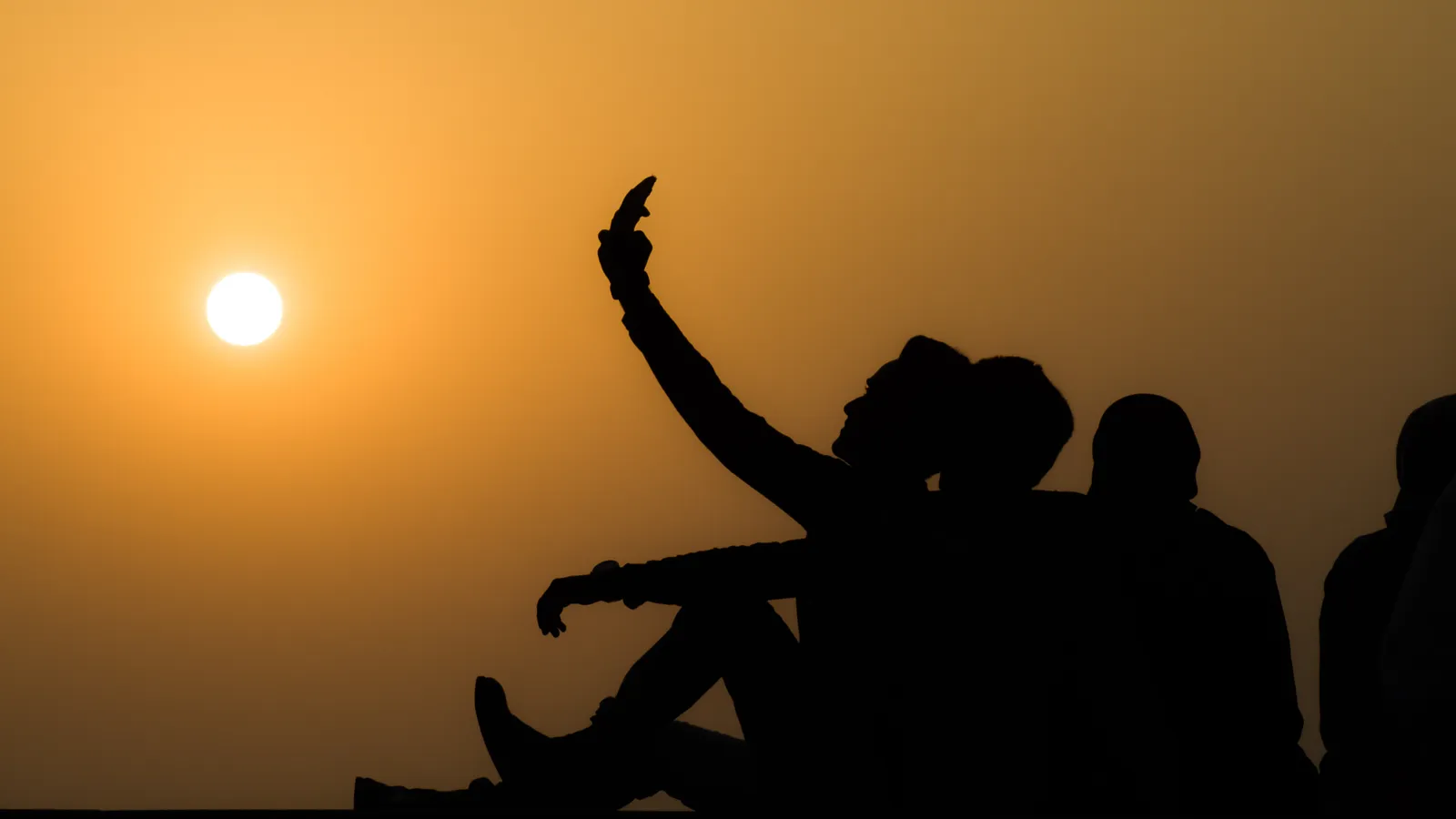
If your teenager never posts a photo without smoothing their skin or slimming their face first, you are not alone, and it is not automatically a crisis. What matters is whether the habit is play or pressure.
Why does my teen always use beauty filters?
Filters are built into many camera and social apps, friends use them, and nobody wants to be the one unfiltered face in the group chat.
There is also a physics reason. A selfie taken about 12 inches (30 cm) from the face makes the base of the nose look about 30 percent wider than a photo taken from 5 feet away, according to a model by Brittany Ward, Max Ward, Ohad Fried and Boris Paskhover published in JAMA Facial Plastic Surgery and summarised in the Rutgers release on ScienceDaily. So the close-up front-camera photo is a distortion too, and a filter can feel like a fix for it.
What does research say about filters and how teens see themselves?
Editing, not just posting, is the warning sign. In a survey of 101 Year 7 girls in Australia (average age 13), those who regularly shared selfies reported more body dissatisfaction and more concern about weight and shape. Among those girls, the ones who edited their photos more and invested more in their photos had higher concerns, even after accounting for general media use (McLean and colleagues, International Journal of Eating Disorders, 2015).
Editing can make you feel worse in minutes. In an experiment with 130 women aged 18 to 30, taking and then editing a selfie raised negative mood and facial dissatisfaction, and the more someone edited, the bigger the rise in facial dissatisfaction (Tiggemann, Anderberg and Brown, Body Image, 2020).
Seeing the unedited version helps. In a study of 305 women aged 18 to 30, viewing "Instagram vs reality" posts that put an edited photo next to the original led to less body dissatisfaction than viewing the idealised photos alone (Tiggemann and Anderberg, New Media and Society, 2020).
The limits: most participants were girls or young women in Australia, the first study shows a link rather than a cause, and the experiments measured short-term feelings. These studies do not show that an occasional filtered photo causes harm. Heavy editing and a lot of worry about how photos turn out tend to go with feeling worse.
How do I talk to my teen about filters without a fight?
Start curious, not critical. "You look fake" shuts the conversation down. Our guide to talking to your teen without it turning into an argument covers the basics. Try these prompts on a walk or in the car:
"Which filter do your friends use most? Why that one?"
"Show me a photo you liked before you edited it. What did you change?"
"Do you ever see someone in person and think they look different from their posts?"
"Is there anything you won't post without a filter? What would happen if you did?"
"What do you like about how you look that a filter can't add?"
Listen more than you talk. If looks are already a sore subject, see our guide on arguments with teens over clothes and appearance first. Photo habits also connect to privacy, which our talk about deepfakes and photo sharing covers.
How does the no-filter photo challenge work?
Do this as a family, parents included, for seven days. Nobody has to post anything.
Day 1: Count. Everyone notes how many photos of themselves they edit today. No judging.
Day 2: The distance test. Take one selfie at arm's length and one from about 1.5 metres away (use a timer). Compare them side by side.
Day 3: Before and after. Each person finds the original of one old edited photo and says what the edit changed.
Day 4: Light, not filters. Take portraits by a window, outdoors and under a tube light.
Day 5: Photos of each other. Take candid photos of one another.
Day 6: Filter-free share. Each person shares one unfiltered photo they like in the family group.
Day 7: Review. Compare with Day 1's count. What felt hard, and what do you want to keep?
On Day 2, your teen can see for themselves that the short camera distance did the stretching, not their face. If they like seeing ideas rather than reading them, the Fermi Simulation Lab has interactive simulations for ideas that are easier to see than to read.
When should a parent worry?
Pay closer attention if your teen avoids being photographed at all, spends long stretches checking or editing their face, skips school or outings because of how they look, or talks about changing their appearance permanently. These are reasons to talk to a doctor or counsellor. In India you can call Tele MANAS, the government's free 24x7 mental health helpline, on 14416 (Press Information Bureau).
Tonight, try one prompt, and save the challenge for a week without exams.