On this page
Your teen has a point worth taking seriously. AI tools now write essays and solve textbook problems, so "why study?" is a fair question. The honest answer is neither "AI is hype" nor "jobs are finished". AI is changing which parts of work people do, and the parts left over need more understanding, not less.
Will AI really take all the jobs?
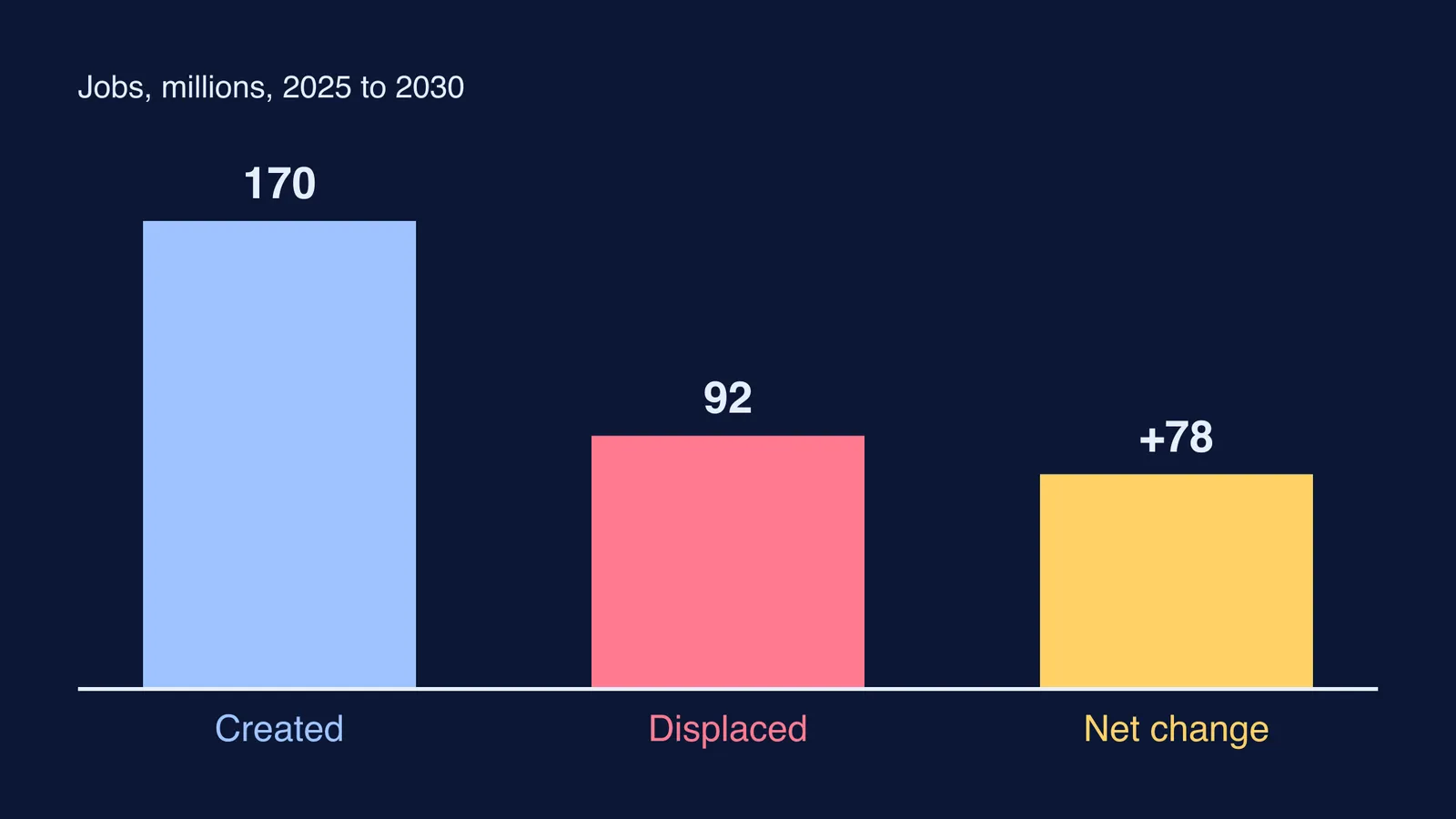
Start with a large global employer survey. The World Economic Forum's Future of Jobs Report 2025 gathered views from over 1,000 employers covering more than 14 million workers in 55 economies. They expect 170 million new jobs and 92 million displaced jobs between 2025 and 2030, a net gain of 78 million. The drivers include technology, the rising cost of living, climate change and demographic shifts such as ageing populations.
The same report says workers can expect 39% of their existing skills to be transformed or become outdated by 2030. The job your teen does at 30 will look different from today's version of it. That is an argument for learning how to learn, not for stopping.
Research on AI itself points the same way. A study by Tyna Eloundou and colleagues, later published in Science in 2024, estimated in its preprint that around 80% of the US workforce could have at least 10% of their work tasks affected by large language models, and about 19% could see at least half their tasks affected. "Affected" means some tasks could be done significantly faster at the same quality, not that the job disappears.
Which skills still hold value when AI can do the homework?
Analytical thinking is the core skill employers want most: seven in ten companies in the WEF survey called it essential in 2025. Resilience, flexibility and agility came next, then leadership and social influence. AI and big data top the fastest-growing skills, and creative thinking, curiosity and lifelong learning are also expected to rise.
Older evidence fits. Economist David Deming found that between 1980 and 2012, US jobs needing high levels of social interaction grew by nearly 12 percentage points as a share of the workforce, and jobs needing both strong maths and strong social skills saw particularly strong job and wage growth (Quarterly Journal of Economics, 2017).
AI can also help people learn on the job. In a study of 5,172 customer-support workers, an AI assistant raised issues resolved per hour by 15% on average (Brynjolfsson, Li and Raymond, 2025). Less experienced and lower-skilled workers improved in both speed and quality, while the most experienced saw small gains in speed and small declines in quality.
Does using AI instead of studying hurt learning?
In a field experiment with nearly a thousand high-school maths students, some were given a plain ChatGPT-style GPT-4 tool during practice (Bastani and colleagues, PNAS 2025). Their practice grades rose 48%. When the tool was taken away, their grades fell 17% and they did worse than students who never had it. The researchers found that, without guardrails, students tried to use it as a crutch. A version designed with safeguards for learning largely removed that harm.
What can you say at the dinner table?
Aim for curiosity, not a lecture. Here is a script you can adapt:
Agree first: "You're right that AI can already do a lot of what's in your textbook."
Ask: "Which jobs do you think it changes most? What would you still want a person for?"
Share one fact: "A big employer survey expects more jobs created than lost by 2030, but a lot of the skills inside jobs will change. The people who do well keep learning."
Share the maths study: "Students who leaned on ChatGPT in practice did worse on the test without it."
Hand over control: "What would make studying feel less pointless? Want to test it on one chapter?"
If they name a career, such as medicine, our piece on whether AI will replace doctors goes further, and these questions for exploring careers with AI turn the worry into a task. If the "pointless" feeling is about more than AI, read what to do when a teen says studying is pointless.
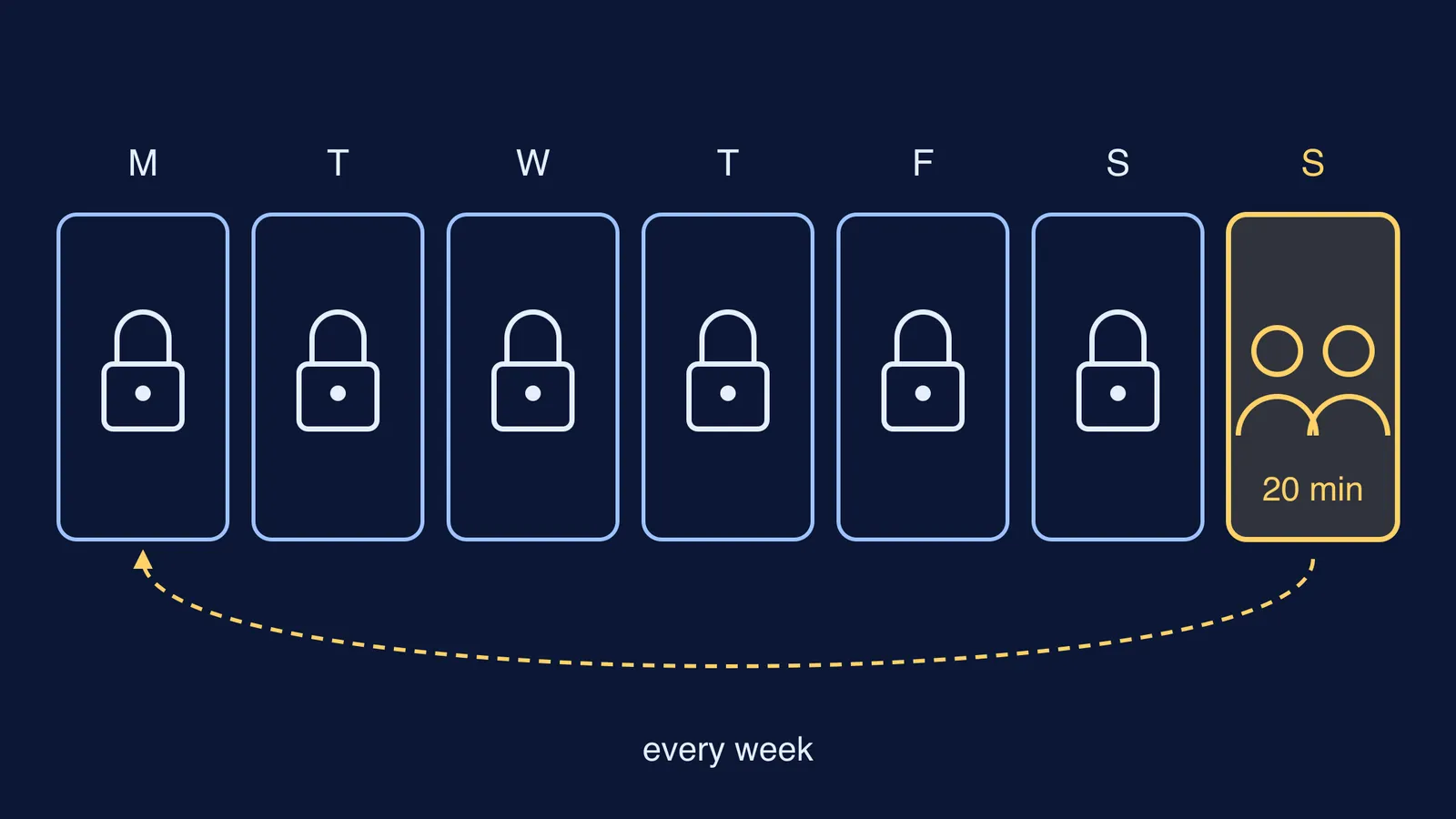
A 20-minute test to try together
Pick one physics, chemistry or maths question from this week's homework.
Ask an AI chatbot to solve it and save the answer.
Close the chat. Your teen explains the method aloud and checks each step: units, signs, and whether the final number is sensible.
Ask: "If the AI had made one mistake, would you have caught it?"
Change one number in the question and solve it without AI.
Steps 3 and 5 are where studying shows its value. Whatever they could not check is what to study next. To work through that gap, Fermi's AI tutor works out what they already know, builds a plan for the session and checks understanding as it goes, rather than handing over an answer.
If worry about the future turns into constant anxiety, low mood or trouble sleeping, talk to a school counsellor or doctor, or call the government's Tele MANAS helpline on 14416.