On this page
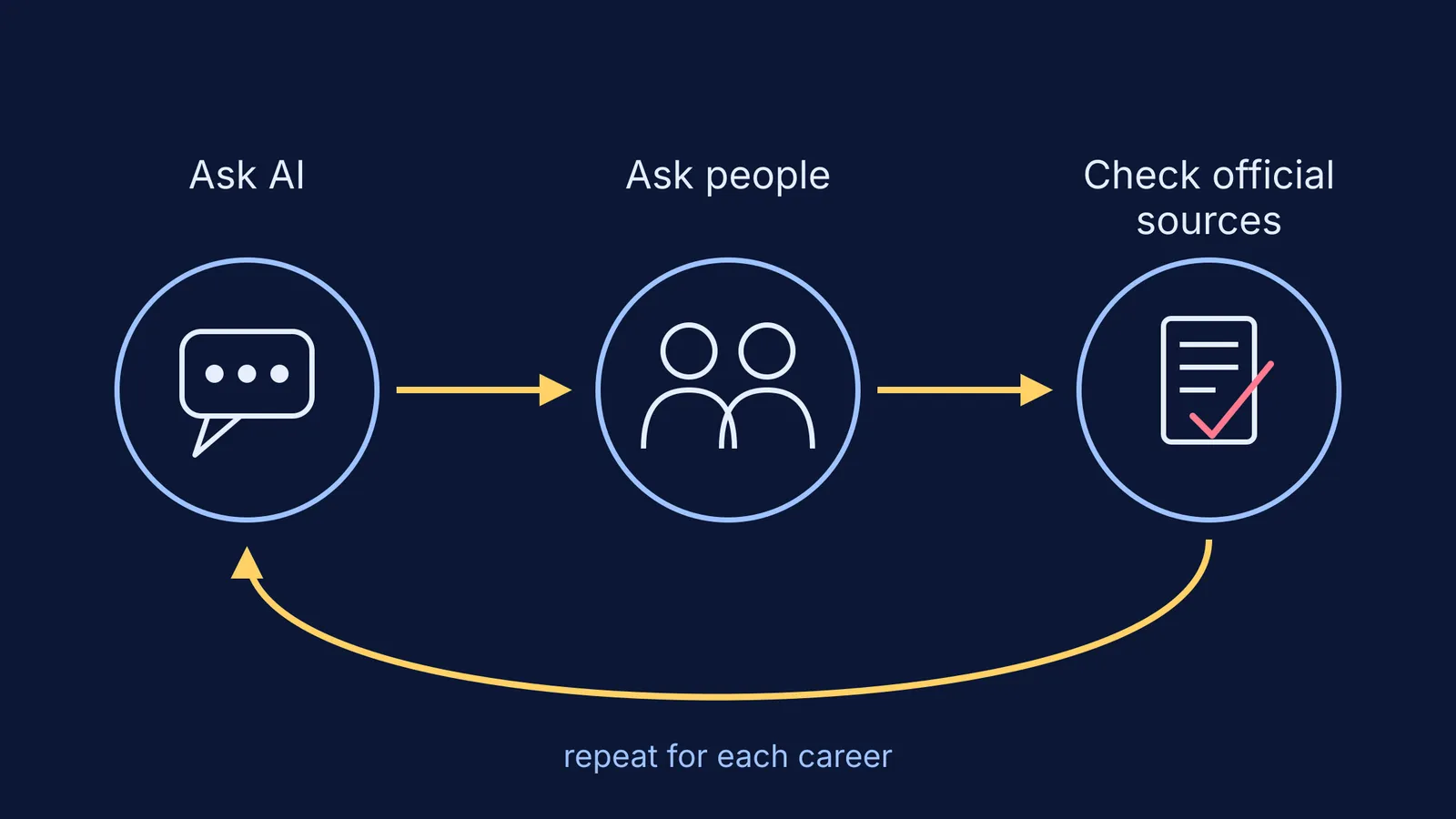
After Class 12, most students pick from the handful of careers they already know. An AI chatbot can widen that list fast: ask about a job you have never seen up close and you get a readable picture in minutes. The catch is that it can be wrong about exams, eligibility and pay, in the same confident tone it uses when it is right. So use AI to find good questions, then take them to people and official sources.
Can AI help you choose a career after Class 12?
It can help you explore. It should not choose for you. In the OECD's Dream Jobs? report, which used PISA 2018 data, 47% of 15-year-old boys and 53% of girls in 41 countries and economies expected to work in one of just 10 jobs by age 30. The report puts the problem in one line: "students cannot be what they cannot see."
AI is a cheap way to see more, and you can ask follow-ups at midnight without feeling silly. What it cannot tell you is whether a detail is current, or what the job feels like on a Tuesday afternoon.
What should you ask AI about a career?
Ask three sets of questions, one career at a time.
Daily work: "Describe a normal working day for a junior [job] in India. What takes most of the time? What is hardest in the first year?"
Entry routes: "List the usual routes into this job after Class 12: degrees, entrance exams, diplomas and apprenticeships. Name the body that runs each exam."
Skills: "Which school subjects and skills matter most? Which are learned on the job?"
Then add one line that makes checking easy: "Write every fact as a short numbered claim, and mark which ones I should verify."
How do you check what AI tells you?
Sort each claim by type and send it to the right place.
Exams and eligibility: the official exam body. The National Testing Agency lists the national entrance tests it runs, including JEE Main, NEET-UG and CUET-UG. For anything else, use the college's own admissions page.
Jobs, skills and counselling: the government's National Career Service portal, which offers career content, a "Find Counsellor" option and a toll-free helpline, 1514.
Daily work and pay: two or three people who do the job now, since one person's experience is not the whole field. Treat any salary figure from AI as unverified.
Talking to people does more than catch errors. Box 0.2 of the same OECD report describes a UK study by Elnaz Kashefpakdel and Chris Percy: after accounting for background and qualifications, taking part in career talks with someone from outside school at 16 was linked with better earnings at 26. Yet in PISA 2018, fewer than 40% of students, on average, took part in relatively simple career activities such as visiting a job fair, the report found.
For why chatbots state wrong facts so smoothly, see our post on why AI makes up sources.
What does this look like in practice?
Say Meera, in Class 12 with PCM, is curious about hotel management. Her AI chat produces three claims:
"Many hotel management institutes admit through NCHM JEE." The NTA site lists the Hotel Management Joint Entrance Examination, so the route is real. For participating institutes and dates, she reads the current information bulletin, not the chat.
"Juniors often work shifts, weekends and festivals." She asks a cousin's friend who works at a hotel. Partly true: it depends on the department.
"Starting pay is around a certain amount." She marks it unverified and asks the people she talks to.
Her script for each conversation: "What did you do yesterday at work? What surprised you in your first year? What do you wish you had studied in school? Who else should I talk to?"
How can parents help without taking over?
Help your child find people to talk to: relatives, neighbours, former students of their school. Sit in if they want you there, and let them ask the questions. If you disagree on a path, read our guides on when your child chooses a different career and talking about STEM careers at home. If career worry turns into lasting distress, the free Tele MANAS helpline, 14416, is open 24x7.
A one-week plan
Day 1: pick three careers, including one you know little about.
Days 2-3: run the three question sets for each.
Days 4-5: talk to at least two people who do the job now.
Day 6: check every exam and eligibility claim on an official page.
Day 7: cross out what you ruled out and write one next step for each career left.
Sometimes the checking shows a career needs a subject you find hard, such as physics for engineering. Fermi's AI tutor can work out what you already know and build a plan for the session, so you can see whether that subject is a wall or just a gap.
Start tonight with one career, three questions and one person to ask.