

On this page
When parents try to cultivate appreciation, it often slips into a lecture: "Look how much you have" or "Say thank you right now." While well-intended, these demands turn appreciation into a performance. Fostering a genuine, daily gratitude habit at home does not require elaborate rituals. It thrives on small, low-pressure routines where children notice the care behind daily actions without feeling put on the spot.
Why does a daily gratitude habit matter for children?
In an experimental study published in the *Journal of School Psychology*, researchers Jeffrey J. Froh, William J. Sefick, and Robert A. Emmons (2008) followed 221 middle school students assigned to daily gratitude lists, hassles lists, or a neutral control group. Early adolescents who counted their blessings reported significantly greater optimism, higher life satisfaction, and fewer negative emotions than peers focusing on irritants. Crucially, the gratitude group showed a sustained increase in school satisfaction that remained three weeks after the intervention ended.
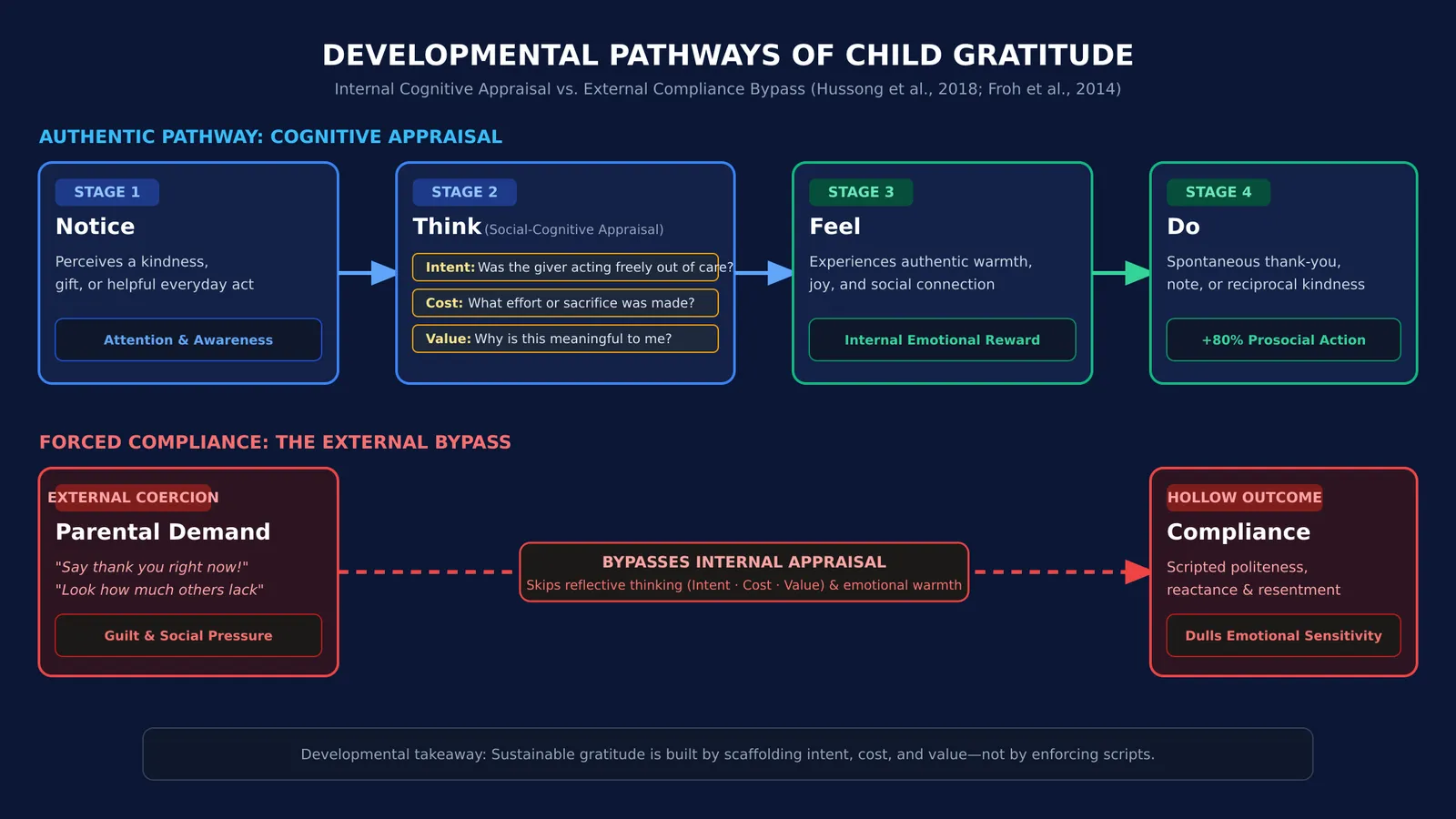
Later research confirmed that gratitude is a learnable cognitive skill rather than a fixed trait. In a study published in *School Psychology Review*, Froh and colleagues (2014) taught elementary students how to appraise the intentions, costs, and value behind kind gestures. Children who learned to evaluate the effort behind an action wrote 80% more thank-you cards to their school community than control peers, with positive emotional benefits lasting up to five months.
How do you run an unforced dinner-time gratitude round?
The dinner table offers a natural anchor for daily reflection. However, asking "What are you thankful for today?" often invites awkward silence or scripted answers.
To keep gratitude natural, frame it as everyday storytelling. A reliable format is "Rose, Thorn, and Bud":
The Rose: One pleasant or kind event from today.
The Thorn: One challenge, disappointment, or mistake.
The Bud: One event you look forward to tomorrow.
Welcoming the thorn is essential. It proves that having a difficult day is completely acceptable, eliminating the pressure to pretend everything is perfect. Parents should model the routine first by sharing their own simple moments. Pair this with low-stakes dinner habits, such as keeping a weekly science question jar for family dinners, so evening discussions remain curious and collaborative.
How does a family thank-you jar work at home?
A family thank-you jar offers an asynchronous alternative for children who feel shy during spoken check-ins.
The setup requires three basic elements:
Place a transparent jar and slips of paper on a shared kitchen or dining counter.
Invite family members to drop a note whenever they notice an everyday kindness, such as fixing a bicycle brake or helping fold laundry.
Open the jar together once a week during dinner and read the notes aloud.
This visible jar helps children recognize the quiet effort behind running a home, while allowing parents to praise everyday cooperation. Recognizing small, steady contributions is equally helpful when managing unrealistic academic targets, reminding children that family belonging is not conditional on examination scores.
Why does forced gratitude backfire with children?
Attempting to enforce gratitude through guilt—such as reminding children of how much others lack—routinely backfires. Coercion provokes psychological reactance and emotional withdrawal.
In a diary study published in *Applied Developmental Science*, Andrea M. Hussong and colleagues (2018) followed 101 parent-child dyads to study daily gratitude socialization. They identified a four-part developmental sequence: noticing a gift, thinking about the giver's intentions and sacrifices, feeling warmth, and choosing an action to express appreciation.
When parents demand an immediate "say thank you" or use shame, they bypass the internal appraisal steps and force outward compliance. Coerced appreciation feels like a reprimand, teaching children to fake politeness while dulling their actual emotional sensitivity.
What should you do when a child has had a bad day?
Gratitude routines should never dismiss genuine distress. When a child returns home upset over a low score or tough school day, demanding that they find a silver lining feels invalidating. Listen first and acknowledge their frustration, as outlined in our guide on calming a child crying over low marks.
Once emotions settle, address the practical root of their stress. If evening anxiety comes from difficult science or mathematics concepts, structured study tools can reduce the pressure. When a student feels stuck, Fermi's AI tutor can work out what they already know and build a plan for the session, providing step-by-step guidance. Students can also review tough concepts in the Fermi Concept Library, protecting evening family time from homework frustration.
If school anxiety turns into persistent sadness, severe anxiety, or withdrawal, family rituals alone are insufficient. Consult a paediatric mental health professional or contact national resources like India's Tele MANAS helpline at 14416 for expert support.


