

On this page
Most family talk about school is about marks and homework, not ideas. A question jar changes that with very little effort. Once a week, everyone at the table, parents included, brings one science question, finds an answer and explains it at dinner. Here is why that is worth doing and how to set it up.
Why does science talk at home matter?
Parents can shape how teenagers see science. In a field experiment published in *Psychological Science*, researchers sent parents two brochures and a website, all highlighting why maths and science courses are useful (Harackiewicz and colleagues, 2012). Their children went on to take, on average, nearly one semester more of science and maths in the last two years of high school than the control group. We covered that trial in more detail in our post on how parents can explain why STEM is useful.
There is an Indian reason too. Article 51A(h) of the Constitution lists a duty of every citizen "to develop the scientific temper, humanism and the spirit of inquiry and reform" (Constitution of India, Article 51A). A dinner-table question is a small, everyday way to practise that spirit of inquiry.
How does a family science question jar work?
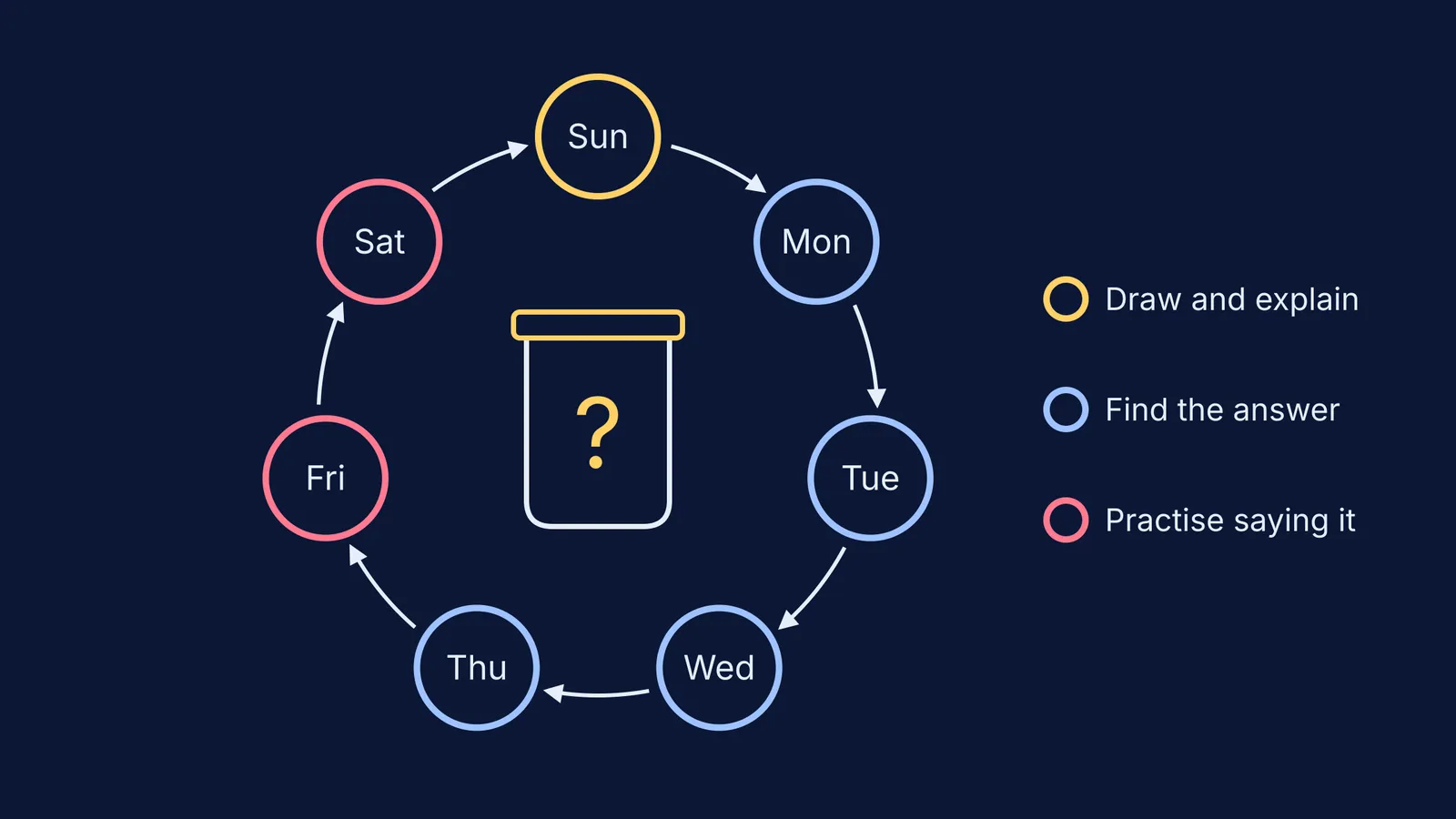
You need a jar, slips of paper and one fixed dinner each week. Sunday is one option.
Everyone writes questions they genuinely wonder about and drops them in the jar. Keep a pen nearby so new ones go in during the week.
At the weekly dinner, each person draws one slip. If you pull your own question, put it back and draw again.
During the week, find the answer. Use the school textbook, a library book, a trusted website or an AI tutor, and note where the answer came from.
At the next dinner, each person gets two minutes to explain. No reading from a phone; a quick sketch on paper is allowed.
Everyone else asks one follow-up question. "How do you know?" is always a fair one.
Then draw the next round of slips.
Good questions start with "why" or "how" and connect to things you can see: why the pressure cooker whistles, how a mosquito finds you in the dark, why the Moon looks bigger near the horizon. If your child needs help coming up with questions, our guide to encouraging curiosity at home has ideas.
Why does explaining at dinner help the person explaining?
The explainer often learns the most. In a small classic study, 14 eighth-grade students read a text on the human circulatory system and were prompted to explain each line to themselves; they gained more understanding than 10 students who read the text twice (Chi and colleagues, 1994). The prompted students who explained the most all ended up with the correct mental model of the circulatory system; many of the unprompted students did not.
The two-minute rule works the same way: explaining out loud makes you connect ideas and notice the gaps.
What does a question-jar week look like?
Say your 15-year-old draws: "Why does a steel spoon feel colder than a wooden spoon from the same drawer?"
Sunday: the question is drawn. A parent asks, "What do you think? Are they really at different temperatures?"
Monday to Thursday: they look it up and find that both spoons are at room temperature. Steel conducts heat much better than wood, so it pulls heat out of your hand faster, and your skin reads that heat loss as cold.
Friday and Saturday: they practise saying it in two minutes, perhaps with a sketch of heat flowing from hand to spoon.
Next Sunday: the explanation, then follow-ups. A younger sibling might ask, "So would a steel spoon feel hot in a hot room?" That is a great question for the jar.
A simple script for parents during the explanation: "Say that part again in your own words." "How did you check it?" "What surprised you?" Avoid correcting mid-sentence; save corrections for after.
How do you keep it fair and fun for everyone?
Watch who gets the explanations. In a study of families with young children at a science museum, parents were three times more likely to explain science to boys than to girls, even though they were equally likely to talk to both about how to use the exhibits (Crowley and colleagues, 2001). At your table, give daughters and sons the same follow-up questions and the same airtime.
A few house rules help:
Parents take a slip too, and sometimes get stuck in front of the children.
No marks, rankings or prizes for the best answer.
Skip a week when exams are on, without guilt.
Some questions are best answered by trying them: our list of kitchen science experiments is a good source.
Some questions are easier to see than to read about, like why a pendulum's swing time depends on its length. For those, the Fermi Simulation Lab has interactive simulations your teenager can try before they explain.
Start this Sunday with a jar and six slips each.


