On this page
Stammering, also called stuttering, is a speech disorder in which people know what they want to say but have difficulty saying it, as the All India Institute of Speech and Hearing, Mysuru puts it. If your child has started to stammer: it is not your fault, many children grow out of it, and early speech therapy often helps.
What causes stammering in children?
Nobody can say for sure why a particular child starts. The NHS is clear that stammering "is not caused by anything the parents have done", and says developmental and inherited factors may play a part, along with small differences in how efficiently the brain's speech areas work. Around 2 in 3 people who stammer have a family history of stammering, according to the NHS.
The American Speech-Language-Hearing Association says the same: "Emotional problems and parenting style do not cause stuttering" (ASHA Practice Portal).
Stammering usually starts early. About 95% of children who stammer start before the age of 4, and the average age of onset is about 33 months, according to ASHA. Around 1 in 12 young children go through a phase of stammering, and it is more common in boys than girls (NHS).
Will my child grow out of stammering?
Often, yes. Around 2 in 3 children who stammer go on to speak fluently, says the NHS. A review of the research by Yairi and Ambrose concluded that long-term and population studies "support high levels of natural recovery from stuttering" (Journal of Fluency Disorders, 2013).
But nobody can predict which children will recover. The ASHA Practice Portal lists factors linked to stammering that lasts:
your child is a boy
someone in the family has a persistent stammer
it has lasted more than 6-12 months, or has not improved over several months
it began at 3½ years or later
your child's language is developing more slowly, or there are other speech or language difficulties
If you are worried, get advice early. The NHS says treatment "is often successful in pre-school age children", and stammering that lasts until school age is "significantly more challenging to treat" (NHS treatment guidance).
What actually helps a child who stammers?
For children under 5, a speech and language therapist will usually start with indirect therapy: the family changes how it talks, such as speaking slowly and calmly, taking turns, and not interrupting or criticising (NHS).
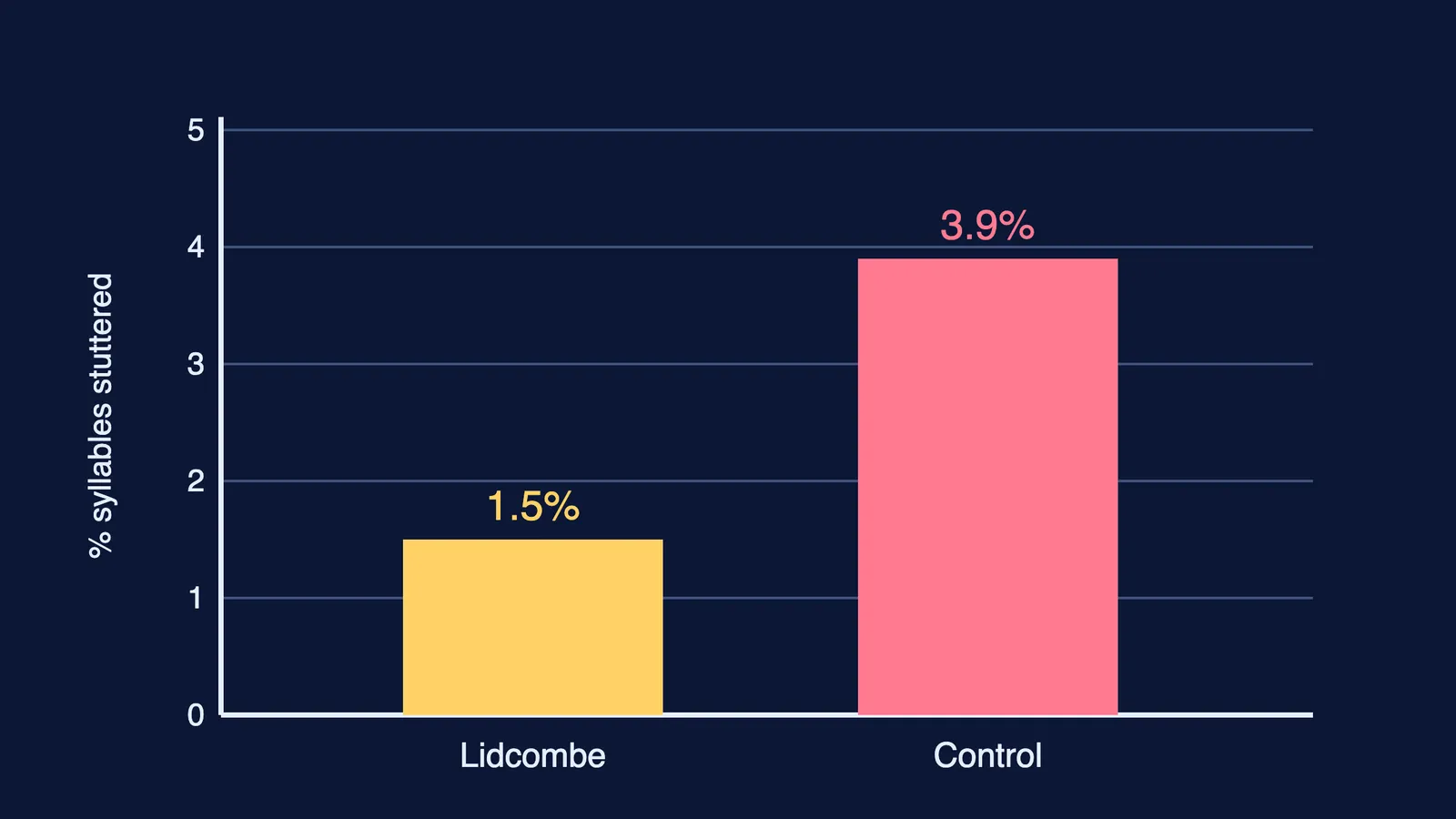
One well-studied direct therapy is the Lidcombe Program, which parents carry out under a therapist's guidance, giving friendly, non-judgemental feedback on their child's speech. In a randomised controlled trial in New Zealand, 54 children aged 3-6 were split between the programme and a control group. After nine months, children in the Lidcombe group stammered on 1.5% of syllables on average, against 3.9% in the control group.
For school-age children, therapy works on fluency and also on understanding stammering, handling fear of speaking and building confidence (NHS).
In India, ask for a speech-language pathologist (speech therapist). AIISH Mysuru has brochures and expert videos on stuttering in English and Kannada.
What does not help
Telling your child to "slow down". The NHS advises against asking someone who stammers to speak faster or more slowly.
Finishing their words or sentences for them. Give them time to finish.
Reaching for gadgets first. The NHS says feedback devices "do not work for everyone" and lists them mainly for older children and adults with a persistent stammer.
What should you say to a child who stammers?
Here is how that sounds at home:
When they get stuck: wait, keep looking at them, then reply to the content. "You saw a peacock on the terrace? What colour was its tail?"
If they ask "Why do I talk like this?": "Lots of people get stuck on words sometimes. Your words are catching up with your ideas. It is not your fault, and I like hearing what you have to say."
If a relative says "Just tell him to slow down": "His speech therapist asked us to give him time and not correct him. Please let him finish."
How can you support a child who stammers at school?
Meet the class teacher early. Ask them to give your child time to answer, not to skip them or speak for them, to agree how reading aloud will work, and to act quickly on teasing. If your child is mocked and will not say so, see what to do when a child is afraid to tell the teacher about bullying. For a child who holds back questions, try these small steps for a child too shy to ask doubts in class.
If your child would rather sort out a doubt privately before asking in class, Fermi's AI tutor works through problems alongside the student and notices where they are stuck.
If your child seems withdrawn, anxious or very upset about speaking, talk to their therapist or doctor. Tele MANAS, the government's mental health service, is free on 14416.
Your next step: if you are worried, ask your doctor or a speech therapist for an assessment.