On this page
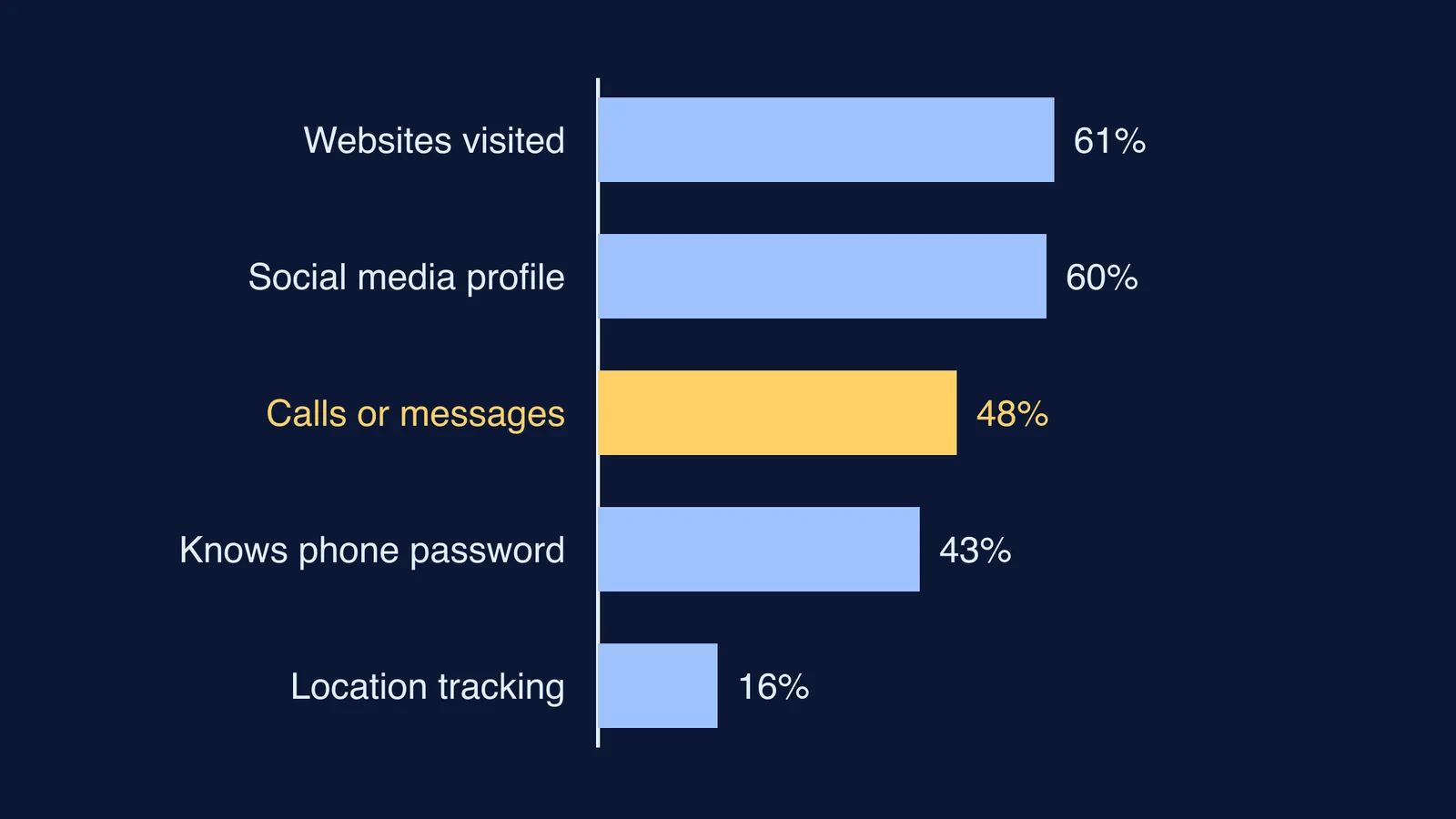
The phone is on the table, unlocked, and a message lights up the screen. Most parents of teenagers have felt the pull to look. You would not be unusual: in a Pew Research Center survey of US parents of 13- to 17-year-olds, 48% said they had looked through their teen's call records or messages, and 61% had checked which websites their teen visited.
Wanting to know is not the problem. Doing it in secret usually is.
Does secretly checking a teenager's phone keep them safer?
A widely cited study suggests that the information that protects teens mostly comes from the teens themselves. In a study of 1,186 14-year-olds in central Sweden and their parents, Margaret Kerr and Håkan Stattin found that children's spontaneous disclosure explained more of the link between parental knowledge and good adjustment than parents' tracking and surveillance efforts did. Teens' feelings of being controlled were linked to poorer adjustment.
Children say much the same about monitoring apps. Researchers at the University of Central Florida and Marquette University analysed 736 Google Play reviews of 37 online-safety apps written by children aged 8 to 19. 76% of those child reviews gave the app a single star. The children felt the apps were overly restrictive and invasive of their privacy, and that they hurt their relationships with their parents.
A teen who discovers secret checking may learn to hide better rather than to tell you more. That is how some families end up dealing with a secret second phone.
Is it wrong for parents to monitor a teen's phone at all?
No. A teenager's privacy matters, but it is not unlimited. Article 16 of the UN Convention on the Rights of the Child says no child shall be subjected to “arbitrary or unlawful interference” with their privacy or correspondence. The word that matters for families is arbitrary. Monitoring that is explained, agreed and suited to your child's age is a different thing from reading every chat while they sleep.
The practical difference:
Open monitoring: your teen knows what you can see and why. Location sharing when they travel, screen-time reports, approval for new apps.
Secret monitoring: hidden tracking apps, reading messages while they sleep, logging into their accounts without telling them.
Open monitoring should shrink as your child shows they can handle more. Our guide on how much privacy to give a teenager sets out how that can step down by age.
When do concerns justify a direct conversation, or a look?
Match what you do to what you are actually worried about.
Everyday worries (too much time on the phone, late nights, marks slipping): talk and agree rules. Reading messages will not fix any of these.
A specific warning sign (sudden fear when the phone buzzes, unexplained money, a new online “friend” who is much older, someone asking for photos): have a direct conversation the same day, before you look at anything.
Immediate danger (talk of self-harm, blackmail, a plan to meet a stranger, intimate images being shared): safety comes before privacy. Tell your teen you are going to look and why, look together if you can, and get help straight away.
For step 3, India's National Commission for Women lists these helplines: the cyber crime helpline 1930, CHILDLINE 1098 (free and 24 hours), and the emergency number 112. Online abuse can also be reported at cybercrime.gov.in. If your teen is distressed, Tele MANAS offers free, 24x7 mental-health support on 14416 or 1800-891-4416; for anything clinical, see a doctor or counsellor.
What should I say to my teenager about checking their phone?
A calm script works better than an ambush. Adapt this to your own words:
Start with the worry, not the evidence: “You've seemed tense when your phone buzzes at night. I'm worried, not angry.”
Say what you will and won't do: “I'm not going to read your chats. I do want location on when you're out late.”
Offer a safe way to tell you: “If anyone online scares or pressures you, tell me. You won't lose your phone for telling me.”
If you already checked in secret, own it: “I read your messages last week. Doing that behind your back was wrong. Here is what worried me.”
Then write the rules down together. A simple family phone agreement turns a tense talk into something you both signed.
If the late-night phone turns out to be homework stress, Fermi's AI tutor works out what your teen already knows and builds a plan for the session, so they start with a clear next step.
This week, pick one open rule you both agree on, and tell your teen what you will never do in secret.