

On this page
Finding a secret phone hidden in a drawer or backpack is a jarring moment for any parent. Your immediate instinct might be to confiscate it and tighten the rules, but taking a step back to understand why your teenager felt the need to hide a device is the key to rebuilding trust.
Why do teenagers hide a secret phone?
A hidden device—whether an old handset or a prepaid "burner" phone—is rarely about the device itself. It is usually a symptom of a teenager trying to navigate rules they find too restrictive.
A March 2024 report by the Pew Research Center found that 50% of parents of teens ages 13 to 17 say they look through their teen’s smartphone. The same study noted that 47% of parents set specific time limits on their teen’s phone use. When these controls clash with a teenager's desire for privacy or a perceived need to stay connected with peers, they may seek a workaround.
Teenagers might use a second phone to manage private social media, talk to friends after hours, or evade monitoring apps. Adolescence is a time when peer relationships become the primary focus, and the smartphone is the central hub for these connections. When teenagers feel that their only connection to their social world is heavily restricted, they are more likely to find secretive ways to maintain it. They may fear that a single mistake will lead to the confiscation of their primary phone, so they keep a backup device.
For older teens preparing for high-stakes exams, a secret phone might simply serve as an unmonitored distraction from intense academic pressure. The burden of constant studying can lead them to seek an escape that their parents cannot track.
What should you do when you find a secret phone?
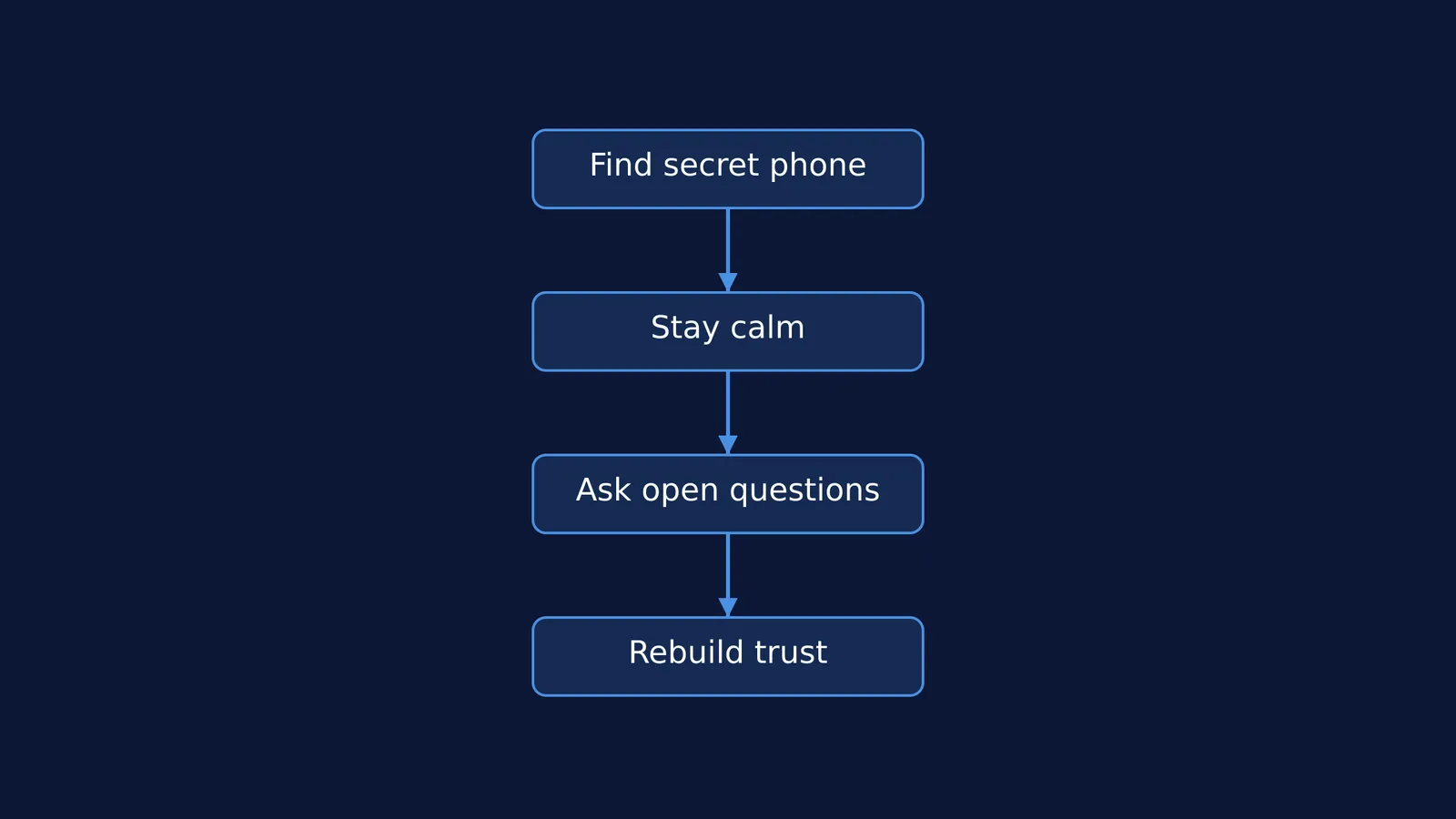
Finding a hidden phone can trigger a strong emotional response, but taking a breath before reacting is essential. Confiscating the second phone without discussion can create more tension and encourage further sneakiness. Instead, approach the situation with curiosity rather than immediate punishment.
Hold the conversation when everyone is calm. Do not confront them the moment you find the device. Wait until you have processed your frustration so you can approach the conversation constructively.
Ask open-ended questions. Start with something neutral, such as, "I found this device in your room. Can you help me understand what you use it for?" This gives them a chance to explain their perspective without immediately going on the defensive.
Listen without interrupting. Give them space to explain their reasoning. They might reveal that they felt overwhelmed by screen time limits, wanted a private space away from parental monitoring, or felt left out of social circles when their primary phone was locked down.
Acknowledge their need for independence. Teenagers crave autonomy. Acknowledging that it is normal for them to want privacy can disarm their defensiveness and make them more willing to share the truth.
While parents might think their monitoring is obvious, the Pew Research Center found that while 50% of parents report looking through their teen's smartphone, only 43% of teenagers believe their parents have ever done so. This awareness gap highlights the importance of clear, honest communication about your expectations and boundaries.
How can you rebuild trust and set new rules?
Instead of permanent confiscation, establish shared guidelines. Taking away their primary phone as an additional punishment can reinforce the behaviour that led to the secret phone. Rebuilding trust requires a collaborative approach.
Focus on the behaviour. Reassure them that your concern is their safety and well-being, not just spying on their conversations. Explain that trust is a two-way street, and hiding a device breaks that trust.
Relate consequences to the rules. Consequences should be directly related to the misbehaviour. Work together on a plan to rebuild trust, which might include more transparency with their primary device in exchange for slightly more relaxed time limits.
Set realistic boundaries. Agree on rules that give them space while keeping them safe. This might mean designating specific "no-phone" zones rather than installing invasive tracking software.
Review academic stress. Sometimes, secretive phone use is an escape from study anxiety. If they are dodging schoolwork because they are stuck on difficult concepts, Fermi's AI tutor can help. Instead of providing easy answers, Fermi works out what they already know and builds a plan for the session, so they sit down to a clear next step.
Building a healthy digital routine is an ongoing process. Check in regularly to see how the new rules are working, and be willing to adjust them as your teenager demonstrates more responsibility.
Navigating this challenge takes time and patience. By focusing on the reasons behind the behaviour rather than just the rule-breaking itself, you can create a more open and trusting relationship. For more ways to support your teenager during high-stress periods, explore How parents can help children learn without adding pressure, read about managing Exam season at home: routines that help the whole family, or share advice on How to build a study routine that lasts longer than a week.


