

On this page
A paper plane costs one sheet of paper and can teach the central idea of experimental science: change one thing, keep everything else the same, and measure. Most children fold a plane, throw it, fold a different one and throw again, changing five things at once. With a little structure from you, the same afternoon becomes a real experiment with a question, data and a conclusion.
What does a paper plane experiment teach kids?
It teaches the forces that keep anything in the air, and it teaches how to run a fair test.
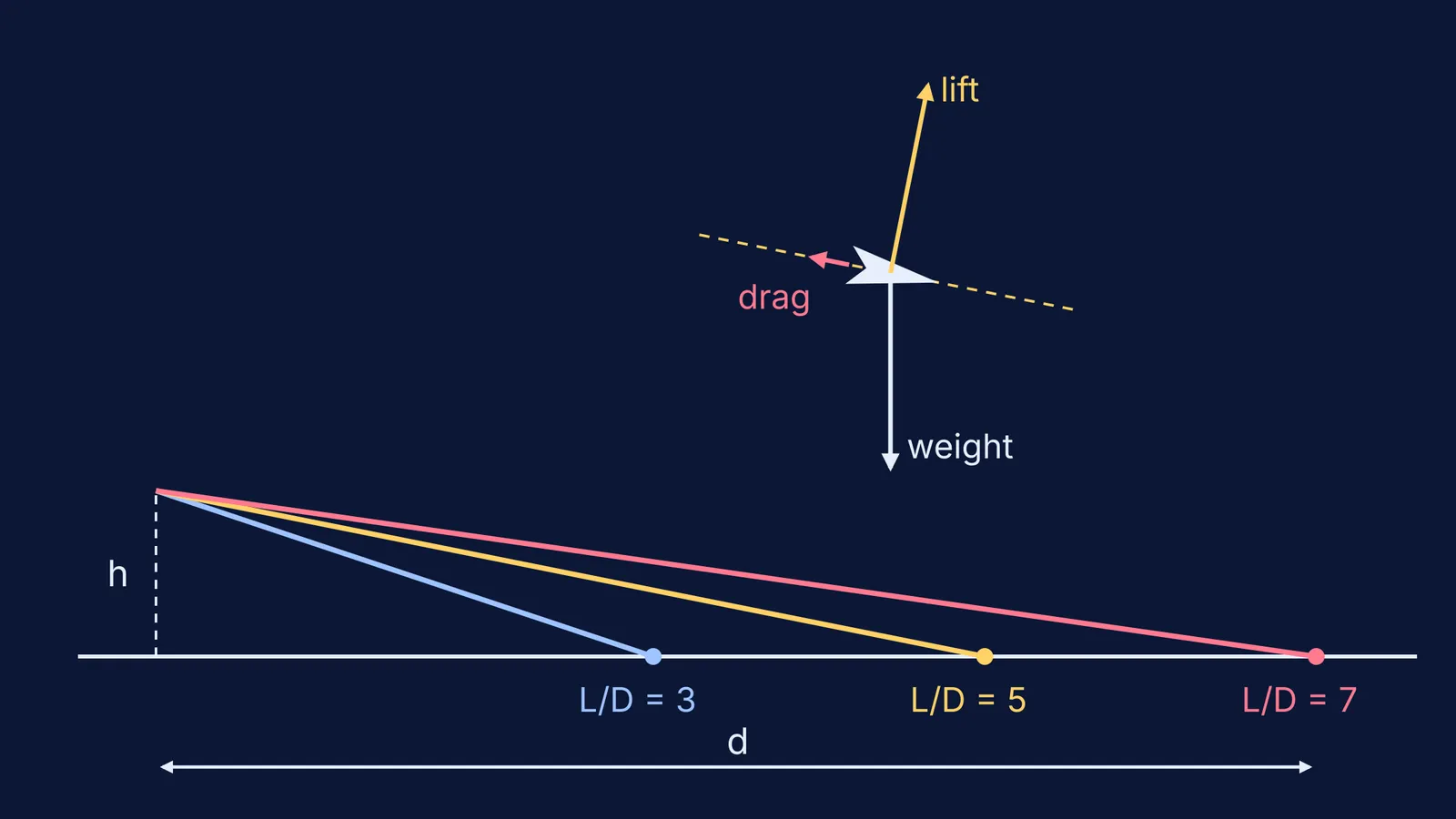
NASA's Beginner's Guide to Aeronautics describes four forces on an aircraft. Weight is a force always directed toward the centre of the Earth. Lift is the force an aircraft generates to oppose weight. Drag is the air resisting the aircraft's motion. Powered planes use thrust from engines to overcome drag. A paper plane has no engine: your throw starts it moving, so once it leaves your hand it is a glider.
Gliders follow a neat rule. NASA's page on the lift to drag ratio shows that in a steady glide, lift divided by drag equals the distance travelled divided by the height lost. So a plane with a lift-to-drag ratio of 5, gliding steadily from 1.5 metres, would cover about 7.5 metres. Real paper planes wobble, stall and curve, which is exactly why measuring beats guessing.
How do you make a paper plane experiment a fair test?
A fair test changes one variable, measures another and keeps everything else the same; psychologists call this the control of variables strategy.
In a 1999 study in Child Development, Zhe Chen and David Klahr worked with 87 children aged 7 to 10. Children who were taught the strategy explicitly, along with probe questions, learned to design unconfounded experiments and transferred the skill to new situations; probe questions alone did not help. A 2004 study by Klahr and Milena Nigam with 112 third- and fourth-graders found that many more children learned experimental design from direct instruction than from discovery.
The lesson for you: do not wait for your child to stumble on fair testing. Say the rule out loud, then let them use it.
Fold two identical copies of one simple design, such as a dart, from the same paper.
Choose one change to test, for example folding up the wing tips.
Make that change on one copy only. The other is your control.
Mark a launch line with tape. The same person throws, from the same height, with the same gentle push.
Throw each plane five times, taking turns, and measure where each first touches the floor.
Fly indoors with the fan off, because a breeze is a variable too.
Which folds and variables can kids test?
Each line below is a separate experiment, always against the same base plane.
Wing tips: flat versus folded up.
Nose weight: no paper clip versus one paper clip on the nose.
Wing size: full wings versus wings trimmed by a strip.
Paper: printer paper versus a notebook page, same design.
Back edge: flat versus bent slightly up.
Older children can name the parts: the fold is the independent variable, distance is the dependent variable, and everything kept the same is a controlled variable.
How should kids record and compare results?
Use a notebook page with three columns: throw number, control distance, test distance, measured in centimetres with a tape. After five throws each, write the distances from smallest to largest and circle the middle one, the median, so that one throw that hits a cupboard cannot swing the result. Our guide to basic statistics for school science projects explains why repeated trials matter.
Then finish one sentence: When we changed ___, the middle distance went from ___ to ___. If the two sets of throws overlap a lot, the honest conclusion is no clear difference, and that is a real result too.
What should you ask while they test?
Questions do more than explanations here. Try these:
What do you think will happen, and why? (Write the prediction down before throwing.)
What did we keep the same?
Did it go further, or did it just fly straighter?
Is the air holding it up more, or holding it back more? (Lift and drag in everyday words.)
If we wanted to be sure, what would we test next?
If your child gets hooked, the same habit works in bubble experiments with fair tests, and the physics of flying a kite at Makar Sankranti shows lift and drag on a kite. For older students who find forces hard to picture, the Fermi Simulation Lab has interactive simulations for ideas that are easier to see than to read.
Start this weekend with two identical darts, a roll of tape and a notebook.


