

On this page
Every year, students bring home a form for NCC or a note about the school's scout troop or guide company. Both mean a uniform, regular meetings and camps away from home, for boys and girls. The differences are in the normal week, the certificate at the end, and when the busy stretches land in the school calendar.
CBSE also sees a place for both. Its Health and Physical Education curriculum for Classes 9 and 10 names NCC alongside sports, yoga and self-defence, and lists Scouts and Guides among the ways students build social values. It says health and physical activities, preferably sports, should get one regular period a day, and that the subject is assessed internally by the school.
What does NCC involve week to week in school?
NCC's motto is "Unity and Discipline", and its stated aims include character, leadership, discipline and selfless service, according to a Kendriya Vidyalaya NCC note that reproduces the DG NCC rules. In school, cadets join the Junior Division/Wing.
Most training happens at school: drill, physical fitness, map reading and first aid. Naval wing units add boat pulling and sailing, and air wing units add gliding. Cadets also join social service drives such as tree plantation and blood donation.
The certificate at the end is the 'A' certificate. The same document lists the rules:
The cadet must be in the second year of NCC.
The cadet must have attended an Annual Training Camp.
The cadet must have attended at least 75% of the training periods in the first and second years.
A break of more than 12 months at one time means earlier service may not count.
At that Kendriya Vidyalaya, students enrol between Class 7 and Class 9, and the camp is a 10-day Common Annual Training Camp in the second year. Camp length and timing vary by unit, so ask your school's NCC officer.
What do scouts and guides do, and which badges matter?
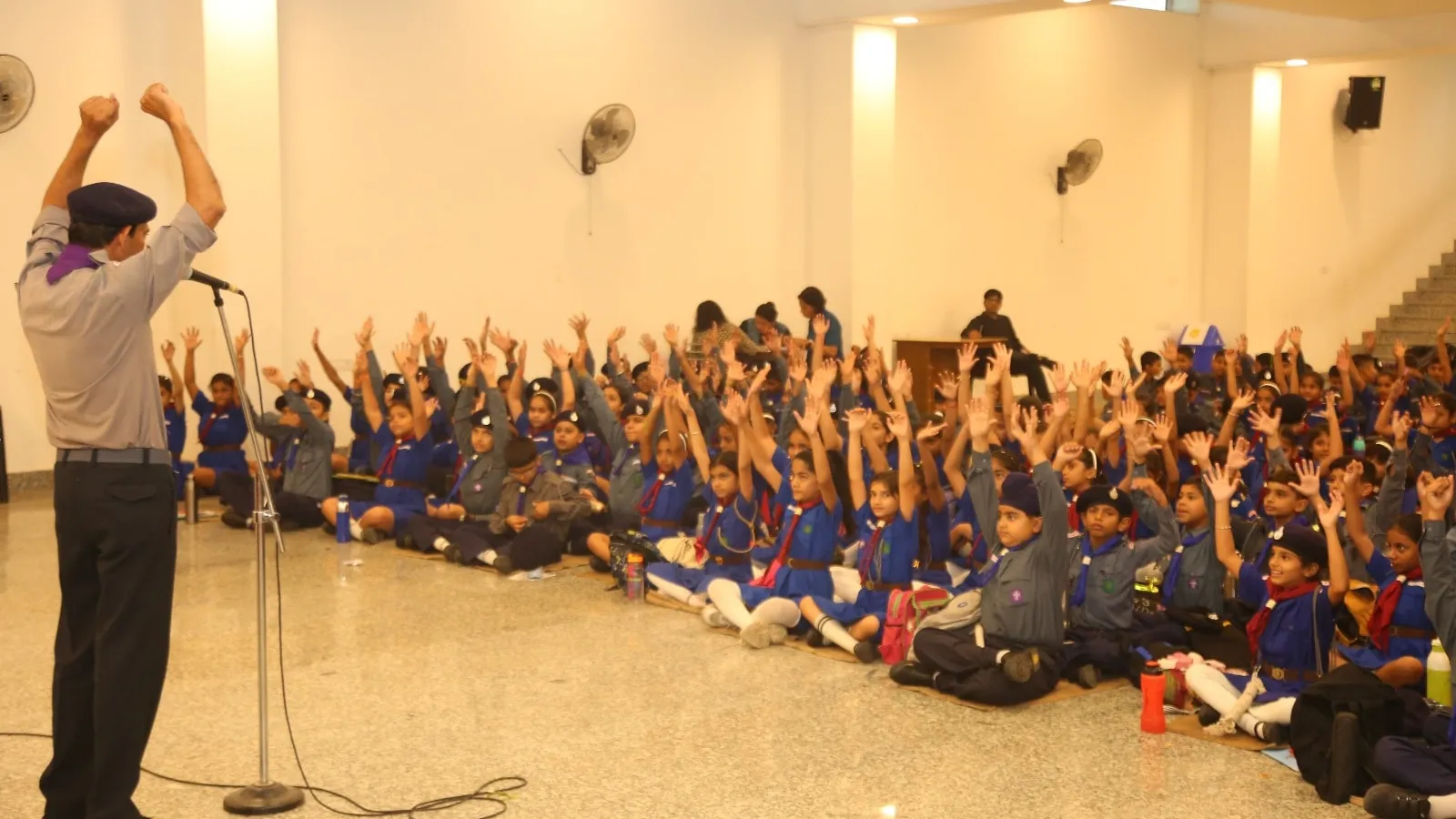
Bharat Scouts and Guides takes children who have completed 10 years but not 17. They work in patrols inside a troop or company. Before being invested, a new member attends at least four troop meetings, goes on a four-hour outing with their patrol and works for three months as an aspirant.
After that, progress is measured in badges, each with a minimum time on the BSG advancement scheme:
Pravesh to Pratham Sopan: at least six months.
Pratham Sopan to Dwitiya Sopan: at least six months.
Dwitiya Sopan to Tritiya Sopan: at least six months.
Tritiya Sopan to Rajya Puraskar: at least nine months, then a Rajya Puraskar testing camp run by the state association.
Rajya Puraskar to the Rashtrapati (President) award test: twelve months.
The BSG guidelines for the President's award.pdf) add that a scout or guide must be at least 13 years 6 months old, and can attend the state testing camp only up to age 18. The guidelines cap successful candidates for the President's certificate at 2,000 scouts, guides, rovers and rangers a year, unless the Chief National Commissioner decides otherwise.
A worked example: a child invested as Pravesh at 11 can reach Rajya Puraskar 27 months later at the earliest (6 + 6 + 6 + 9 months), at about 13 and a quarter. After 12 more months and a state testing camp, they can sit the President's award test at about 14 and a quarter. For many children that is Class 9, before the board year.
NCC or scouts and guides: which suits your child?
Ask your child these questions:
Do they enjoy drill, fitness and clear rank and order? NCC fits.
Do they enjoy camping, knots, hikes and running small projects with a patrol? Scouts and guides fit.
Do they want a certificate within two years? NCC's 'A' certificate is built for that.
Do they like slow, badge-by-badge progress? Scouting rewards years of steady work.
Does your school offer both? If it offers only one, that decides it for you.
How do you fit camps around Class 9 and 10 studies?
Try this plan:
When dates come out, put the camp on the family calendar next to unit tests and pre-boards. If they clash, talk to the NCC officer or scout master early.
Two weeks before, ask each subject teacher which chapters will be taught during camp.
During camp, expect no studying.
The first evening back is for sleep.
The next three days, copy missed notes, then do one short practice set per subject.
If a missed chapter still doesn't make sense after the notes, the Fermi Concept Library has a lesson on every concept in physics, chemistry, biology and maths. Fermi's AI tutor can work out what your child already knows and build a plan for the session, so catching up starts with a clear first step.
For more, read our board exam plan for students who play sports and how to manage art competitions alongside school exams. A family agreement for the Class 10 board year can settle camp weeks in advance.


