

On this page
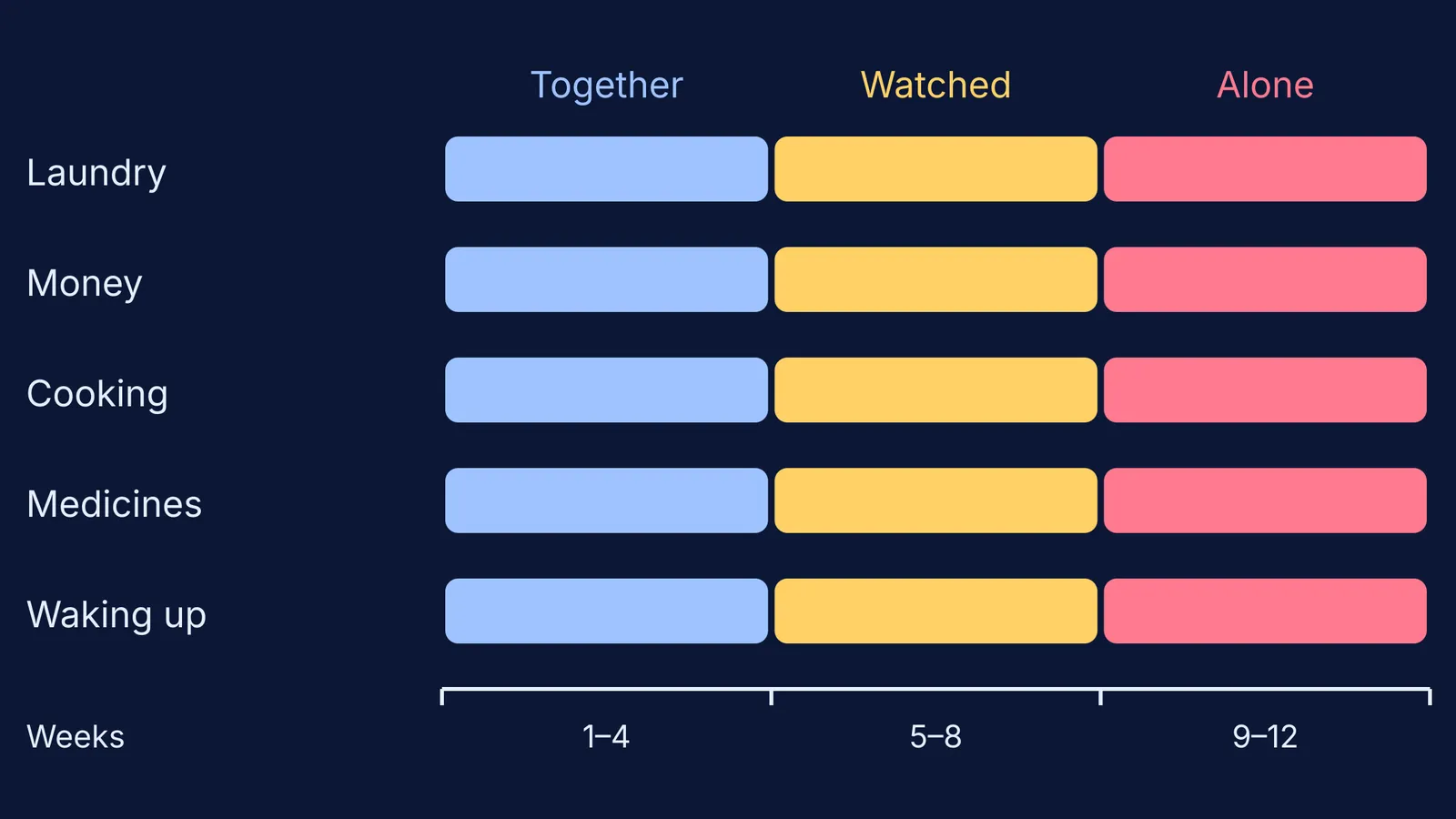
Moving to a hostel, for a college seat or for coaching in another city, means a dozen small jobs that someone at home used to do quietly. The trick is to practise them while home is still a safety net, not in the first fortnight of term. This plan covers five skills over twelve weeks.
What life skills does a child need before moving to a hostel?
Laundry: sorting colours, washing by hand in a bucket, and drying clothes before they smell.
Money: living on a fixed weekly amount, logging every spend, and knowing what to do when a payment fails.
Simple cooking: three dishes that need only a kettle or an induction plate, made safely.
Medicines: knowing what is in the kit, what each item is for, and when to see a doctor instead.
Waking up alone: an alarm they set, a bedtime they keep, and no parent knocking on the door.
How do you practise these skills in 12 weeks?
Give every skill three stages.
Weeks 1 to 4, together. You do the task side by side. Your child does the hands-on part; you explain why.
Weeks 5 to 8, watched. Your child does it start to finish. You step in only if something is unsafe.
Weeks 9 to 12, alone. Your child owns it. You check results, not process: are the clothes clean, is the money log up to date?
A worked example for money: from week 5, hand over a fixed amount for the week's snacks, travel and recharge, logged in full. If the money runs out on Thursday, do not top it up; talk on Sunday about where it went. Our breakdown of hostel and mess fees for college helps you set a realistic figure, and the guide to staying safe with UPI as a student covers common scams and what to do after a fraud.
For cooking, start with food safety, not recipes. The WHO Five Keys to Safer Food are: keep clean, separate raw and cooked, cook thoroughly, keep food at safe temperatures, and use safe water and raw materials. Then pick dishes such as poha or egg bhurji, after checking the hostel's rules on cooking appliances.
How should a teenager manage medicines in a hostel?
This is everyday organisation, not medical advice. Before departure, ask your family doctor to help you list any regular medicines, allergies and how to get refills in the new city. Keep a copy on the phone. Teach your child to read a strip: name, strength and expiry date.
India's health ministry launched the Red Line campaign, urging people not to use medicines marked with a red vertical line, including antibiotics, without a doctor's prescription (PIB, Ministry of Health and Family Welfare). Show your child the red line on a real strip and explain why a friend's leftover antibiotics are not a shortcut.
Find the campus health centre and nearest hospital on a map before day one. Our guide to talking to a hostel warden about problems covers how to raise a concern and when to bring parents in.
How can a student wake up on time without parents?
Teenagers aged 13 to 17 need 8 to 10 hours of sleep every 24 hours, according to the American Academy of Sleep Medicine recommendation cited by the US Centers for Disease Control and Prevention. An alarm cannot rescue a late bedtime, so practise both.
From week 5, your child sets their own alarm and you stop waking them.
The phone goes across the room, so switching off the alarm means getting up.
Lights-out is set by working back from the first class, and stays roughly the same at weekends.
If they oversleep, they sort it out, not you.
If your child finds it hard to sit down to study with no one to get them going, Fermi's AI tutor can work out what they already know and build a plan for the session, so they sit down to a clear next step.
What if your child feels homesick after moving?
Christopher Thurber and Edward Walton define homesickness as "the distress or impairment caused by an actual or anticipated separation from home" (Journal of American College Health, 2012). Their review notes that intense homesickness can make the move to university difficult and sometimes lead to withdrawal from school, and it points to promising prevention and treatment strategies.
Practising routines will not stop homesickness, but it removes some daily stresses. For early calls, try:
"You sound tired. Do you want to talk it through, or do you want ideas?"
"Shall we fix a call time, so you do not feel you have to ring every evening?"
If low mood, worry or poor sleep lasts and gets in the way of classes, contact the campus counsellor or a doctor. Tele MANAS, the government's mental health helpline, is toll-free on 14416 or 1-800-891-4416 and offers support in 20 languages (PIB, Ministry of Health and Family Welfare).
Start this weekend with one bucket of laundry, and let your child do it while you only watch.


