

On this page
Moving into a hostel or managing a monthly allowance is often your first experience handling money independently. Between ordering food, splitting canteen bills, and paying exam registration fees, Unified Payments Interface (UPI) apps are indispensable. However, students living away from home are frequent targets for fraud because scammers exploit unfamiliarity with banking protocols, urgency over exam deadlines, or excitement over discounts. Understanding how digital payments operate protects your allowance and gives your family confidence while you focus on your coursework.
Why do fraudsters ask you to enter a UPI PIN to receive money?
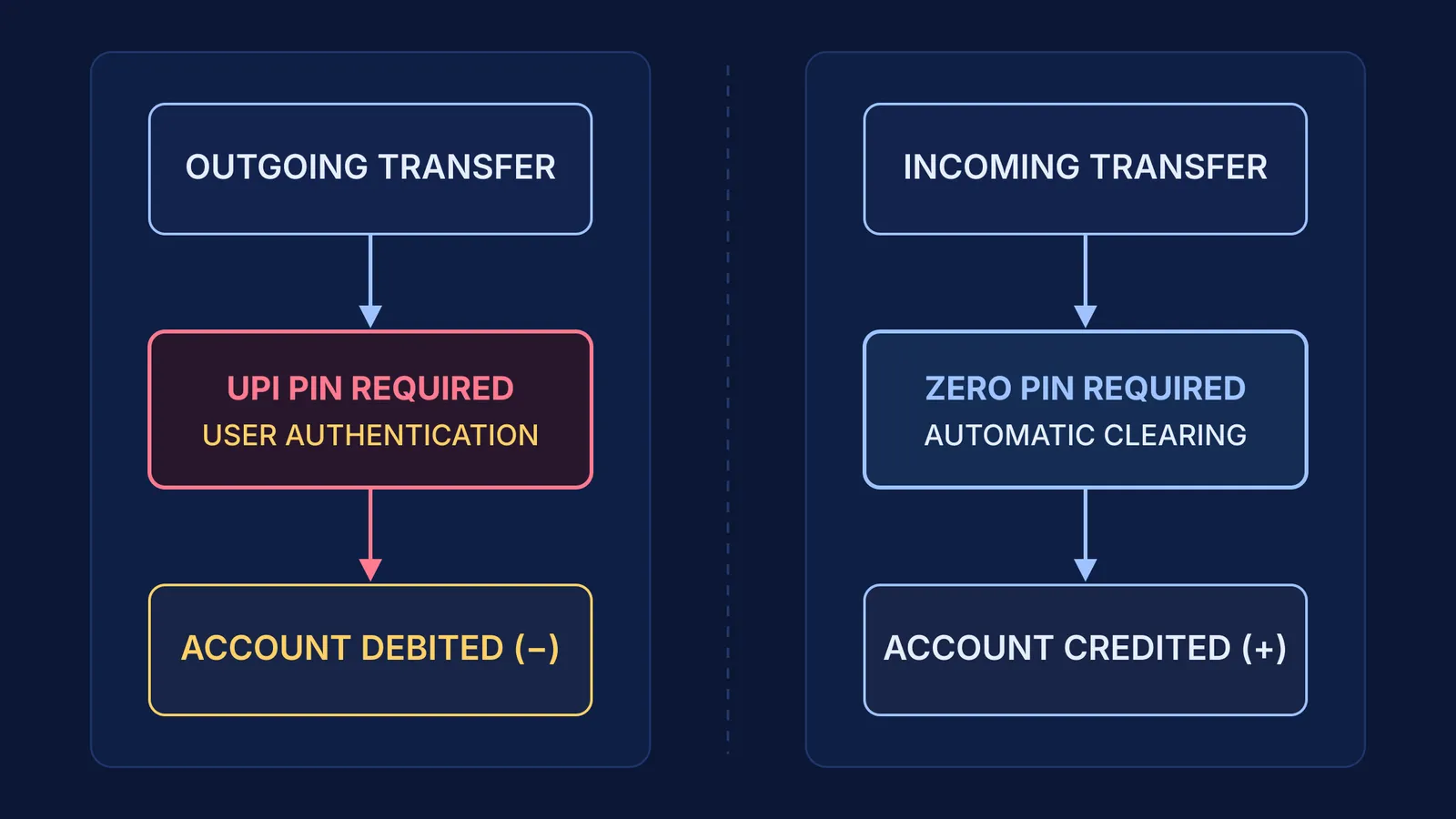
The most common UPI scam relies on a fundamental misunderstanding of payment architecture. According to the National Payments Corporation of India (NPCI) UPI Safety Shield, your UPI Personal Identification Number (PIN) is an authentication tool used exclusively to debit—or deduct—money from your bank account. Receiving money is passive. When someone transfers funds to your UPI ID, the money clears directly into your bank account without requiring you to open an app, scan a code, or enter your passcode.
Fraudsters exploit this misunderstanding through social engineering. When you list a used textbook or bicycle on a student forum, a fake buyer sends a collect request through a payment app, claiming you must enter your PIN to accept the funds. In reality, entering your PIN authorizes an electronic withdrawal from your balance. The Reserve Bank of India highlighted this tactic in its BE(A)WARE booklet on financial frauds, warning that scanning a QR code or entering a passcode sent by an unknown party always results in money leaving your account.
What are the common UPI scams targeting students?
Fraudsters frequently target students with scenarios designed around campus life:
The second-hand buyer: A scammer replies to your listing for used books or hostel gear, sending a QR code over WhatsApp and asking you to scan it to receive an advance deposit.
The fake scholarship and exam fee alert: Messages claim your scholarship has arrived or your exam application will be cancelled unless you pay a verification fee through an unofficial link.
The accidental transfer panic: A fraudster sends a spoofed SMS mimicking a bank credit alert, then calls claiming they mistakenly sent their tuition fee to your number and begs for an immediate refund before you check your balance.
Remote screen-sharing requests: Under the pretext of resolving an app glitch or delivery issue, a caller instructs you to install tools like AnyDesk or TeamViewer, allowing them to record your screen and capture one-time passwords (OTPs).
Establishing clear digital boundaries protects your peace of mind. When setting up daily routines while studying in a hostel, keeping a secondary account with a small balance for daily UPI transactions ensures a single mistake never jeopardizes your semester fees. Reviewing privacy and data permissions on your mobile device before downloading untrusted utilities is equally essential.
How do you verify a UPI collect request before paying?
Whenever you pay merchants or split expenses with roommates, follow this four-step verification routine before entering your PIN:
Verify the legal beneficiary name: Scammers often use deceptive handles like `exam_board_fees@upi`. UPI displays the legal account holder's name registered with their bank; if it shows an unknown individual rather than an official institution, cancel immediately.
Read transaction prompts carefully: Authentic payment screens state "Pay ₹X to [Name]", while collect requests state "Request from [Name] for ₹X". Never tap "Approve" unless you are intentionally sending money.
Check your bank balance independently: If someone claims an accidental transfer, never trust an incoming SMS. Open your official banking app to verify your statement. If no funds appear, refuse the request.
Use a firm refusal approach: If a caller pressures you for codes or payments, disconnect immediately. Clarify that you do not authorise transactions over the phone, and verify pending dues directly with your institution.
Managing finances away from home requires the same discipline as exam prep. For families navigating this transition, our guide on guidelines for students studying away from home offers practical advice on setting budgets. Rather than purchasing unverified question banks from questionable forums, you can practice with the Fermi Problem Library, where a step-by-step solver explains the underlying reasoning rather than printing an answer. When revising challenging chapters, Fermi's AI tutor can work out what you already know and build a plan for the session, keeping your preparation organized and secure.
What should you do immediately if you fall for a UPI scam?
If you discover that money was debited fraudulently, fast action within the "Golden Hour" provides the best chance of recovery:
Call the 1930 helpline right away: Dial 1930, the national cyber fraud helpline run by the Indian Cyber Crime Coordination Centre (I4C). Have your 12-digit Unique Transaction Reference (UTR) number and timestamp ready. According to official Press Information Bureau reporting on the CFCFRMS initiative, real-time coordination through the Citizen Financial Cyber Fraud Reporting and Management System has prevented over ₹11,158 crore from being siphoned off across more than 32.80 lakh complaints by placing liens on fraudulent accounts before funds leave the banking system.
File a formal complaint online: Visit the National Cyber Crime Reporting Portal within 24 hours to lodge an official report with screenshots and transaction records.
Notify your bank branch in writing: Under the Reserve Bank of India customer protection framework (Circular DBR.No.Leg.BC.78/09.07.005/2017-18), notifying your bank within 3 working days protects your entitlement to zero liability for third-party breaches. If you inadvertently shared credentials, immediate reporting halts further unauthorized debits and limits your liability.
Save the 1930 helpline in your phone contacts today so you are prepared to act immediately if an emergency occurs.


