

On this page
A teenager preparing for JEE or NEET in a coaching city makes dozens of food decisions a week, often late and tired. Ordering in is the easy answer. When it becomes the only answer, meals get irregular and the money runs out fast. This guide is for parent and student together.
Why does a teen living alone end up ordering food every day?
Usually it isn't greed. It's convenience, mood and discounts. A 2025 study of food delivery app use among postgraduate students at a public health institute in Kolkata (Tiwari and colleagues, Cureus) found that 92% of app users saw the apps as time-saving and convenient. In the same study, 48.3% said they ordered as a comfort choice when feeling low or sad, and 29.2% cited discounts and offers.
Those students were adults with an average age of about 29, at one institute, so the numbers won't match a 16-year-old's exactly. Still, 22.4% of app users named irregular meal timing as a health problem they linked to the apps, and 63% agreed that the apps encourage eating alone (Cureus). A tired, homesick aspirant may well order for the same reasons.
What does daily delivery do to meals and study?
The problem is what delivery replaces. ICMR-NIN's Dietary Guidelines for Indians, released in May 2024, link an estimated 56.4% of India's total disease burden to unhealthy diets (India Environment Portal summary of the ICMR guidelines). The guidelines advise restricting added salt to at most 5 g a day and minimising high-fat, sugary and ultra-processed food (All India Radio News). WHO says everyone older than 10 should aim for at least 400 g of fruit and vegetables a day (WHO healthy diet fact sheet). A diet built mostly on delivery orders makes that harder to reach.
Regular meals may also matter for the school day. A review of 36 studies on breakfast and children and adolescents found a mainly positive effect of breakfast on on-task behaviour in class. The authors noted that part of the link can be explained by factors such as family income (Adolphus, Lawton and Dye, Frontiers in Human Neuroscience, 2013).
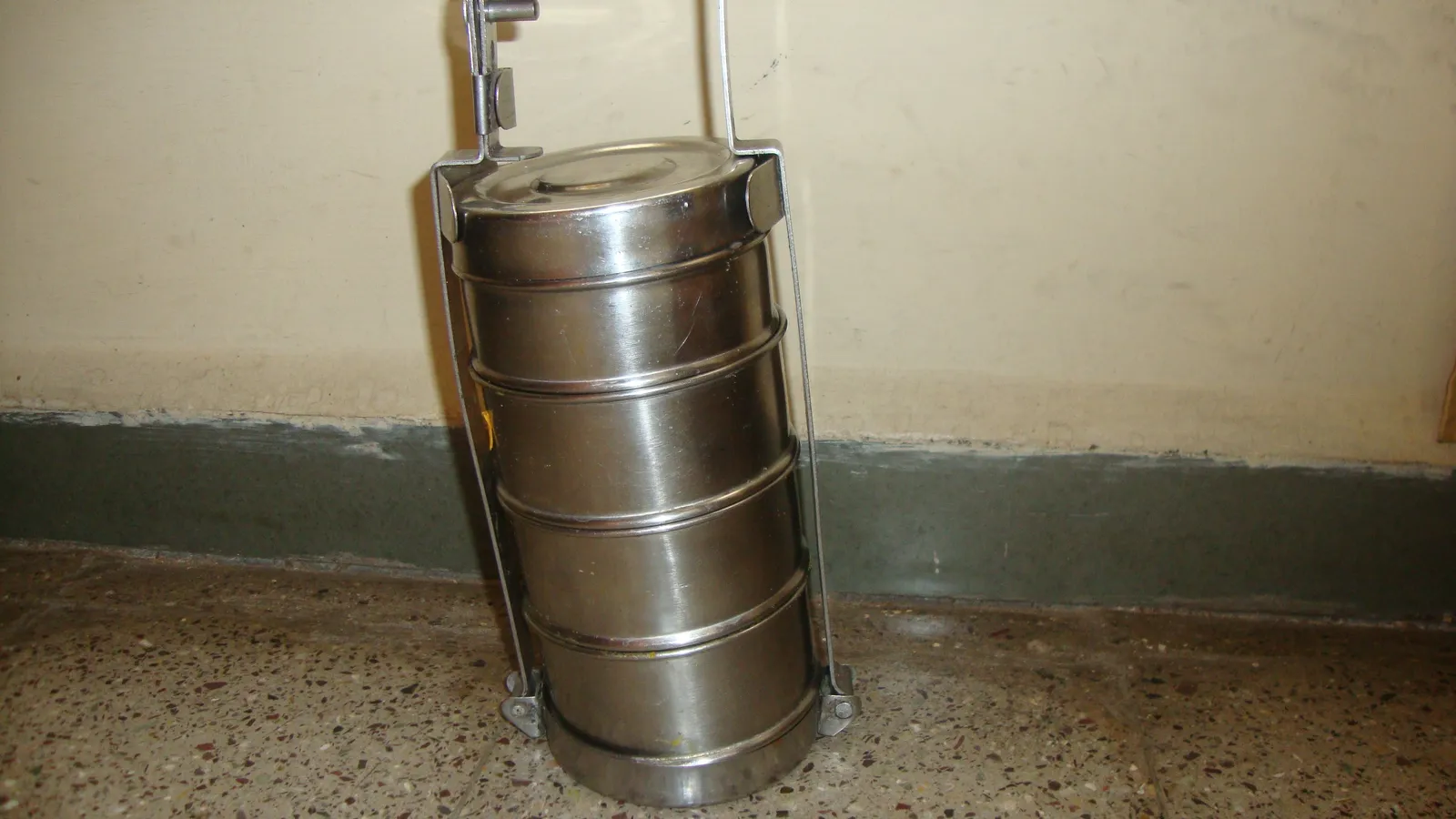
Mess or tiffin: which suits an aspirant living away?
Neither is right for everyone. Use these questions to decide:
Timings: a mess serves at fixed hours. If coaching classes clash with those hours, a tiffin delivered to the room works better.
Choice: a mess usually has some variety and refills. A tiffin is one fixed portion, so check whether it is enough.
Trial: pay for one week before signing up for a month, and eat there on the busiest day.
Hygiene: look at the kitchen or packing area if you can, and ask other students.
Exit terms: ask in writing what happens if your child stops midway.
We compare cost, hygiene and nutrition in more detail in tiffin service or hostel mess.
How much should you budget for food each month?
Prices differ between cities, so build the budget from your own quotes, with your child:
Base meals: the monthly mess or tiffin fee, call it M.
Fill-in food: fruit, milk, curd, eggs or sprouts bought weekly. Add up one real week's bill and multiply by four. Call it F.
Planned orders: agree on a number of orders per week. Multiply by a typical order value and by four. Call it O.
Buffer: about a tenth of M + F + O for exam weeks and illness.
The monthly food budget is M + F + O + buffer. Send it weekly rather than monthly, so a bad week doesn't empty the account. For the rest of the costs of living away, see our monthly budget for students living away for coaching.
What should a parent say on the phone?
Open with curiosity, not a quiz about the delivery app history. You could say:
"What did you eat today, and at what time?"
"Which meal is the hardest to manage with your class timings?"
"If we keep two orders a week as a treat, what would make the other days easy?"
"Shall we try the tiffin for one week and see?"
Agree on one change at a time. For what a day of meals, water and snacks can look like in exam season, read our eating routine during exam prep.
Late-night orders often follow study sessions that ran over because there was no clear stopping point. Fermi's AI tutor works out what your child already knows and builds a plan for the session, so it's easier to finish on time and eat on time.
Tele MANAS, the Ministry of Health and Family Welfare's free, 24x7 mental health helpline, is on 14416 or 1800-891-4416 (IIT Kanpur counselling service page).
Start this week: get one mess or tiffin quote, fill in M, F and O together, and agree on the number of orders.


