

On this page
When a school assignment requires online research, many students type the question into a search engine, click the first result, and copy paragraphs directly into their document. This habit bypasses the actual learning process and often leads to them submitting unreliable or biased information.
According to the OECD Programme for International Student Assessment (PISA) 2018 report, on average across OECD countries, only 9% of 15-year-old students could distinguish between fact and opinion when given implicit cues about the source. Navigating the internet safely and critically is a skill that requires active parental guidance and a clear framework for studying at home.
Here is how to help your child research school assignments online, evaluate their sources, and write in their own words without relying on the simplest search results.
Why is the first search result not always reliable?
Search algorithms are designed to rank pages by popularity, user engagement, and search engine optimisation, not necessarily by factual accuracy or educational value. When your child clicks the top result, they might land on an AI-generated summary, a crowd-sourced wiki, or a heavily biased opinion piece rather than a primary source.
To break the habit of clicking the first link:
Scroll past the top three: Encourage your child to look at the fourth or fifth result. These often contain more robust primary sources, educational sites, or university publications.
Check the URL domain: Teach them to look for domain extensions like `.edu`, `.gov`, or recognized research institutions before they click.
Compare two sources: Ask them to find two different websites that say the exact same thing before they accept a claim as a fact. This builds a healthy scepticism toward single sources of information.
For a detailed look at search techniques and building a research mindset, read our guide on How to Teach Your Child to Search the Internet for Homework.
How to check if a website is reliable?
Students often struggle to tell the difference between a neutral factual report and a persuasive essay designed to sell an idea. Give them a "stop and check" routine before they even start reading the main text.
Who wrote this? Have them look for an author's name or an "About Us" page. If the information is published by an official body like NASA, the World Health Organization, or a university, it is generally reliable.
Are there citations? Good articles link to their primary sources, peer-reviewed studies, or official data. If a page makes a bold claim without a link to back it up, it should be treated with caution.
Is it fact or opinion? Remind them of the PISA finding. Ask them directly, "Is the author reporting what happened, or are they telling you how you should feel about what happened?"
How to stop a child from copy-pasting from the internet?
If the browser tab is open while they write, they will inevitably copy the text. It is a natural impulse to use the "perfect" sentence sitting right in front of them, especially when they are tired or rushing to finish an assignment.
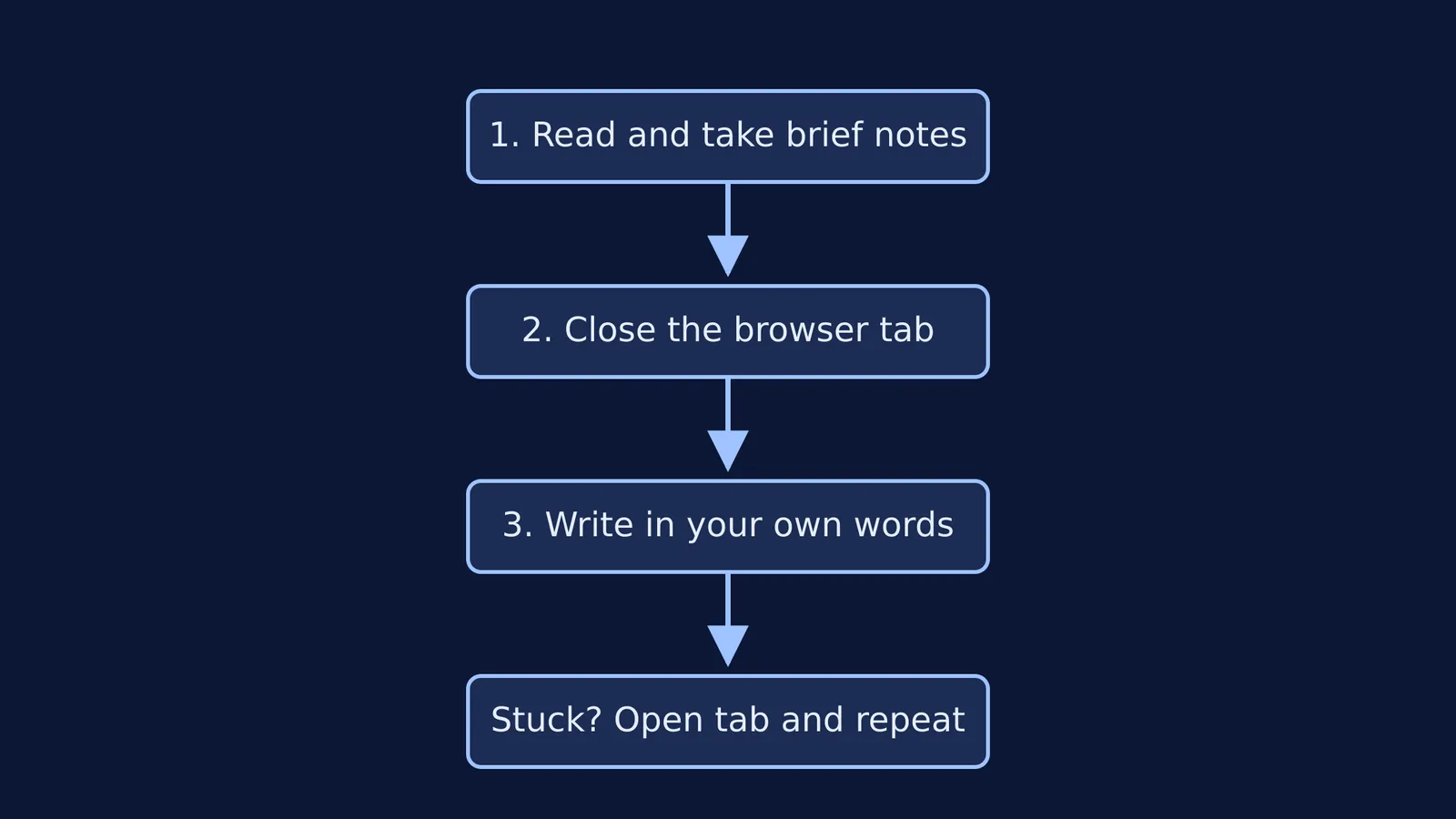
To build active learning habits, use this structured three-step framework:
Read and take brief notes: Have your child read the page and write down only keywords, dates, and numbers. Tell them that no full sentences are allowed on the notepad.
Close the tab: Once they have the data, have them close the browser tab or physically hide the source text completely.
Write in their own words: Ask them to construct the paragraphs themselves using only their brief notes.
If they get stuck, they can open the tab again, read it once more, and close it again before trying to write. This forces the brain to process the information and build real understanding. It is a similar approach to how Fermi's AI tutor works: it holds a line of reasoning across a session, notices where a student is stuck, and decides whether to explain or ask, rather than just printing an answer to copy.
What to do when they copy from guidebooks instead?
Sometimes the copy-paste habit extends offline. If they are relying heavily on physical guidebooks or answer keys instead of doing the mental work, the exact same active learning principles apply. They must close the guidebook before writing their final answer. For more on handling this specific problem, see Why children copy from guidebooks and how to break the habit.
Once they have gathered their notes and written the content in their own words, structuring the final piece is the next hurdle. To help them present their research clearly and confidently, you can use the techniques in our guide on How to help your child improve answer writing for boards.


