On this page
Middle school brings a sharp jump in academic expectations. When a Class 6 student suddenly faces more subjects, heavier textbooks, and regular tests, parents naturally want to step in and manage their time. However, building a study timetable is less about enforcing hours and more about teaching your child how to manage themselves.
By sitting with your child and planning a simple weekly schedule they control, you help them transition from simply "doing homework" to active self-regulation.
How much study time does a Class 6 child actually need?
It is easy to over-schedule a child in the pursuit of good grades, but more hours do not always mean more learning. According to a major review by Duke University researcher Harris Cooper, the optimal amount of homework follows a "10-minute rule," equating to roughly 60 minutes a night for a Class 6 student (Duke University).
Pushing far beyond this limit often leads to diminishing returns and burnout. Data from the OECD PISA assessments shows that the academic benefits of homework level off after about four hours per week across countries (OECD-final.pdf)). For a Class 6 student, an hour of focused, independent work is an excellent daily target.
Why should your child own their timetable?
A timetable handed down as a set of rules is likely to be resisted. Research into autonomy-supportive parenting shows that when parents give children choices, students develop stronger intrinsic motivation and persistence.
A major meta-analysis of over 300,000 students found that intrusive, direct help with homework—such as sitting with the child and checking every answer—is consistently linked to lower achievement (NIH). This type of oversight can unintentionally undermine a child's confidence. Instead, acting as a coach who guides the planning process helps them build executive function. Let them choose which subject to tackle first or how to organise their desk; these small choices build ownership over the work itself.
When they do get stuck while working independently, Fermi's AI tutor can step in without taking over. It teaches rather than simply answering, holding a line of reasoning across a session to notice where a student is stuck, and deciding whether to explain, ask, or show.
How do you build a Class 6 study timetable together?
A good timetable makes study feel like a normal part of the day rather than an interruption. Sit down together with a blank sheet of paper or a whiteboard and follow these steps:
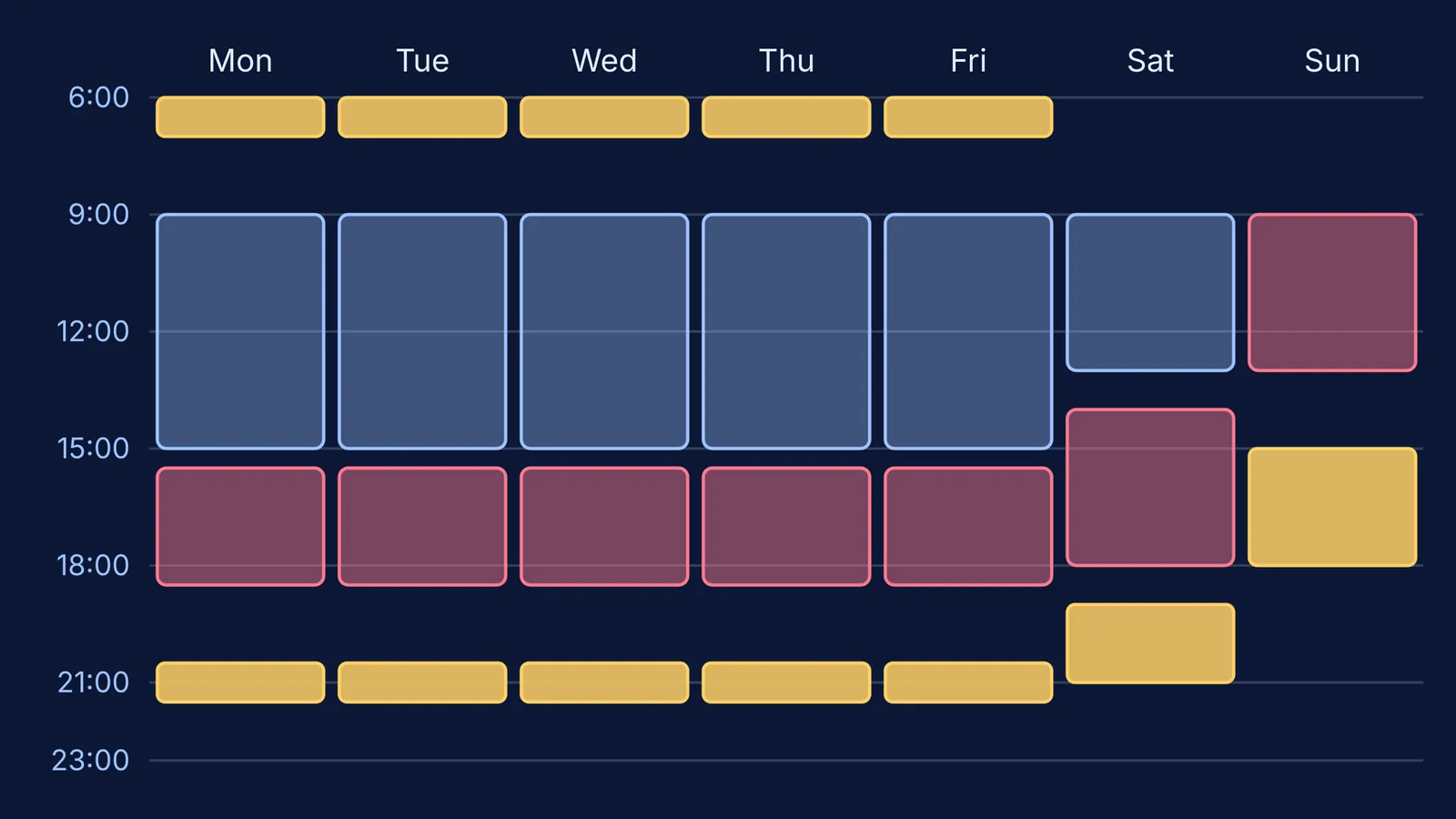
Map the non-negotiables first: Block out school hours, travel time, sports, and family meals. This visually demonstrates to your child how much free time they actually have.
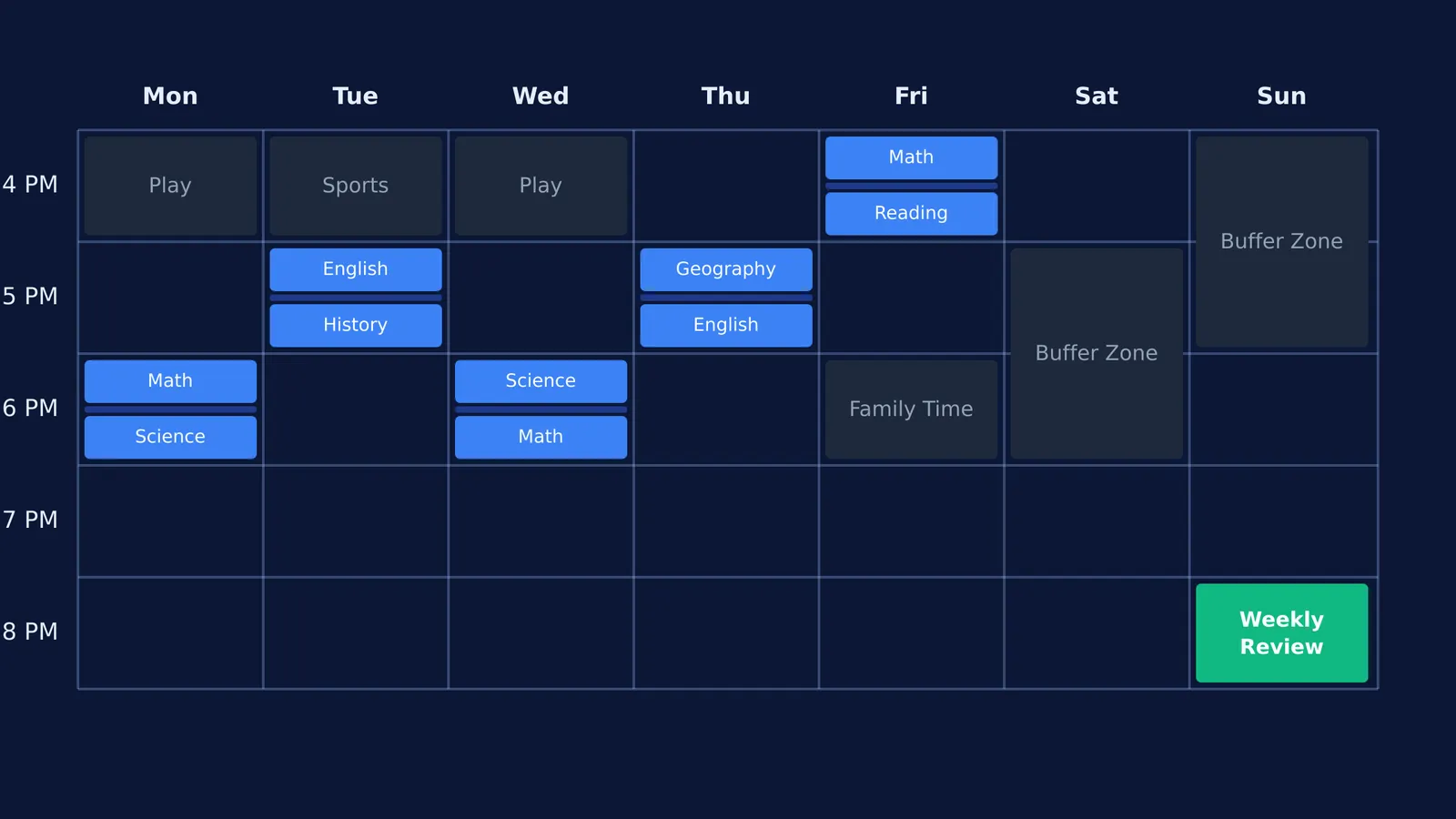
Block out an hour for study: Break this hour into two shorter sessions, separated by a short break to stretch or drink water.
Put the hardest subject first: Encourage them to schedule their most challenging subject for when their energy is highest, often right after a short rest following school. If they have gaps in their foundation for these hard subjects, the Fermi Concept Library has a mapped lesson for every concept in science and mathematics.
Leave buffer zones: Do not schedule every minute. Leave Saturday evenings or Sunday mornings entirely blank to act as a buffer for tasks that take longer than expected.
Helping them form these routines now echoes the ideas explored in William James, the first psychology textbook and habits of study, where making useful actions automatic frees the mind for harder thinking.
What should you say during a Sunday review?
A timetable is only useful if it is maintained. Set aside time every Sunday evening to review the past week and look ahead. This should be a collaborative check-in, not an interrogation.
Here is a script you can use to guide the conversation:
"Looking at last week, which study block felt the easiest to stick to?"
"Did any subject take longer than we planned?"
"What do you have coming up this week? Do we need to move your science block to Wednesday to prepare for the test?"
"What is one thing you want to change about the timetable for this week?"
By reviewing the plan together, you teach them to evaluate their own methods—a skill central to the findings in Ten study techniques rated: inside the 2013 Dunlosky review. If they stick to the timetable most of the time, treat it as a success. The goal is to build a lasting habit, not to demand perfection.