

On this page
Your five-year-old can say “Pachycephalosaurus” without stumbling, corrects your pronunciation of “Triceratops”, and wants the same dinosaur book every night. Is this a phase to wait out or something to build on? The research says build on it, gently, because these interests often fade once school takes over.
Is it normal for a child to be obsessed with dinosaurs?
Yes, and psychologists have a name for it. They call topics like dinosaurs, airplanes or horses “conceptual interests”: interests that lead to collecting facts and knowledge, not to a game or a skill.
In a 2008 study in Cognitive Development, Joyce Alexander and colleagues followed 215 children from about age 4 to 6, checking in with parents every two months for two years. Dinosaurs were among the researchers' examples of a conceptual interest. About 50% of the children had a conceptual interest at some point in those two years, but only 20% kept one going long-term.
The authors point to earlier research linking lasting interests with gains for learning: more knowledge, more persistence, sharper attention and deeper processing of information. They also note that children with these interests look for information in books, typically read to them by others. So your child needs you as the supply line.
Why do dinosaur interests fade once school starts?
In the Alexander study, the chance that a child showed a conceptual interest dropped as school began. This happened at a similar rate for boys and girls, and it was the only kind of interest to show a significant decline.
The authors suggest some reasons. A classroom has more children, stricter curriculum goals and less time for one child's questions. New friends may not care about dinosaurs, so a child may keep quiet about them to fit in. The study also found that parents reported such interests far more often in boys, and the authors suggest this may partly reflect toys such as dinosaur models being marketed to boys. So if your daughter loves fossils, make extra room for it.
How do you encourage a child who loves dinosaurs?
Use three tools: books, a visit and a sketchbook. Then ask questions that point toward real science.
Books: mix picture books with a simple reference book. Let your child “teach” you a page each night, so they practise explaining what they know.
A visit: a natural history gallery, a fossil park or a science centre. Our guide to planning a science museum visit with children has ideas for before, during and after the trip. In Gujarat, the Balasinor Fossil Park at Raiyoli shows dinosaur bones, eggs and nests. India Tourism says over 13 species of dinosaur once lived there, including *Rajasaurus narmadensis*, a meat-eater with a crested horn.
A sketchbook: ask your child to draw the skeleton, not the cartoon. In seven experiments published in 2016, Jeffrey Wammes, Melissa Meade and Myra Fernandes found people remembered words they drew better than words they wrote out. That was a memory study, not a study of children and dinosaurs, so take it as a good reason to draw rather than a promise.
Stories of real fossil hunters help too. Mary Anning's story shows a young person making real discoveries on a beach.
A four-week plan from favourite dinosaur to real science
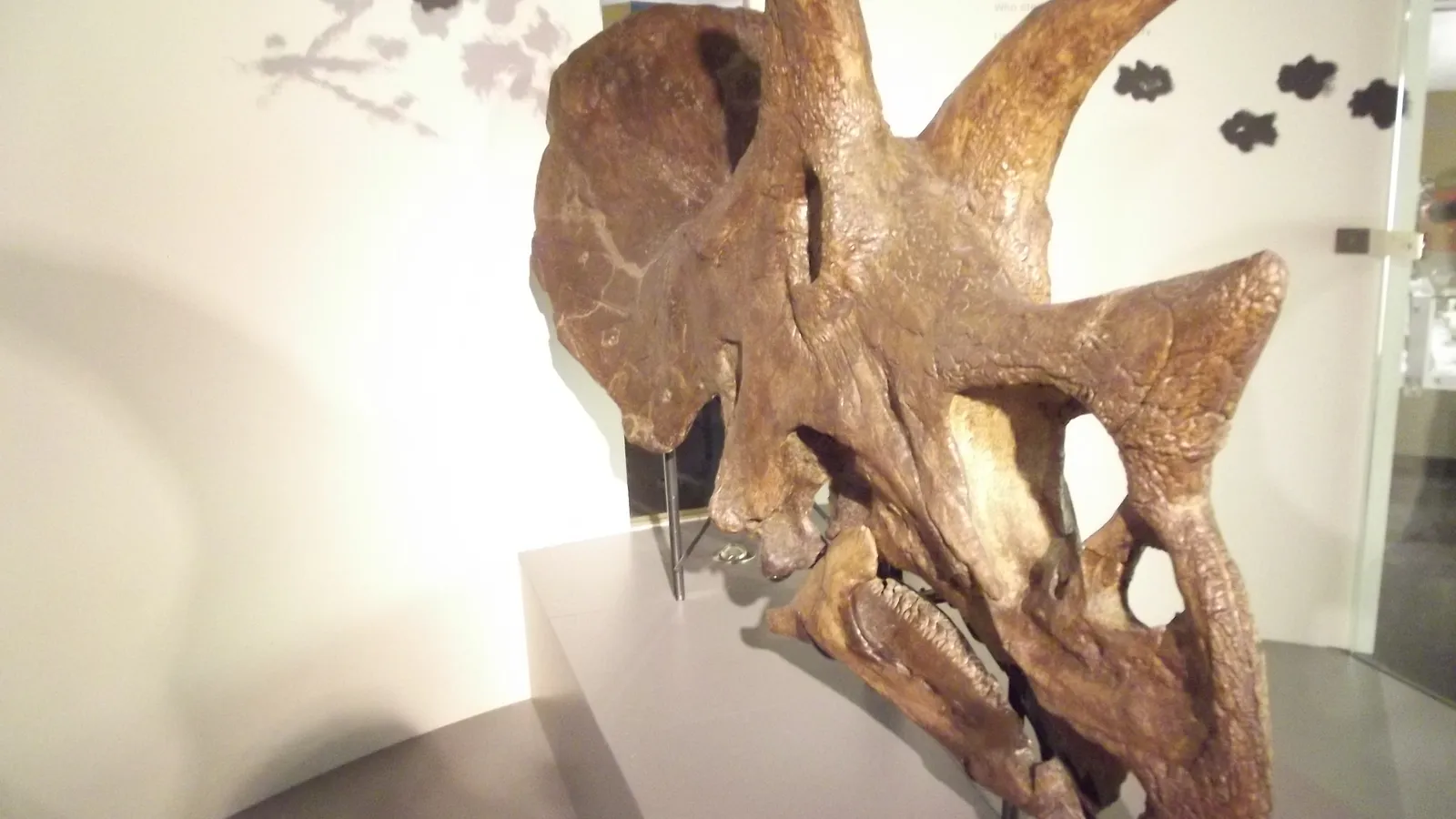
Week 1, ask “how do we know?” Pick your child's favourite dinosaur. Ask: “Nobody has seen one alive, so how do scientists know what it ate?” Look at its teeth together in a book: flat or pointed?
Week 2, measure it. Find its length in a book and pace it out in the park or the building corridor. Your child now has a feel for size and a reason to measure.
Week 3, draw the bones. Copy a skeleton from a book or a museum photo, and label the parts your child knows: skull, ribs, tail.
Week 4, find a living dinosaur. Watch the pigeons or crows outside. The Natural History Museum in London explains that birds are living dinosaurs, descended from theropods, the group that also included *Tyrannosaurus rex*. Compare a bird's feet with a theropod's.
A script for when your child asks something you cannot answer: “I don't know. How could we find out?” Then look it up together. You are showing them how science works, not just handing over a fact.
What if your child is older, or the interest moves on?
That is fine. A dinosaur fan often moves on to fossils, evolution, rocks or animals. Our article on encouraging curiosity in children covers how to keep asking good questions whatever the topic.
For a teenager who wants to go deeper into school biology topics such as evolution and classification, the Fermi Concept Library covers every concept in biology, each with its own lesson and its place in the map.
Next step: this weekend, ask your child to teach you about their favourite dinosaur, then ask, “How do scientists know that?”


