On this page
When you study evolution for NEET-UG or CBSE, fossils are presented as settled evidence. Two hundred years ago, nobody knew what a giant skeleton in a cliff might be, or whether animals could go extinct at all. Some of the specimens that answered those questions were dug out by a young woman with little schooling, on a beach in Dorset. This post covers who Mary Anning was, what she found, why she was left out of the science of her day, and what her way of working teaches.
Who was Mary Anning?
The Natural History Museum in London gives her story. She was born in 1799 in Lyme Regis, on what is now called the Jurassic Coast. Her family were poor religious dissenters, and of nine children only Mary and her older brother Joseph survived to adulthood. Her father Richard, a cabinetmaker and amateur collector, taught her to find and clean fossils, and sold them from his shop. When he died in 1810, the family sold fossils to pay their debts.
Mary had little formal education, but she could read and taught herself geology and anatomy.
What did she find?
The ichthyosaur. In autumn 1811 Joseph found a strange skull. About a year later Mary dug out the rest of its skeleton, around five metres long, which took several months. Scientists first thought it was a crocodile. By 1820 it was recognised as an extinct marine reptile and named Ichthyosaurus, "fish lizard". It was not the first ichthyosaur found, but the NHM says it was the first to be scientifically studied and described.
The plesiosaur. In December 1823 she found the first complete skeleton of a Plesiosaurus. Georges Cuvier, known as the father of palaeontology, suspected a fake made from two animals. More drawings convinced him it was real.
The pterosaur. In December 1828 she found the first remains attributed to Dimorphodon, a flying reptile. It was the first pterosaur found outside Germany.
Coprolites. She also pioneered the study of coprolites, fossilised dung, which can show what ancient animals ate.
The Oxford geologist William Buckland described both kinds of find from the rocks at Lyme Regis in 1829 papers in the Transactions of the Geological Society: on coprolites and on a new species of pterodactyle.
Why was she left out of the science?
According to the NHM, male scientists bought the fossils Mary uncovered, cleaned, prepared and identified, and often did not credit her in their papers, even when writing about her ichthyosaur. When the plesiosaur was debated at a special meeting of the Geological Society of London, she was not invited. The Society did not allow women to become Fellows until 1908.
The historian Hugh Torrens' 1995 paper in the British Journal for the History of Science, Mary Anning (1799-1847) of Lyme; 'the greatest fossilist the world ever knew', quotes in its title a description of her as "the greatest fossilist the world ever knew", and is a starting point for her full history.
How do scientists still use her specimens?
Her fossils are not only museum pieces. In 2013, Judy Massare and Dean Lomax published a description of an ichthyosaur in the Sedgwick Museum, Cambridge, collected by Mary Anning that had never been properly described. Its abstract notes that, as an Anning specimen, it is certainly from the Lower Jurassic of Lyme Regis. Careful collecting two centuries ago still gives researchers usable data.
How to look at a fossil the way she did
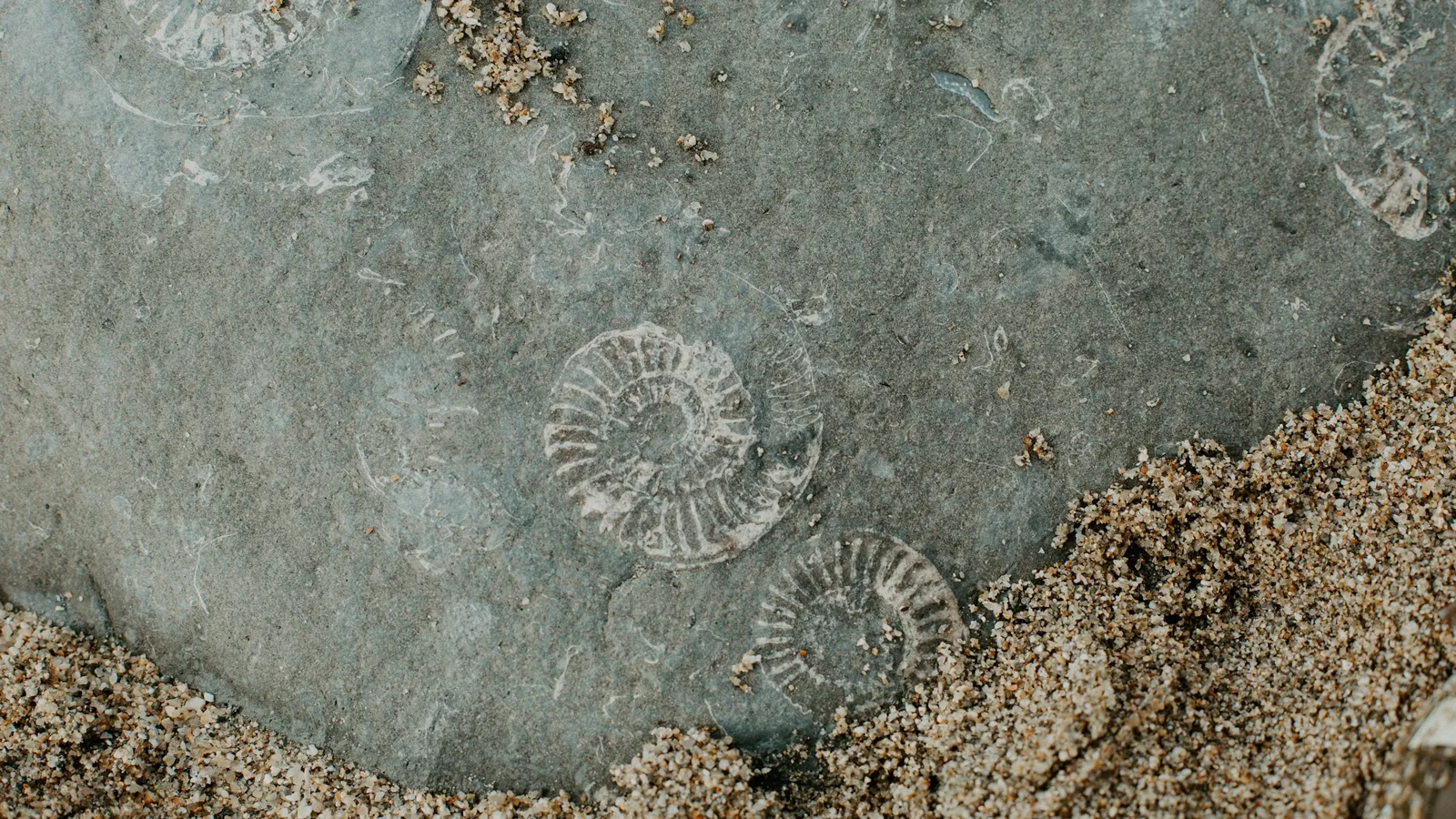
You do not need a beach to practise her method. Try it on a fossil photograph or a museum visit.
Describe before naming. List what you see: size, number of bones, shape of the skull, where the eyes sit.
Compare with living animals. Which parts look like a fish, a reptile, a bird? Which look like nothing alive?
Note what is missing. A skeleton without a tail or skull limits what you can claim.
Record where it came from. Rock layer and location matter as much as the bones. That is why her specimens are still trusted.
Common mistake: naming first and then seeing only what fits the name. Cuvier's doubts about the plesiosaur came partly from how unlike any known animal it looked.
How is she remembered?
Her friend, the geologist Henry De la Beche, painted Duria Antiquior in 1830, which the NHM calls the first pictorial representation of prehistoric life based on fossil evidence. He sold prints to raise money for her. She died of breast cancer in 1847, aged 47, still short of money. In 2022, a statue of her and her dog was unveiled in Lyme Regis after a campaign started by 11-year-old Evie Swire.
What can a student take from her way of working?
Teach yourself the theory behind the practice. She read anatomy so she could identify what she found, not just dig it up.
Patience beats speed. Excavating one skeleton took months.
Keep good records. Her finds are useful today because their origin is known.
Her fossils fed the debates that Charles Lyell and Charles Darwin later built on; see our posts on Charles Lyell's geology and evolution for NEET. If terms like extinction, adaptive radiation or homologous organs are unclear, the Fermi Concept Library has a lesson for every concept in biology, each placed in a map so you can see how ideas connect.
Next step: pick one fossil image from your NCERT evolution chapter and write the four-step description above before reading its caption.