On this page
A day at a science centre or a planetarium show can spark a question that lasts for years. It can also become a blur of buttons and queues. What makes the difference is often not the museum but the conversation around it. This post sums up what researchers have learned by watching families at exhibits, and gives a simple plan for before, during and after your visit.
Where can families in India find science centres?
The National Council of Science Museums, an autonomous body under the Ministry of Culture, runs a network of science centres and museums across the country. Its national centres include Science City and the Birla Industrial and Technological Museum in Kolkata, the Nehru Science Centre in Mumbai, the Visvesvaraya Industrial and Technological Museum in Bengaluru, and the National Science Centres in Delhi and Guwahati. Many state governments and cities also run their own science centres and planetariums. Check the website before you go for show timings, the language of planetarium shows and any gallery closures.
What does research say about how children learn at exhibits?
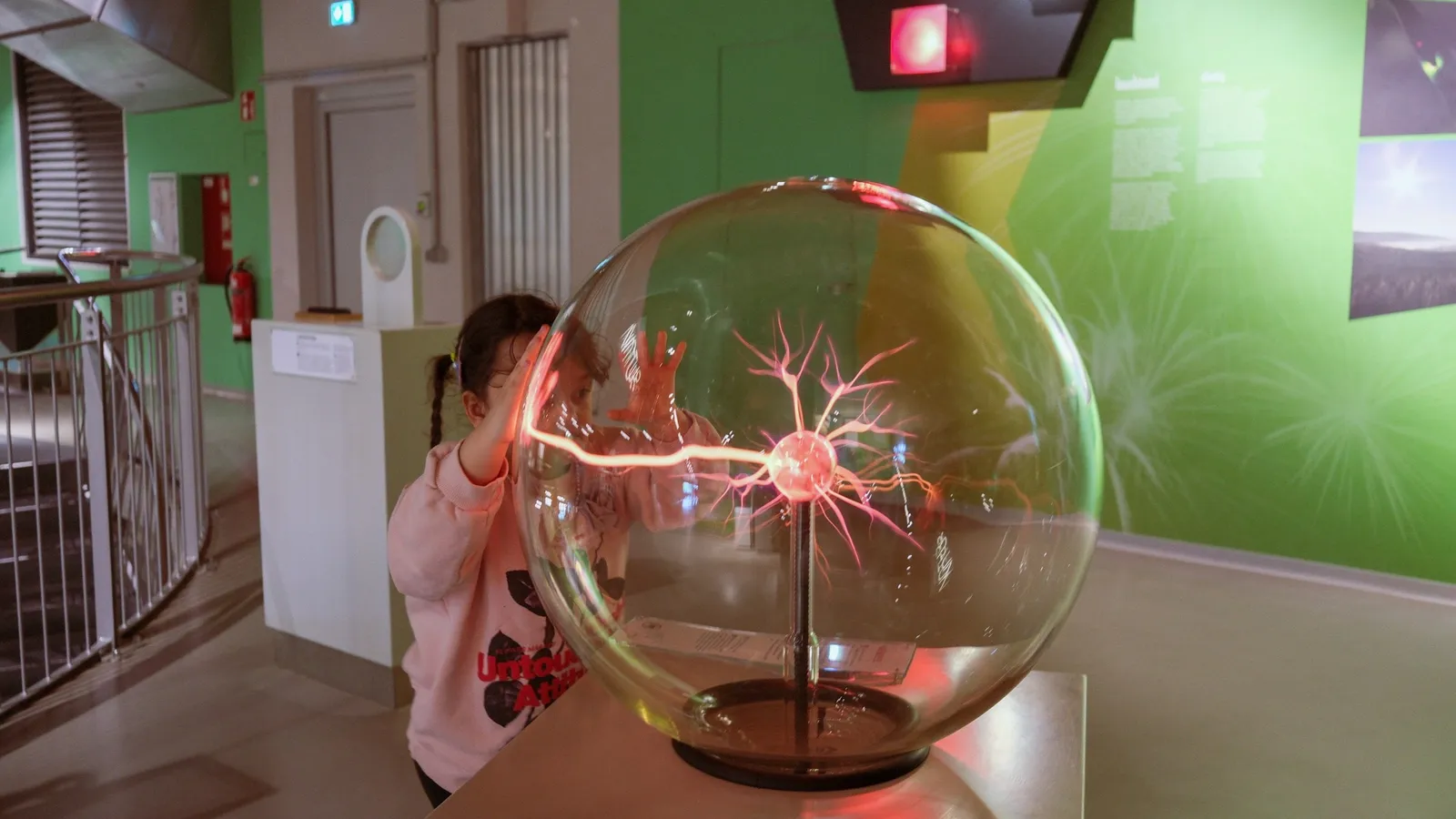
Researchers have spent years recording families at museum exhibits. A large project led by Callanan, Legare, Sobel and colleagues (2020) studied families at gear exhibits in three children's museums. It focused on two things families do together, explaining and exploring, and on how they relate to children's causal thinking when given more structured tasks afterwards.
A related experiment by Willard and colleagues (2019) gave parents of 4 to 6 year olds one small instruction at a gear exhibit. When parents were asked to encourage explanation, families talked more about how the gears worked. When asked to encourage exploration, children spent more time connecting gears. In the explain group, the questions parents asked predicted how much their children discussed and tested the gears. A one-line nudge to the adult changed what the child did.
There is a warning in this research too. In a study of families at interactive science exhibits, Crowley and colleagues (2001) found that parents were three times more likely to explain science to boys than to girls, even though they talked equally to sons and daughters about how to use the exhibits. Nobody intended it, but it adds up. Our post on building girls' confidence in maths and physics looks at this pattern more widely.
How should you plan the visit?
Pick one gallery, not the whole building. Children remember a few exhibits they understood better than twenty they rushed past.
Let your child choose. Look at the museum's website together and let them pick two exhibits or one planetarium show.
Carry one question. For example: "Why does the Moon change shape?" or "How does electricity get to our house?" The visit becomes a hunt for an answer.
Plan breaks. Tired children stop asking questions. Eat, sit and talk halfway through.
What should you do at the exhibit?
Use three kinds of prompts, roughly in this order:
Notice: "What do you see happening?"
Try: "What happens if you change this one thing?"
Explain: "Why do you think it did that?"
Let your child work the exhibit while you watch. Read the label after they have tried it, and compare their idea with what it says. If neither of you knows the answer, say so and make it a question to look up at home. That is a useful lesson in itself.
For a planetarium show, give your child something to look for, such as a constellation, a planet or how the sky turns through the night. Afterwards, ask them to describe one thing they saw in their own words.
How do you keep the learning going afterwards?
The trip ends at the gate, but the learning does not have to.
Retell it at dinner. Ask your child to explain one exhibit to someone who was not there.
Go outside after a planetarium show. On a clear evening, try to find the Moon or one bright planet the show mentioned.
Repeat one idea at home. A floating egg or a fizzing bottle from our kitchen science experiments can extend an exhibit on density or chemical change.
Let a question grow. If an exhibit on orbits, light or magnets sparked curiosity, the Fermi Simulation Lab has interactive simulations for ideas that are easier to see than to read, so your child can keep changing things and watching what happens.
Before your next visit, sit with your child for ten minutes, open the museum's website and choose one gallery and one question together.