On this page
Teaching children about fire safety can feel daunting, but it is one of the most critical life skills they will learn. You want to make sure they know exactly what to do without making them fearful of their own home.
By introducing simple rules, explaining the reasons behind them, and practicing an escape plan together, you give your kids the confidence to react quickly if an emergency happens. Here is a practical guide to talking about fire safety, setting boundaries, and running a home fire drill.
What are the basic fire safety rules for kids?
Prevention starts in the kitchen. The American Red Cross advises keeping items that can catch fire at least 3 feet away from anything that gets hot, such as space heaters. For children and pets, set a clear boundary of three feet around the stove to prevent accidental burns. If you use a gas stove, teach older children to check that the knobs are turned off completely when not in use, and explain the smell of leaking gas so they know to alert you immediately.
Explain that matches and lighters are tools for adults, not toys. If your children find them, they must not touch them and should tell a grown-up immediately. Keep these items completely out of reach.
When children understand the science behind safety rules, they remember them better. If your teenager wants to understand how heat travels or why materials catch fire, they can explore the physics in the Fermi Concept Library, where the AI tutor explains convection and combustion step by step.
What to do if there is smoke or a fire?
If a fire starts, children must know to act immediately rather than hiding. Kids often try to hide under beds or in closets when they are scared, which makes it harder for adults and firefighters to find them.
Teach them these three immediate actions:
Get low and go: Smoke rises, so the cleanest air is near the floor. Children should crawl on their hands and knees to stay below the smoke as they leave.
Test the door: Before opening a door, they should feel it with the back of their hand. If it is hot, they must leave it closed and use their second way out.
Stop, drop, and roll: If their clothes catch fire, running will only feed the flames with oxygen. They must stop immediately, drop to the ground, cover their face with their hands, and roll back and forth to put the fire out.
How do you make a family fire escape plan?
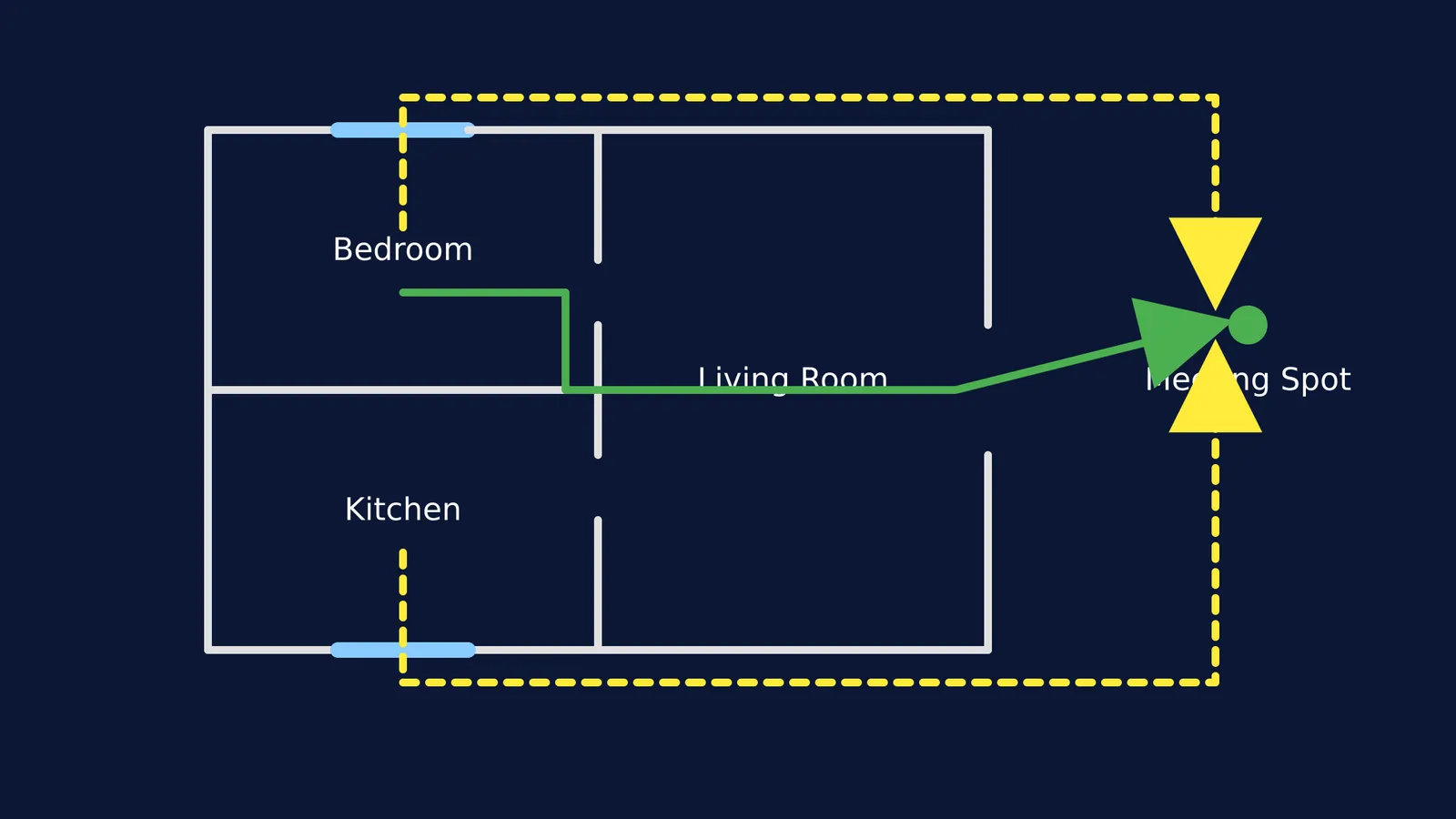
A plan only works if everyone knows it by heart. Sit down with your children and draw a simple map of your home, marking all the doors and windows.
Two ways out: Every room should have at least two escape routes, usually the main door and a window.
Choose a meeting spot: Pick a permanent, safe location outside, like a specific tree or a neighbour's mailbox. Everyone must go straight there and stay there.
Leave things behind: Emphasize that they must never go back inside for toys, pets, or belongings.
The American Red Cross recommends that families practice their home fire escape plan at least twice a year. Try it once during the day and once in the evening, ensuring children know what the smoke alarm sounds like and can wake up to it.
Which emergency numbers should kids know?
Once everyone is safely at the meeting spot, you need to call for help. Make sure your children memorize the national emergency numbers.
In India, the unified national emergency number for fire, police, and ambulance is 112. They should also know the traditional fire service number, 101. Run through a practice conversation with them so they know to speak clearly, give their address, and say that there is a fire.
By combining clear boundaries with regular practice, you turn a scary topic into an empowering family routine.
For more on the science of heat and everyday safety, you can explore the physics of conduction, convection and radiation or learn about combustion, fuels and flame zones.