

On this page
Combustion is one of the few chemistry topics you can watch at home every day, on a gas stove or a candle. It is also a chapter where students lose marks on small slips: calling the yellow part of a flame the hottest, or dividing the wrong way in a calorific value sum. This guide covers the ideas, two worked calculations and a revision routine.
Where is combustion in the current NCERT books?
In the 2026-27 books, the core ideas are in Class 7 Curiosity, Chapter 5, "Changes Around Us: Physical and Chemical": what combustion is, why it needs oxygen, ignition temperature and the fire triangle. The new Class 8 Curiosity book has no separate combustion chapter. The older Class 8 chapter "Combustion and Flame" (2024-25 reprint) goes further, with types of combustion, flame zones, fuels and calorific value. If your school still uses it, learn both.
What does a fire need?
The Class 7 book defines combustion as a chemical reaction in which a substance reacts with oxygen and produces heat and/or light. It needs three things, drawn as the fire triangle:
A combustible substance (the fuel).
Oxygen.
Enough heat to bring the fuel to its ignition temperature, the lowest temperature at which it catches fire.
Take away any one and the fire stops. A candle under a glass tumbler goes out when its oxygen runs low. A blanket wrapped around someone whose clothes are burning cuts off air. The book warns never to use a synthetic blanket, which can melt onto skin.
Ignition temperature explains a classic exam question: a paper cup with water can be heated without burning, and paper wrapped tightly around a metal pipe does not catch fire easily. In both cases heat flows away from the paper (into the water, or along the metal), so the paper does not reach its ignition temperature.
What are the types of combustion?
The older Class 8 chapter names three:
Rapid combustion: a fuel burns quickly with heat and light, like LPG at a stove.
Spontaneous combustion: a material bursts into flame with no obvious cause. The book gives phosphorus, which burns in air at room temperature, as an example.
Explosion: a sudden reaction that releases heat, light, sound and a lot of gas, as in a firecracker.
Which part of a flame is hottest?
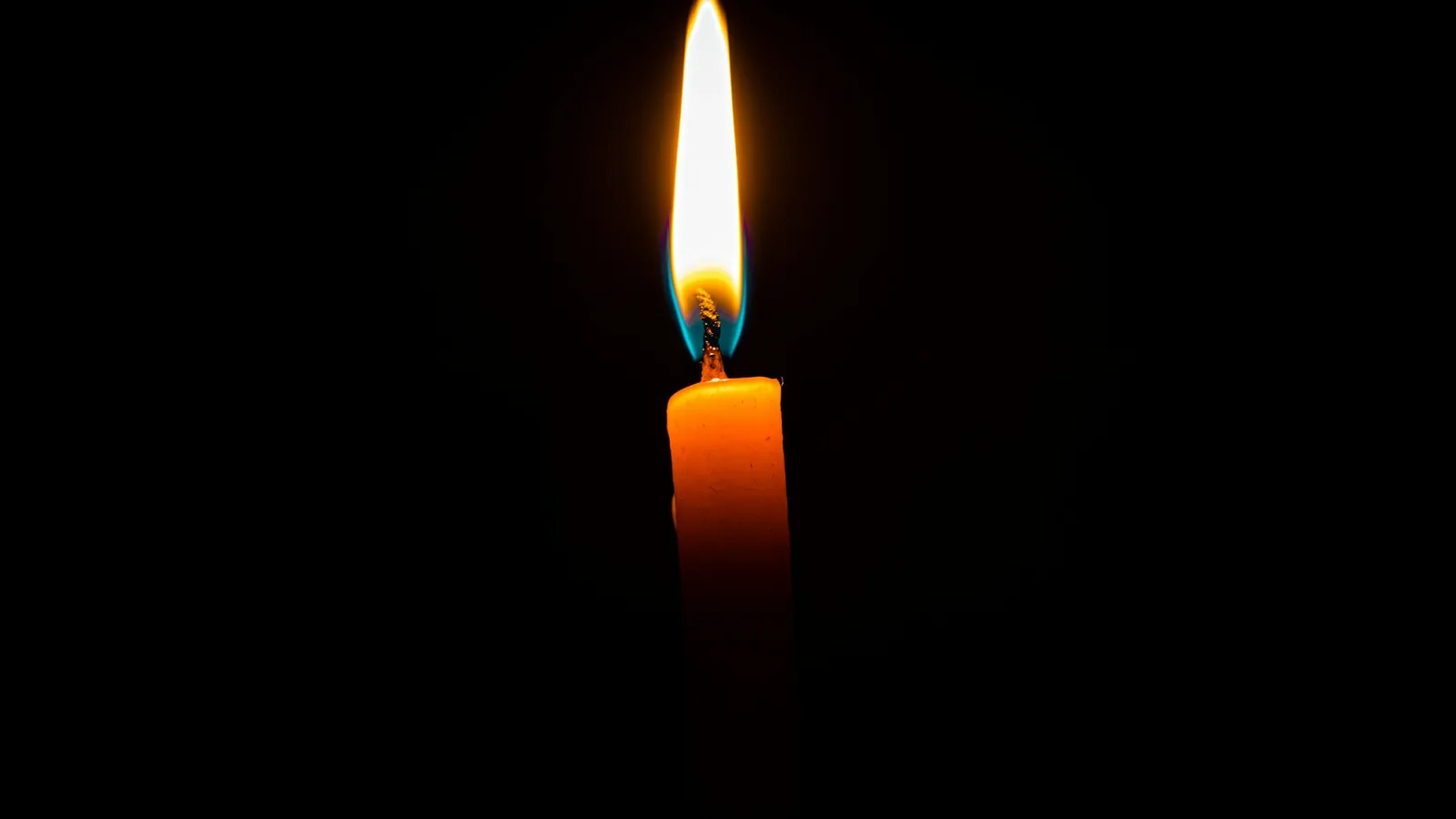
A candle flame has three zones, according to the older Class 8 chapter:
Outer zone (blue, non-luminous): complete combustion; the hottest part.
Middle zone (yellow, luminous): partial combustion; moderately hot.
Inner zone (dark): unburnt wax vapour; the least hot.
That is why goldsmiths blow the outer zone onto gold and silver. And the Class 7 book adds a detail worth remembering: wax melting and turning to vapour are physical changes, while the vapour burning is a chemical change, so a burning candle shows both.
How do you calculate calorific value? Two worked examples
Calorific value is the heat produced when 1 kg of a fuel burns completely, in kilojoules per kilogram (kJ/kg).
Calorific value = heat produced ÷ mass of fuel burnt
Example 1 (from the textbook exercise). 4.5 kg of a fuel burns completely and gives 180,000 kJ. Calorific value = 180,000 ÷ 4.5 = 40,000 kJ/kg.
Example 2. A family needs about 110,000 kJ of heat for a week's cooking. How much fuel is that? The book's table gives LPG as 55,000 kJ/kg, wood as 17,000 to 22,000 kJ/kg and cow dung cake as 6,000 to 8,000 kJ/kg.
LPG: 110,000 ÷ 55,000 = 2 kg.
Wood, taking 20,000 kJ/kg: 110,000 ÷ 20,000 = 5.5 kg.
Dung cake, taking 7,000 kJ/kg: 110,000 ÷ 7,000 ≈ 15.7 kg.
The heat is the same, but the mass of fuel is nearly eight times larger for dung cake than for LPG, and it brings much more smoke. That is the reasoning behind the book's question "Why is LPG a better domestic fuel than wood?"
The usual mistake is to multiply instead of divide. Check your units: kJ ÷ kg gives kJ/kg.
Why does the fuel we choose matter?
The older chapter lists the harm from burning fuels: unburnt carbon particles that cause breathing problems, poisonous carbon monoxide from incomplete combustion (so never sleep in a closed room with burning coal), carbon dioxide linked to global warming, and oxides of sulphur and nitrogen that cause acid rain. The fuels themselves are the subject of our post on coal and petroleum in Class 8.
It also explains why water is not used on electrical or oil fires. Water can conduct electricity, and oil floats on water and keeps burning. Carbon dioxide works better: it is heavier than oxygen, blankets the fire, and cools the fuel as it expands out of the cylinder.
Mistakes to avoid
Calling the yellow zone the hottest.
Writing that air (rather than its oxygen) supports burning. The new Class 8 book notes that nitrogen, about 78% of air, takes no part in combustion.
Saying water puts out every fire.
Treating rusting as combustion without explaining. Rusting also involves oxygen, but it is slow and gives no flame. NCERT asks you to discuss this, so give reasons, not one word.
A practice routine for this chapter
Draw and label the candle flame from memory, with colour, type of combustion and temperature for each zone.
Explain the fire triangle using three fires: a candle, a kitchen oil fire and an electrical fire. For each, say which side of the triangle you would remove.
Do three calorific value sums, one of each kind: find the calorific value, find the heat, and find the mass of fuel.
If the flame zones still feel abstract, the Fermi Simulation Lab has interactive simulations for ideas that are easier to see than read, so you can test your picture before the exam. For a step up to Class 10 reactions, see our guide to chemical reactions in Class 10.
Tonight, light a candle with an adult and identify the three zones before you close the book.


