On this page
Diwali, Durga Puja, Pongal, Eid and Christmas breaks bring days off school, plus guests, travel and late nights. Many students either drop study completely and feel rusty on the first day back, or carry books everywhere and resent both. The middle path is one short, fixed study slot each day, planned around the family rather than against it.
How much should you study during Diwali holidays?
The aim is not to finish a chapter but to keep the thread, so school does not feel like starting over. For students in Class 9 to 12, 15 to 45 minutes on most days is a reasonable target, with one day planned as a full break.
Habit research suggests why a short, regular slot is worth keeping. In a study of habit formation by Lally and colleagues, 96 volunteers repeated one daily eating, drinking or activity behaviour in the same context, such as "after breakfast", for 12 weeks. Missing one opportunity to perform the behaviour did not materially affect the habit formation process. The same study found that reaching 95% of each person's peak automaticity took between 18 and 254 days, so habits can be slow to build. A small daily slot can help keep an existing routine going through a busy week.
What should the daily study slot look like?
Use the slot for chapters you have already studied. In Roediger and Karpicke's experiments on test-enhanced learning, students who took recall tests on a prose passage remembered more after two days and after one week than students who restudied it, even though restudying made students feel more confident.
A meta-analysis of 317 experiments on spaced study by Cepeda and colleagues found that the gap between study sessions that gave the best recall grew as the time until the final test grew. For exams months away, that supports coming back to last month's chapters during a festival week rather than leaving them until just before the exam.
Here is the 30-minute version of the slot:
Five minutes: on a blank page, write everything you remember from one chapter you finished before the break.
Fifteen minutes: open the book, mark what you missed, then solve three questions from that chapter.
Ten minutes: write one line for tomorrow, naming the chapter and the one gap you found.
Fix the slot to the same time and place each day, such as after morning chai.
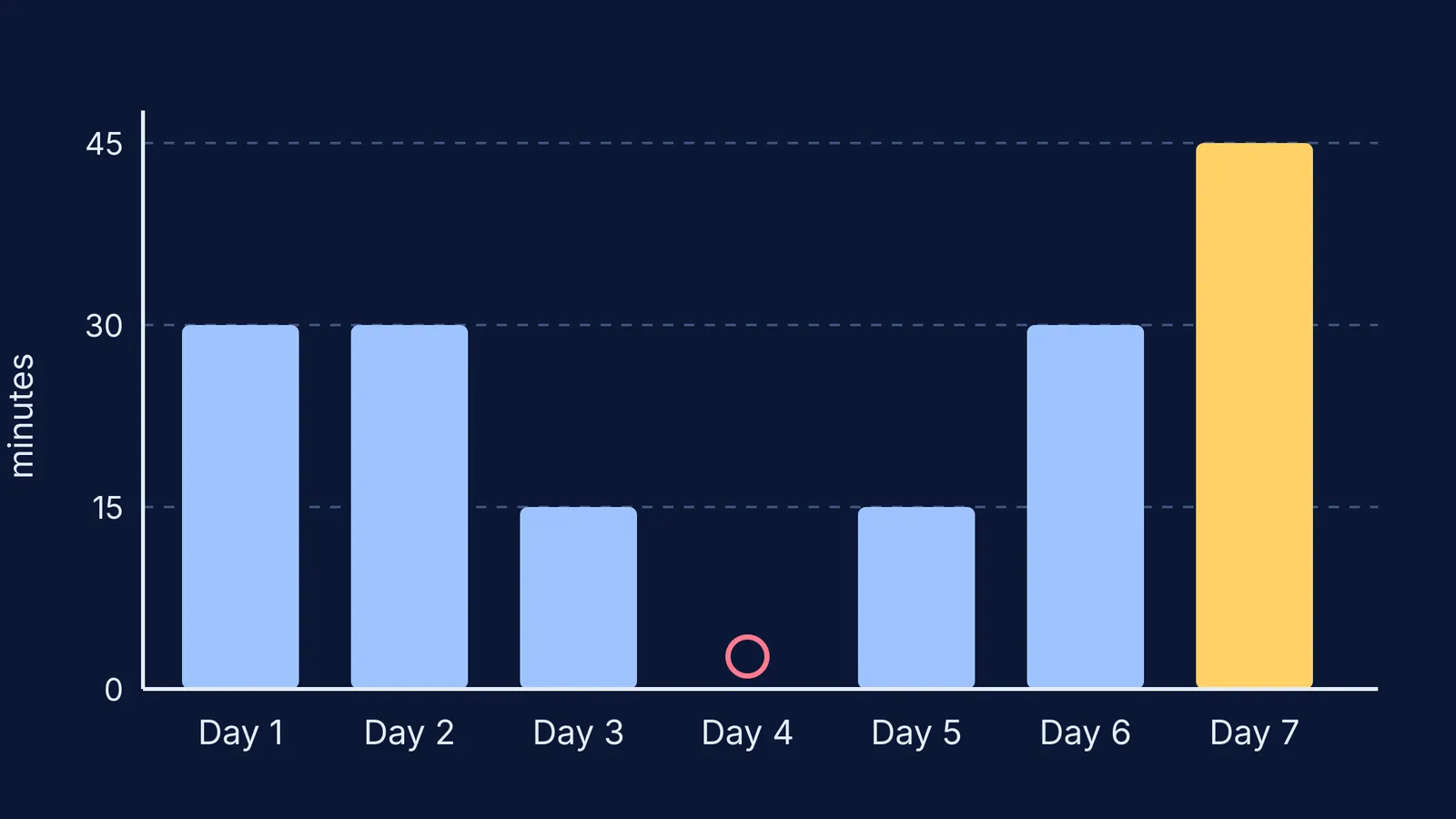
A worked example: a 7-day festival break plan
This assumes a seven-day break with the main festival day in the middle; shift days to match your calendar.
Day 1 (cleaning, shopping): 30 minutes. Physics or maths recall.
Day 2 (first guests): 30 minutes. Chemistry or biology recall.
Day 3 (eve of the main day): 15 minutes. Blank-page recall only, no questions.
Day 4 (main festival day): zero. Celebrate fully.
Day 5 (visiting relatives): 15 minutes, in the morning before you leave.
Day 6: 30 minutes. Go back to the chapter with the most gaps in your notes.
Day 7 (day before school): 45 minutes. Read your one-line notes from the week and list what to ask your teacher.
That is under three hours across the week, without missing a puja, a meal or a visit.
How can parents protect the study slot without nagging?
Agree the slot once, before the break, then stop reminding. A script:
"Your study time is 9 to 9:30 every morning, except on Diwali day. After that you are free, and I will not ask about studies."
"If guests arrive during your slot, finish your 30 minutes and then come and meet them. I will tell them you will join soon."
Relatives will ask about marks, so plan how to handle relatives asking about your child's marks before they arrive. If your child is in Class 10 or 12, our family plan for Diwali and weddings in the board exam year covers the extra pressure that year brings.
Protect sleep over study. The American Academy of Sleep Medicine's consensus statement says teenagers 13 to 18 years of age should sleep 8 to 10 hours per 24 hours on a regular basis. After a late night, move the slot later rather than cut sleep.
What if the festival break goes off track?
If two or three days slip, do not double up to make up the time. Restart with a 15-minute blank-page recall the next morning and carry on. Once school restarts, a 4-week spaced revision schedule for any chapter can pick up where the festival slot left off.
If you sit down on Day 7 and cannot decide where to begin, Fermi's AI tutor can work out what you already know and build a plan for the session, so you start with a clear next step instead of a blank page.
Pick tomorrow's time and chapter now, and stick the note on the fridge.