On this page
You have two school admission offers on the table. Both have good reputations, neat brochures, and similar claims about student success. How do you actually decide between them?
A school's brand name matters less than the daily reality your child will experience. By comparing the practical details—the commute, the teaching style, the true cost, and the learning environment—you can make a choice based on evidence rather than marketing.
Here is a side-by-side checklist for comparing two school offers.
Does a longer commute affect student sleep?
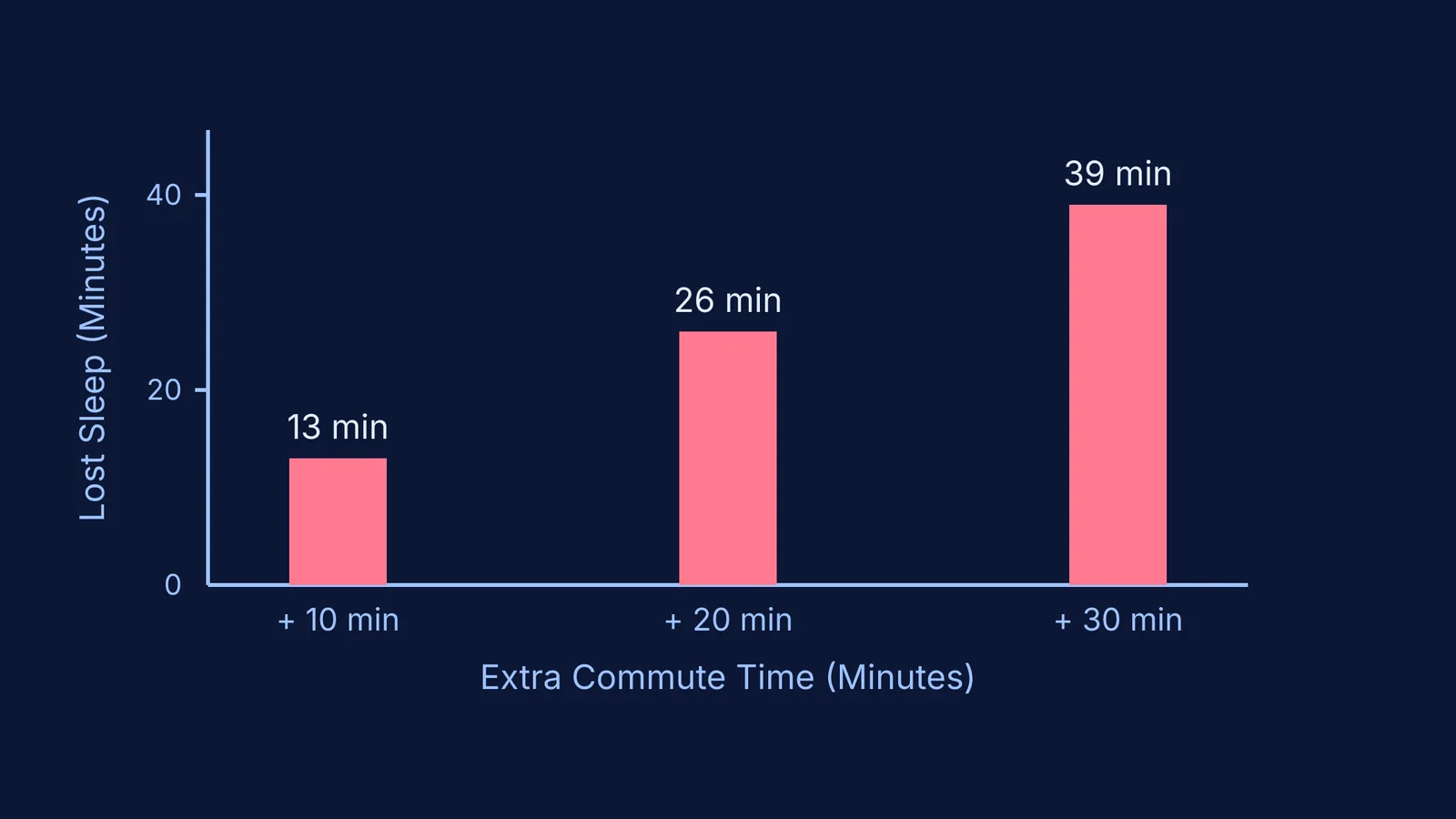
It is easy to accept a longer bus ride for a "better" school, but that choice carries a hidden cost that compounds over the year. Research published in the *Journal of Planning Education and Research* found that for every additional minute of school commute time, teenagers lose 1.3 minutes of sleep.
The trade-off is not one-to-one because a long journey disrupts the entire morning and evening routine, pushing bedtimes later and wake-up times earlier. A student with a 30-minute commute gets approximately 26 minutes less sleep every single night than a student with a 10-minute commute. Over a school term, this chronic sleep deprivation directly harms memory consolidation, attention span, and academic performance.
When comparing offers, time the actual door-to-door commute during morning rush hour, rather than relying on a weekend drive. A neighborhood school often leaves a student with significantly more time and energy to actually study and engage in extracurricular activities.
Which is better: traditional lectures or active learning?
Do students sit and copy from the board, or do they actively solve problems and discuss concepts in class?
Traditional lectures might look disciplined, but they are an inefficient way to learn complex subjects like physics or chemistry. A landmark 2014 meta-analysis published in *PNAS* found that student failure rates are 55% higher under traditional lecturing than under active learning methods. Active learning means the teacher asks probing questions, encourages peer discussion, and gives students immediate feedback while they practice.
When you visit the school, ask what a typical mathematics class looks like. If the answer is "the teacher explains the chapter and gives notes," your child might be doing the hard work of learning entirely on their own at home. Look for schools where students spend class time applying concepts rather than just transcribing them.
How much do hidden school fees and private tuition cost?
The printed fee structure is rarely the final cost of a school year. You must factor in transport, uniforms, mandatory technology fees, and, most importantly, the cost of bridging gaps in the school's teaching.
If a school relies heavily on passive lectures and large class sizes, students often need extra help to handle board exams or competitive entries like JEE and NEET. The Annual Status of Education Report (ASER) 2022 found that 30.5% of children in Classes I–VIII in rural India take paid private tuition, a trend that is mirrored heavily in urban centers.
When deciding, calculate the full out-of-pocket expense. If School A is cheaper but requires you to hire separate private tutors for science and maths just to keep up, School B might actually be the more economical and less stressful choice overall.
Which school environment supports better study habits?
Finally, consider the environment where your child feels comfortable and motivated. A highly competitive, high-pressure school works well for some students, but it can cause severe anxiety and burnout in others.
A school's culture shapes a student's attitude toward making mistakes. Even in a great school, large class sizes mean a teacher cannot spot every time a student gets stuck. This is where a targeted, independent tool helps more than just switching schools or hiring a tired tutor. If your child struggles with difficult numericals, Fermi's AI tutor can work out what they already know and build a plan for the session, so they sit down to a clear next step. It teaches rather than just answering—writing on a board, drawing the figure, and checking understanding as it goes, filling the gaps a busy classroom leaves behind without adding to the pressure.
Put the two schools side by side using this practical framework. Often, the school that protects your child's sleep, uses modern, evidence-based teaching methods, and feels welcoming is the better choice for their long-term growth, regardless of which one has the older name or the shinier brochure.
Read more: