On this page
Board year is hard enough with one home. With two, your child can end up with two timetables, two sets of rules about phones and two different moods about marks. Separated parents can't remove every difference between their homes, and they don't need to. What helps most is agreeing on a few things that matter and keeping arguments between adults out of your child's way.
Why does conflict between parents matter so much in a board year?
How parents handle conflict matters, not only whether they live together. A 2018 evidence review by Gordon Harold and Ruth Sellers in the Journal of Child Psychology and Psychiatry reports that children's emotional, behavioural, social and academic outcomes are adversely affected by conflict between parents, whether the parents are married or separated. The review describes a continuum of conflict "ranging from silence to violence", so cold silences count too.
In exam season, conflict shows up in small ways: criticising the other home's rules in front of your child, arguing about tuition fees at handover, or asking your child to carry messages. Each one takes attention they need for revision.
How can two homes share one study schedule?
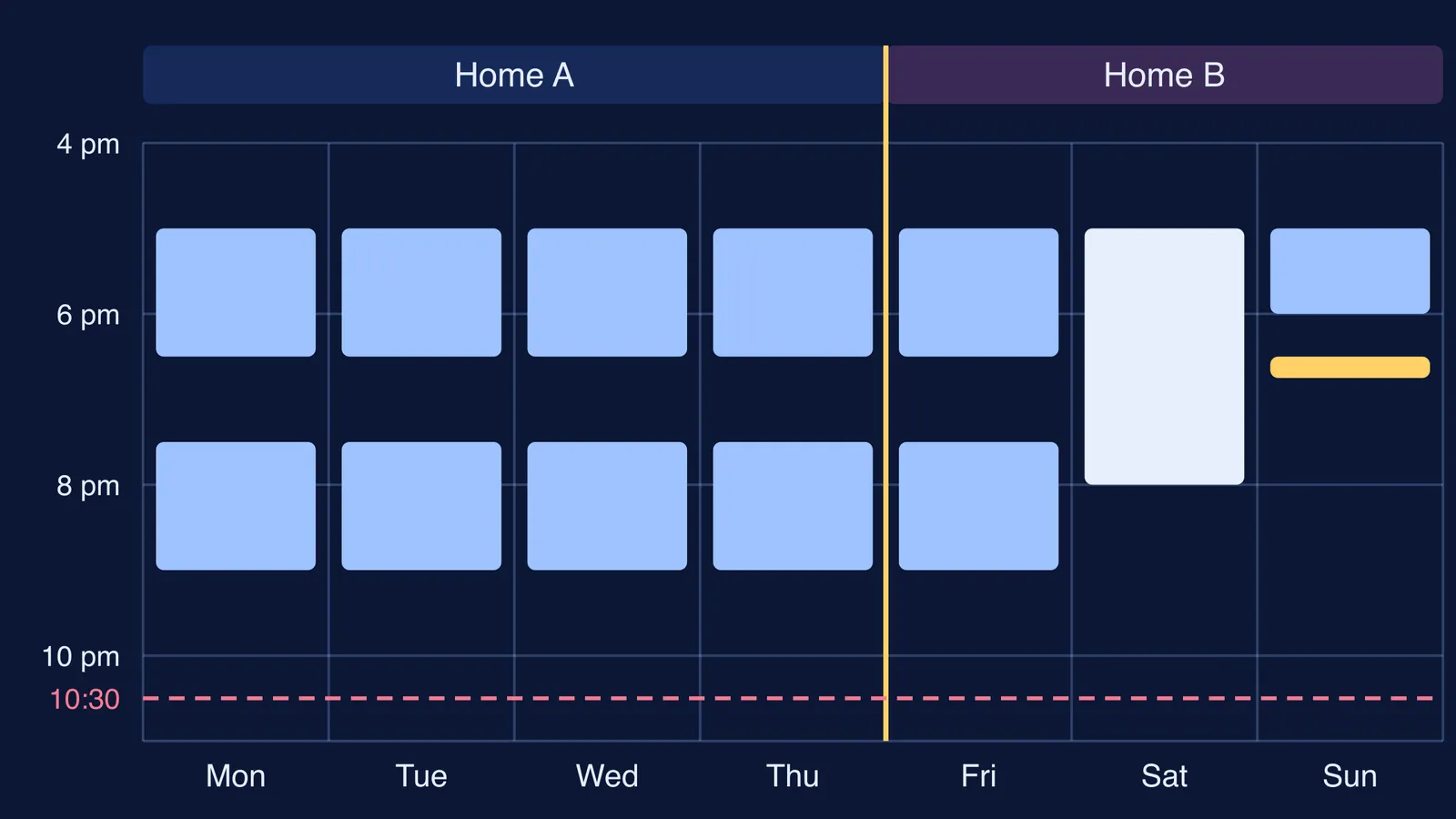
Make one timetable, write it down and use the same copy in both homes. Your child should be able to move house on a Friday without their week falling apart. A simple version looks like this:
Two weekday study blocks at the same times in both homes, for example 5:00 to 6:30 pm and 7:30 to 9:00 pm.
One full timed paper on Saturday, whichever home your child is in, because board papers are long and stamina needs practice.
A short review on Sunday to plan the coming week.
The same lights-out time in both homes.
Sleep is where homes most often drift apart. The American Academy of Sleep Medicine recommends that teenagers aged 13 to 18 sleep 8 to 10 hours per 24 hours on a regular basis. A 10:30 pm lights-out with a 6:30 am alarm gives 8 hours in bed, the bottom of that range. Agree on it in both homes, including on weekends.
Also keep a single shared list of the week's chapters, mock scores and deadlines. Either parent can open it, and your child doesn't have to repeat themselves at every handover. If your child doesn't know where to start on a topic, Fermi's AI tutor can work out what they already know and build a plan for the session, and their progress and notes stay in their library whichever home they are in.
Which rules should both homes agree on?
Keep the list short enough that both homes actually follow it.
Study times and lights-out, as above.
Phones: where the phone stays during study blocks and overnight.
Tuition and travel: who drives, who pays, and who to call if a class is cancelled.
School contact: both parents get the timetable, the date sheet and teachers' messages.
Results: who sits with your child when mock scores or board results come out, and an agreement that neither home reacts to a bad mark with a lecture.
Where you truly disagree, such as on tuition or a weekend trip, decide it between yourselves and then give your child one answer.
What should separated parents say to each other, and to their child?
Use one channel for exam matters, such as a short weekly message or a 15-minute call on Sunday, and stick to facts. Scripts help when feelings run high:
To the other parent: "This week's plan is chemistry and two maths chapters. Saturday's paper is at your place. Anything I should know?"
If you disagree: "I see it differently. Can we talk on Sunday's call instead of in front of our child?"
To your child: "Both of us have the same plan. You don't need to explain it twice."
After a bad mock: "One paper is information, not a verdict. Let's look at what went wrong together."
Where can you get help if things get hard?
CBSE runs free annual counselling for Class X and XII examinees. In 2026 the first phase ran from 6 January to 1 June, with a 24x7 toll-free line on 1800-11-8004 in Hindi and English, plus weekday tele-counselling that both students and parents could use. Check the CBSE website for next season's dates.
If stress turns into something heavier for your child or for you, call Tele MANAS on 14416. It is India's free, 24x7 national mental health helpline, connecting callers with trained counsellors and mental health professionals. A school counsellor or family doctor is also a good place to start.
This week, send the other parent one message: a draft timetable and a time for a 15-minute call.