On this page
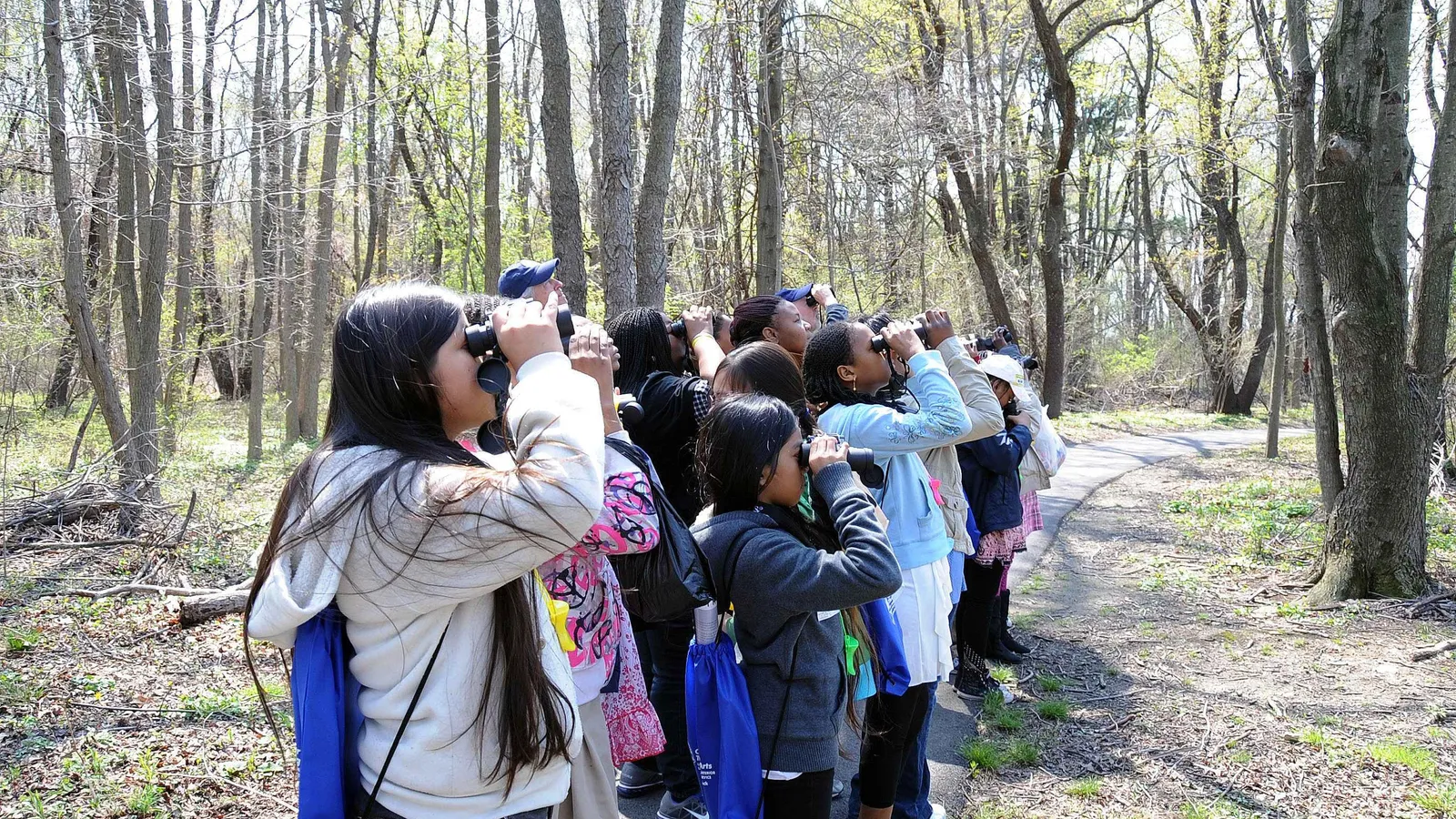
A child who counts the mynas on a balcony railing for 15 minutes is doing the same job as the thousands of birdwatchers whose sightings feed India's national bird assessments. Citizen science means ordinary people collecting observations that researchers then use. Here is what Indian families can join, how a first session works, and how to turn sightings into thinking about data.
Which citizen science projects in India can kids join?
These five are free and need little more than a phone and patience.
Great Backyard Bird Count (GBBC) India. The Bird Count India GBBC page describes it as a four-day event held every February; the next edition runs 12 to 15 February 2027. You watch birds for at least 15 minutes anywhere you like and upload your list on eBird. In 2026, Indian participants recorded 1,092 species across 64,992 checklists, according to the same page.
Campus Bird Count. The school version, run alongside the GBBC: a registered campus watches birds for 15 minutes or more and uploads lists to that campus's eBird hotspot. Registration closes before the event, so ask your child's school early.
SeasonWatch. SeasonWatch asks you to adopt a tree near home and record its leaves, flowers and fruit every week; it covers 130+ common Indian trees and lists 3,950 schools taking part. Mongabay India reports that it began in 2010 as a partnership of the Nature Conservation Foundation, NCBS and Wipro Foundation.
GLOBE Observer (weather and land). NASA's GLOBE Observer app lets you photograph clouds, map mosquito breeding sites, classify land cover and measure trees. India has been a GLOBE partner country since 2000, and its GLOBE India page lists 2,321 participating schools and organisations.
iNaturalist or Seek. For any plant, insect or bird. iNaturalist's help page says that for children aged 12 and under, a parent or guardian must create the account, and suggests Seek, which does not share data by default, as an alternative.
What does a family's first bird count look like?
Here is a simple plan for a February weekend, worked through for a Class 6 child and a parent, built around the GBBC's 15-minute minimum.
Before. Install eBird on the parent's phone. Pick one spot: a terrace, a school ground, a park bench.
Count (15 minutes). The child keeps a paper tally with two columns: species and the highest number seen at once. "Highest at once" stops you counting the same crow three times.
Unknowns. Write a description instead of guessing: "small, brown, long tail, sat on a wire". Look it up together afterwards.
Upload (5 minutes). Enter the list in eBird with the start time and how long you watched. Leave out anything you could not identify rather than guessing.
Repeat. Do the same spot on another day of the count and compare the two lists.
Say your family logs 9 species on Saturday and 12 on Sunday. That difference is the start of a real question.
What do children learn from real data?
The evidence is encouraging, with a caveat. A 2024 systematic review by Heidi Ballard and colleagues in Environmental Education Research examined 100 studies of community and citizen science; NAAEE's summary of the review lists environmental science content knowledge (56 papers) and science inquiry skills (32 papers) among the learning outcomes it found. The review also found, as NAAEE's research digest explains, that the more stages of research participants took part in, the more likely they were to show learning gains; only 33 of the studies involved participants in data analysis.
The caveat: a 2023 review in Frontiers in Education found 148 studies on educational outcomes and concluded there are still too few empirical studies to judge those outcomes comprehensively. So counting alone is not the lesson. Looking at the numbers afterwards is.
Their lists matter, too. The State of India's Birds 2023 report was built from 30 million eBird observations by more than 30,000 birdwatchers and assessed 942 species. Mongabay India reports that it found about 60% of the birds assessed had declined over roughly 30 years.
How do you turn sightings into a science conversation?
After each session, ask three questions and let your child answer first:
"Why might Sunday's list be longer than Saturday's?" (Time of day, weather, more time spent looking.)
"Is that a real change or just chance?" (One weekend cannot tell you; that is why counts repeat every year.)
"What would we need to measure to find out?" (Same spot, same time, same duration.)
That last answer is a fair test, the idea at the centre of school science. If your child wants to read more about a term like phenology or food chains, the Fermi Concept Library has a lesson on each concept in biology, physics, chemistry and mathematics.
For more ideas, read our guides on encouraging curiosity at home and simple kitchen science experiments. An older child with a year of SeasonWatch or bird data may have the start of a project for the National Children's Science Congress.