On this page
Your child has a timer running, soft music playing and a stranger's tidy desk filling the laptop screen. Forty minutes later the stranger has finished a chapter and your child has finished nothing. “Study with me” videos and topper-routine vlogs are not a waste by default, but they can quietly replace the work they were meant to start.
Why do study-with-me videos feel so productive?
A “study with me” video is footage of someone studying, often for hours, with no teaching in it, as described in a 2021 study from KAIST presented at the CHI conference. The researchers analysed 30 such videos and interviewed 12 viewers. Viewers used the videos to create a study atmosphere at lower cost, to feel peer pressure they could control, and for emotional support while studying alone at home. The same paper cites YouTube's figure that views of videos with “study with me” in the title rose 54% in the US in 2020 compared with 2019.
So the pull is real. The trap is that watching someone else work feels like working. In six experiments with 2,225 people, Michael Kardas and Ed O'Brien found that the more people merely watched others perform a skill, the more they believed they could do it too, yet their actual ability did not improve from watching alone. Getting even a brief “taste” of doing it themselves, such as holding the juggling pins, weakened the illusion.
A topper's 5 a.m. routine may work in a similar way. The same researchers found viewers learn which steps to take but not how they feel: your child sees the alarm, desk and colour-coded notes, not the third hour of organic chemistry.
When do they actually help focus?
The helpful use is a video playing beside real work, not instead of it. A 2025 survey of 509 Chinese college students who had used study-with-me sessions on Bilibili for at least three consecutive months found that the peer support they felt was linked to higher motivation, self-efficacy and engagement. It was a cross-sectional survey, so it cannot show the videos caused those gains, and it measured students' own ratings rather than work actually completed.
A quick test you and your child can both use:
Helping: the video is muted or in the background, its timer matches your child's own session, and a notebook is filling up.
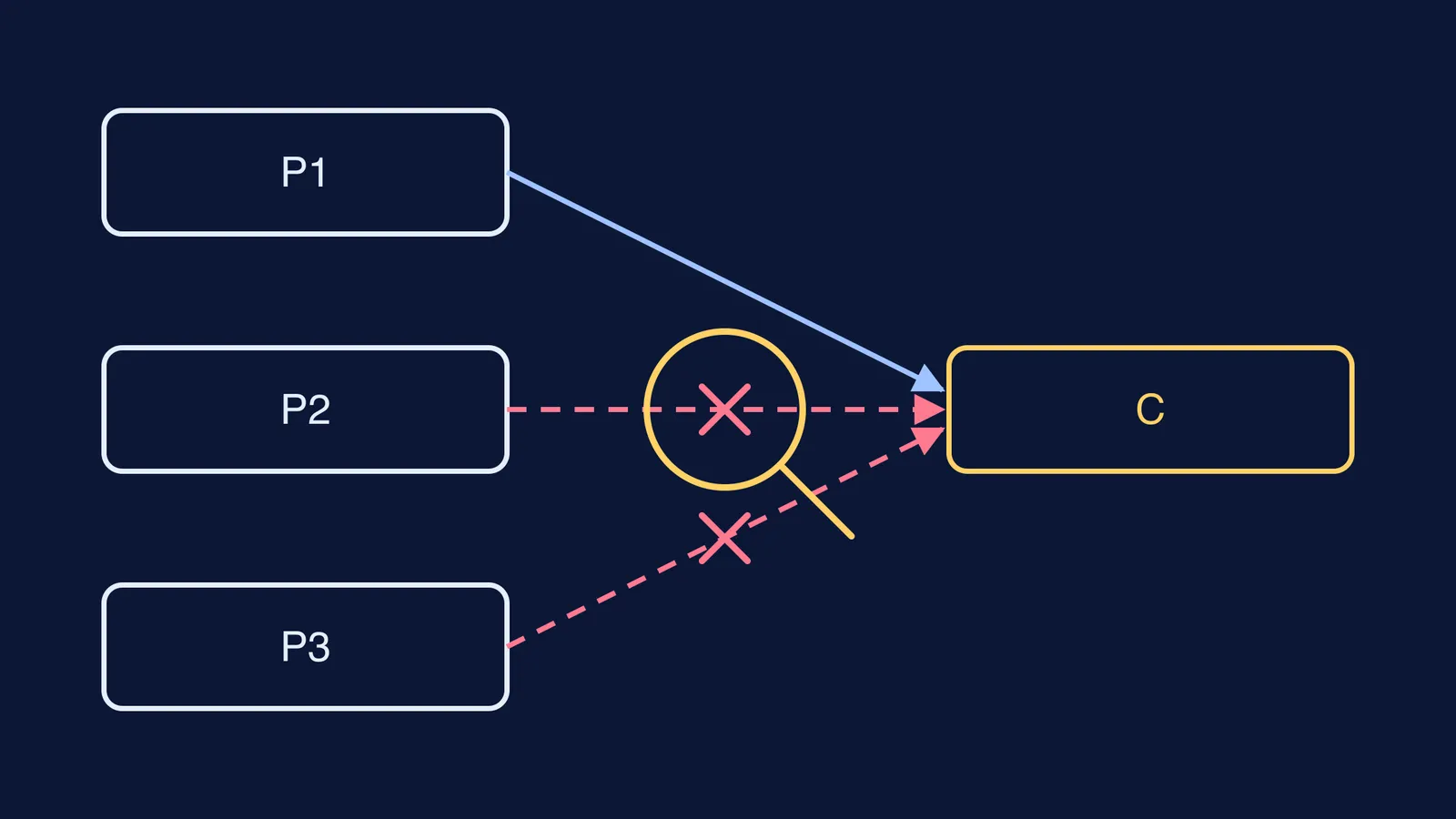
Replacing: your child is choosing the next video, reading comments, or watching routines rather than study sessions.
Replacing: the pen has not moved for a while, or “I'll start after this one” has been said more than once tonight.
What is the “one video, then one task” rule?
Psychologists call a plan in the form “if X happens, I will do Y” an implementation intention. A meta-analysis of 94 studies by Peter Gollwitzer and Paschal Sheeran found these if-then plans had a medium-to-large effect on reaching goals, and helped people get started and shield their work from distractions. The home rule below is one such plan.
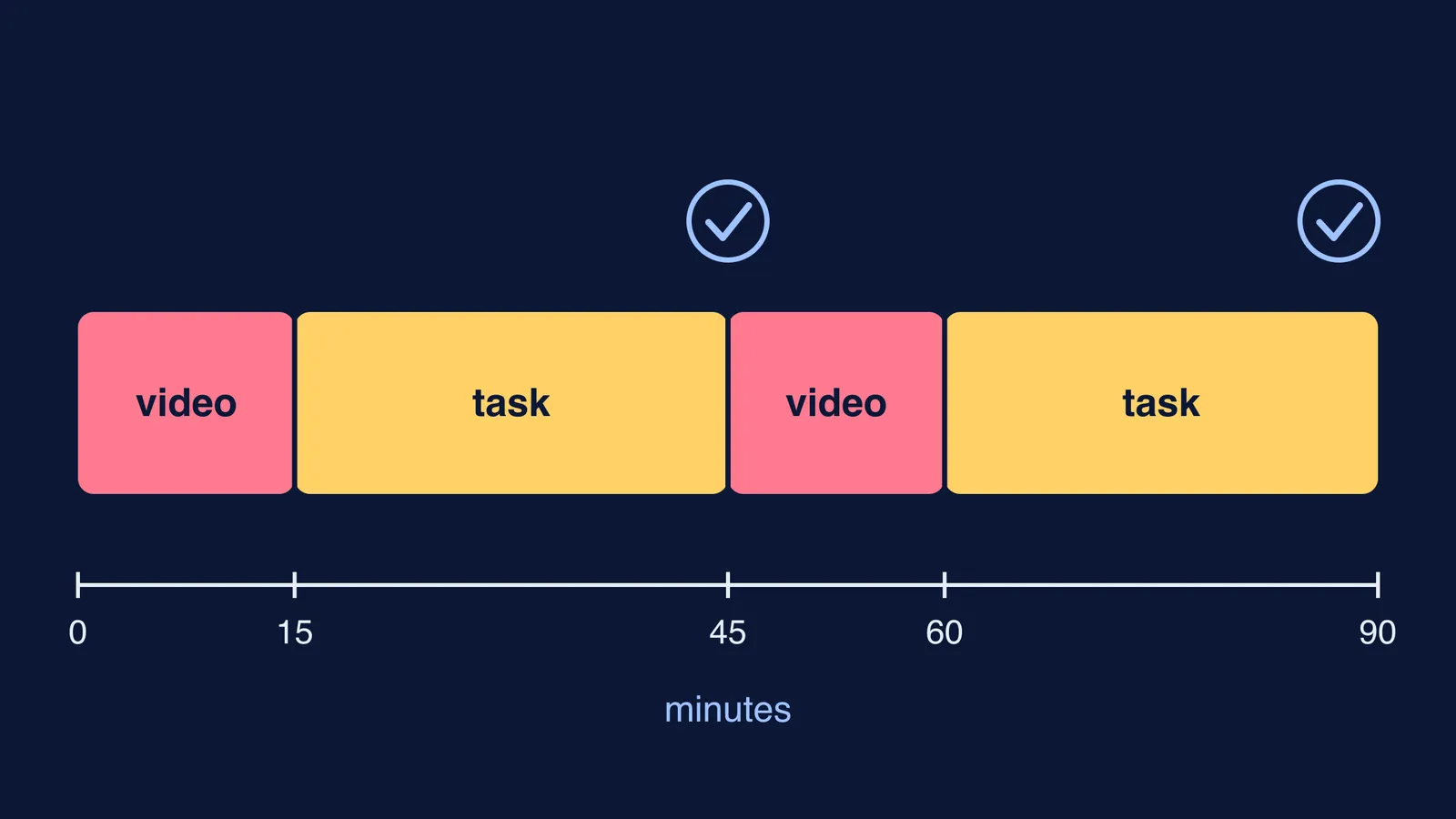
Write the task before pressing play. Not “study physics” but “10 questions from Exercise 3.1”.
One video, up to 15 minutes. When it ends, the tab closes.
Then one task, about 30 minutes. A study-with-me video may stay on, muted, as a timer. Topper vlogs may not.
Show the work. The task counts as done when there is something to see: ticked questions or a written page.
Then the next video is earned. Repeat, or stop for the night.
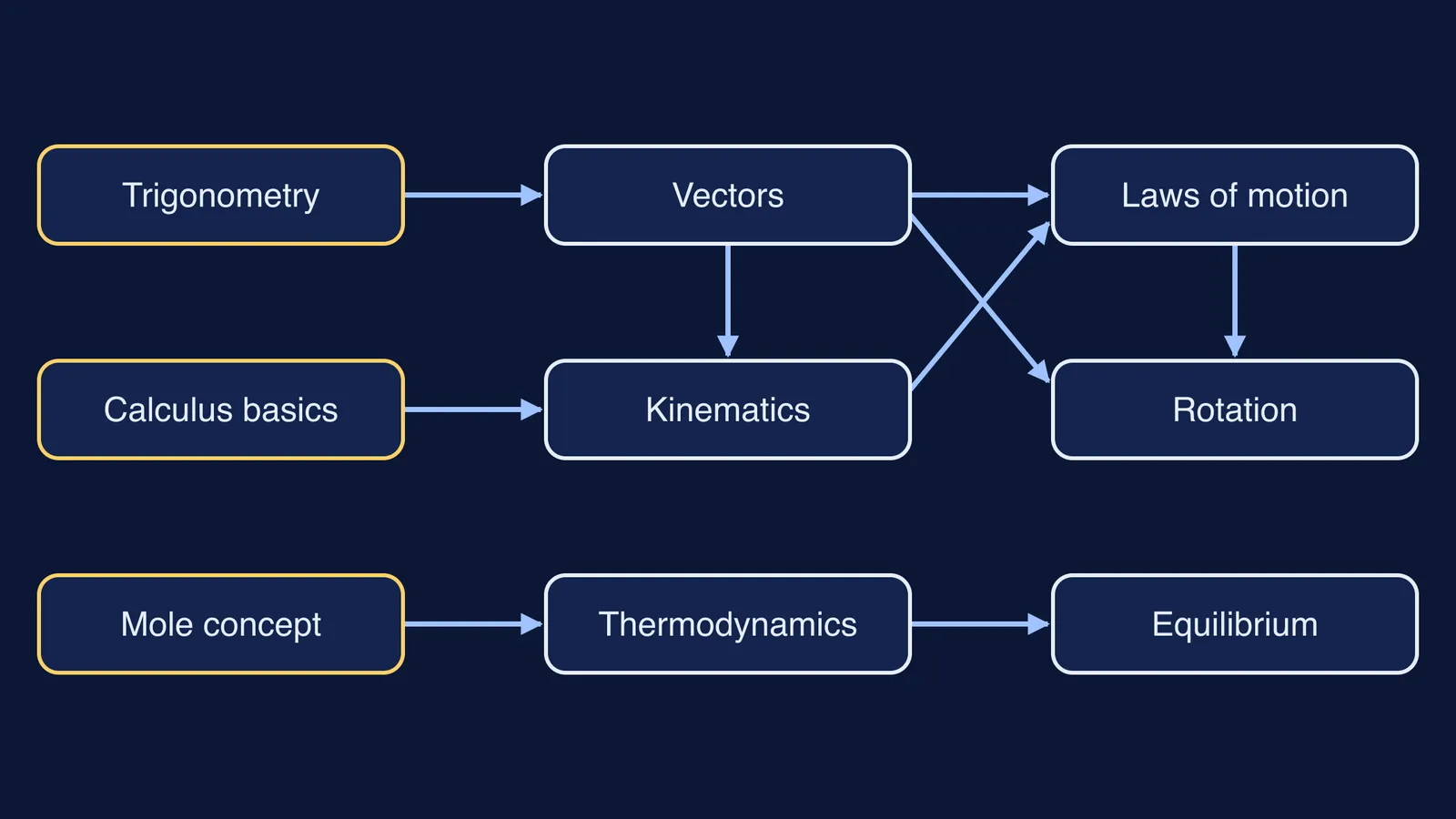
Worked example. Take a Class 11 student we will call Riya. At 7:00 she writes “Kinematics: 8 questions, Exercise 3.1” on a sticky note, then watches a 12-minute topper vlog. At 7:15 she starts the questions with a muted study-with-me timer running. At 7:45 she shows six done and two marked as doubts for school. She picks her next video only after writing the next task.
If the task line stays blank because your child does not know where to begin, Fermi's AI tutor can work out what they already know and build a plan for the session, so the sticky note has a real next step. For a ready-made task, the Fermi Problem Library has worked problems with a step-by-step solver that explains the reasoning rather than printing an answer.
What should parents say without starting a fight?
Agree on the rule together at a calm moment, not halfway through a video. You might say:
“I can see these videos help you get in the mood. I'm not banning them.”
“Can we try one video, then one task you write down first, for a week?”
“At the end of the week, you tell me whether it helped.”
Then step back: glancing at the sticky note is less likely to start an argument than standing behind the screen. If starting at all is the struggle, try a five-minute start rule for a child who keeps delaying study. For screens overall, see how much screen time is okay for a teenager. If the videos are gameplay rather than study, try the weekly plan for a child who watches others play games.
Try the rule for seven evenings, then read the sticky notes together.