On this page
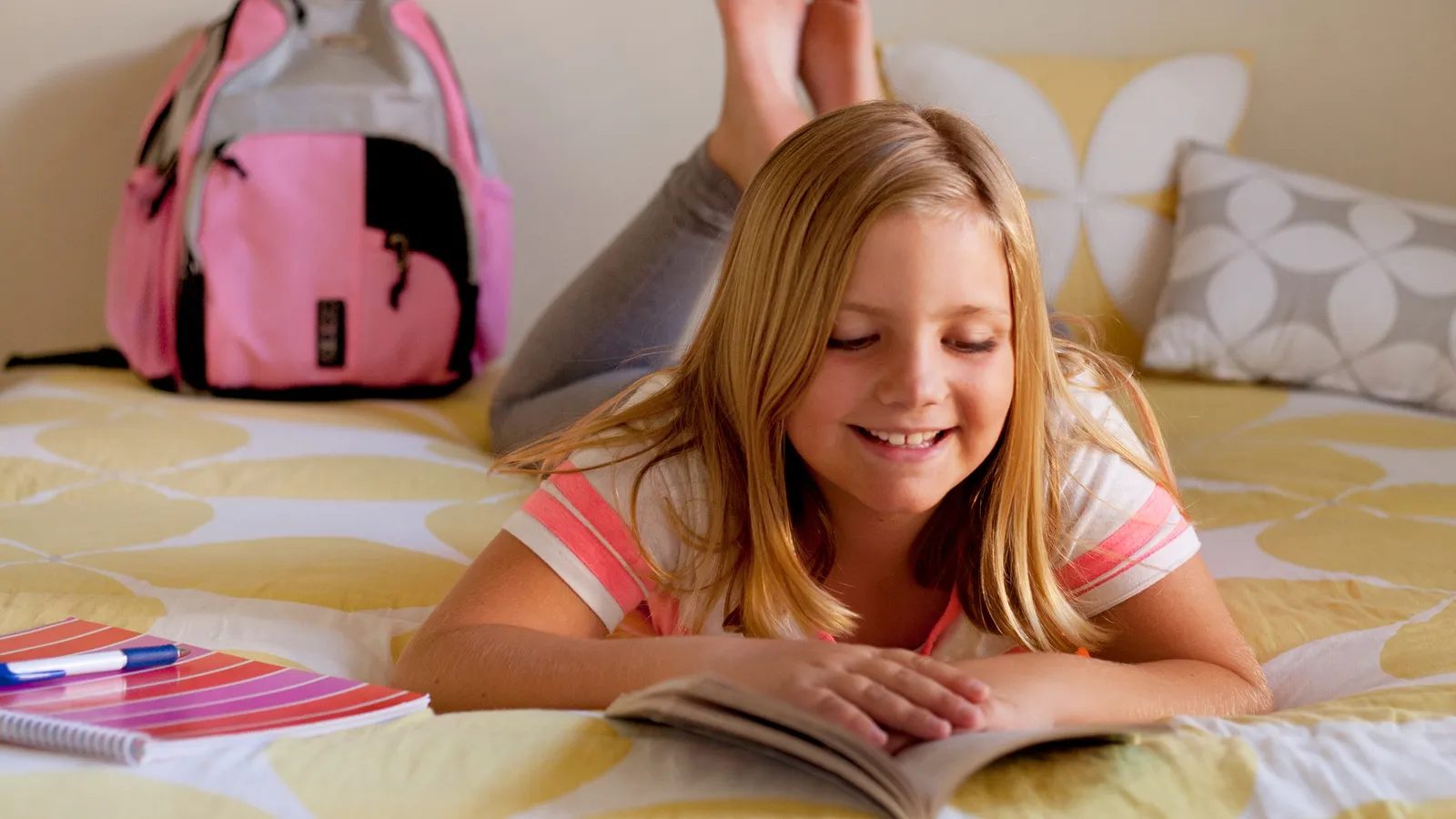
Your 12-year-old comes home with a thick novel from a cousin's shelf, or asks for the thriller everyone in Class 9 is passing around. It was written for adults. Your first instinct may be to say no. A better first step is to find out what is actually in the book, and then decide how your child reads it: alone, with you, or a little later.
Is it okay for my child to read books meant for adults?
Often, yes, if an adult knows what is in the book and someone is there to talk to. Literacy researchers Gay Ivey and Peter Johnston spent a year in a US middle school where students chose their own young adult novels, including some that deal with sex, violence, exploitation or mental illness. They interviewed 71 students at the end of the year. Students described changes in how they related to people and in their moral and intellectual lives.
In a summary of that work for The Conversation, Ivey writes that the eighth-graders' relationships with friends and family improved, that many wanted to find someone else who had read the same book, and that some persuaded their parents to read it. In their accounts, the hard subjects drew them into conversation rather than away from adults. So the useful question is "how will my child read this?", not just "yes or no?"
How do I check a book without reading all of it?
You don't need to read the whole book first. A quick check is enough:
Read the back cover and first chapter.
Flip to three random pages in the middle and read one page of each.
Look up a content review that lists what is inside: violence, sex, language, drugs and drinking.
Ask your child why they want this book. A friend's tip, a film they loved, curiosity: each answer tells you something.
Ask yourself one question: is the hard material shown so the reader understands it, or just for shock?
What do age ratings on books actually tell you?
Age ratings are a starting point, not a verdict. Common Sense Media says its age rating shows the youngest appropriate age for a title, based on its content and general guidelines on child development. Its reviews split content into categories such as violence and scariness; sex, romance and nudity; language; and drinking, drugs and smoking. That split is the useful part, because children differ. A child who is fine with battle scenes may be upset by a story about a family breaking up.
You also have the final say. The American Library Association, which argues for children's free access to libraries, still affirms the right of parents and guardians to guide their own children's use of the library.
How do I talk to my child about a mature book?
After your check, pick one of three answers:
Yes, on your own: the themes are serious but handled with care, and your child is ready. Ask about it over dinner.
Yes, together: you both read it, or you read the same chapters a few days behind them, and talk once a week.
Not yet: give a reason and a date ("after your exams" or "next summer"), and suggest a similar book for now.
Good questions are open ones: "Which character did you trust least?", "Did anything make you uncomfortable?", "What would you have done in her place?" Avoid turning the chat into a test of what they understood. Our guide on talking to your teenager without lecturing has more on keeping these talks two-way.
Reading together is not just for small children. In Scholastic's 2015 Kids & Family Reading Report, 40% of children aged 6 to 11 who were no longer read aloud to at home said they wished their parents had kept going.
If the book is popular science, or a thriller built on real science, it will raise questions school hasn't reached yet. The Fermi Concept Library has a lesson for every concept in physics, chemistry, biology and mathematics, so a question about how a virus spreads or how a black hole forms can lead somewhere.
When should you step in?
Say no, or wait, when a book seems to make violence or self-harm look attractive rather than explaining it, or when your child is going through something close to the story, such as a recent loss. Watch your child more than the book. If they seem withdrawn, scared or low for more than a few days after reading, talk to them gently and contact the school counsellor or a doctor. In India, Tele MANAS is a free, 24x7 mental-health helpline on 14416 or 1800-891-4416.
For more on choosing what comes next, see how to pick books for a 12-year-old by level and interest, and for the wider question of trust, how much privacy to give your teenager.