On this page
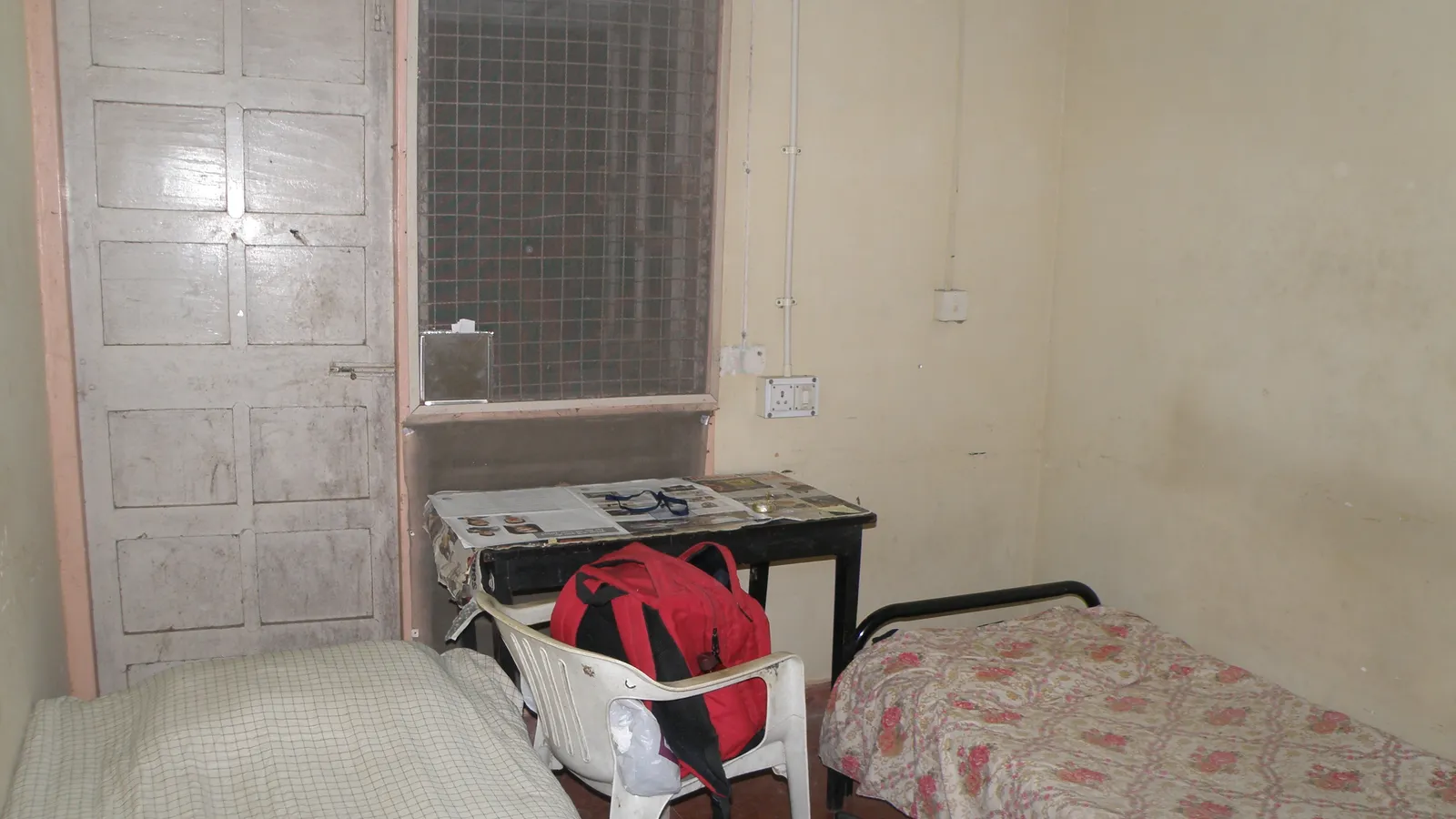
Perhaps your child's roommate plays music till 2 am, borrows things without asking, or brings friends in during exam week. Your first instinct may be to phone the warden yourself. For most roommate trouble, a better move is to coach your child to fix it, and keep the warden for the problems that need one.
Should parents step in when their child has roommate problems?
Usually not first. In a study in the Journal of Child and Family Studies, Schiffrin and colleagues surveyed 297 college students about their parents' involvement. Students who described their parents as over-controlling reported significantly higher levels of depression and less satisfaction with life. The researchers found this was largely explained by students feeling their needs for autonomy and competence were not being met. The study shows a link, not proof that one causes the other.
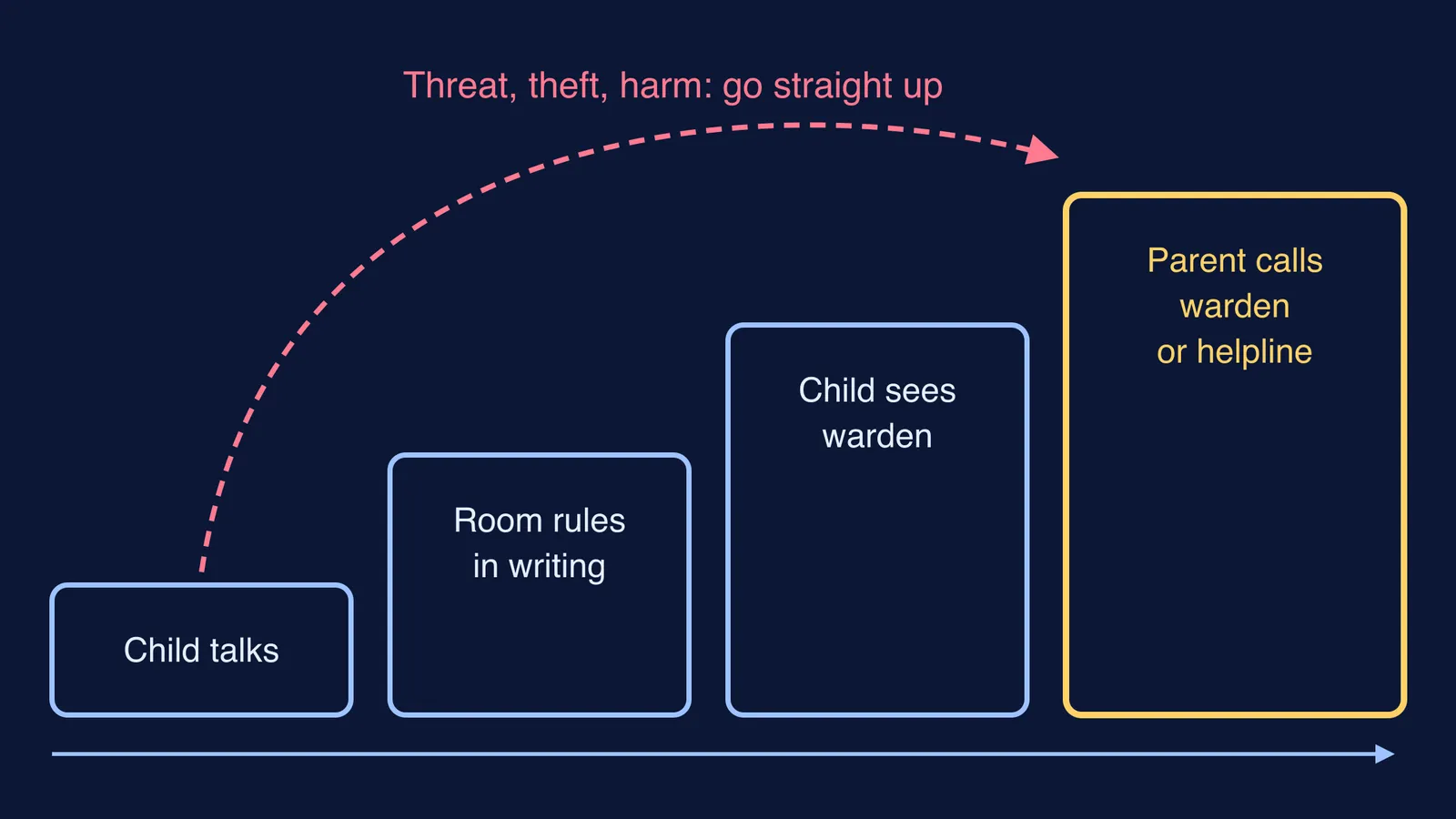
So your role changes from fixer to coach: you help your child think, and they do the talking. A first-year roommate problem is often the first conflict they settle without an adult in the room.
What should I say when my child calls about their roommate?
Listen first. Let them finish before you suggest anything. Then help them sort the problem with three questions:
"What exactly happens, and how often?" (Specific: "lights on till 2 am, four nights a week", not "he's so rude".)
"What would good enough look like?" (Lights off by midnight on weekdays, not a new best friend.)
"Have you told them directly, in private?"
If the answer to the third question is no, that is the next step. Offer to rehearse it with them on the phone.
Notice the shape: one problem, its effect, a specific ask, and something offered back. It works for mess, guests, borrowing and phone calls too.
How can my child sort it out with the roommate?
Talk through this four-step plan with them.
Pick a calm time. Not mid-argument, not in front of others.
Raise one issue at a time. Start with the one that hurts most, usually sleep or study time.
Agree on room rules and write them down. Sleep and study hours, guests, sharing food and chargers, cleaning turns, and lending money. A note on the phone that both can see is enough.
Check in after two weeks. Ask your child, "Is the agreement holding?" If not, it is time for the next step.
Worked example (illustrative). Say Riya, in first-year B.Sc., tells her mother that her roommate's friends sit in their room every evening. Her mother does not call anyone. She asks Riya what she needs (two quiet hours, 8 to 10 pm), helps her word the request, and checks back two weeks later. A fair outcome: the roommate meets friends in the common room on weeknights. Our guide on handling a difficult hostel roommate has more student-side tactics you can share.
When should a parent contact the hostel warden?
Your child handles it: noise, mess, different sleep times, guests, borrowing small things.
Your child goes to the warden: the agreement keeps breaking after a fair try, or they want a room change. Our article on how to talk to a hostel warden about problems explains how to raise it.
You contact the warden directly, the same day: threats, physical harm, theft, demands for money, forcing your child to do things, or anything that leaves them afraid to go back to the room.
Many of the problems on that last list are covered by India's anti-ragging rules. The UGC Regulations on Curbing the Menace of Ragging in Higher Educational Institutions, 2009 define ragging to include rowdy or undisciplined conduct by students that causes physical or psychological harm, financial extortion, and any act that affects the mental health and self-confidence of a fresher or any other student. So bullying by a roommate can count as ragging.
If the college does not act, the National Anti-Ragging Helpline runs a 24x7 toll-free number, 1800-180-5522, and takes complaints online. Our fresher's guide to ragging walks through the steps.
What if the conflict is hurting sleep, studies or mood?
Watch for changes that last: poor sleep for weeks, skipped classes, losing interest in food or friends, or saying they want to leave college. These are reasons to involve the college counsellor. The government's Tele MANAS helpline, 14416 or 1800-891-4416, is free, runs 24x7, and offers counselling and referrals in around 20 languages.
If weeks of broken sleep have left gaps in coursework, Fermi's AI tutor can work out what your child already knows and build a plan for the session, so catching up starts from a clear next step.
Tonight, if your child calls, try asking the three questions before offering a single solution.