

On this page
In short
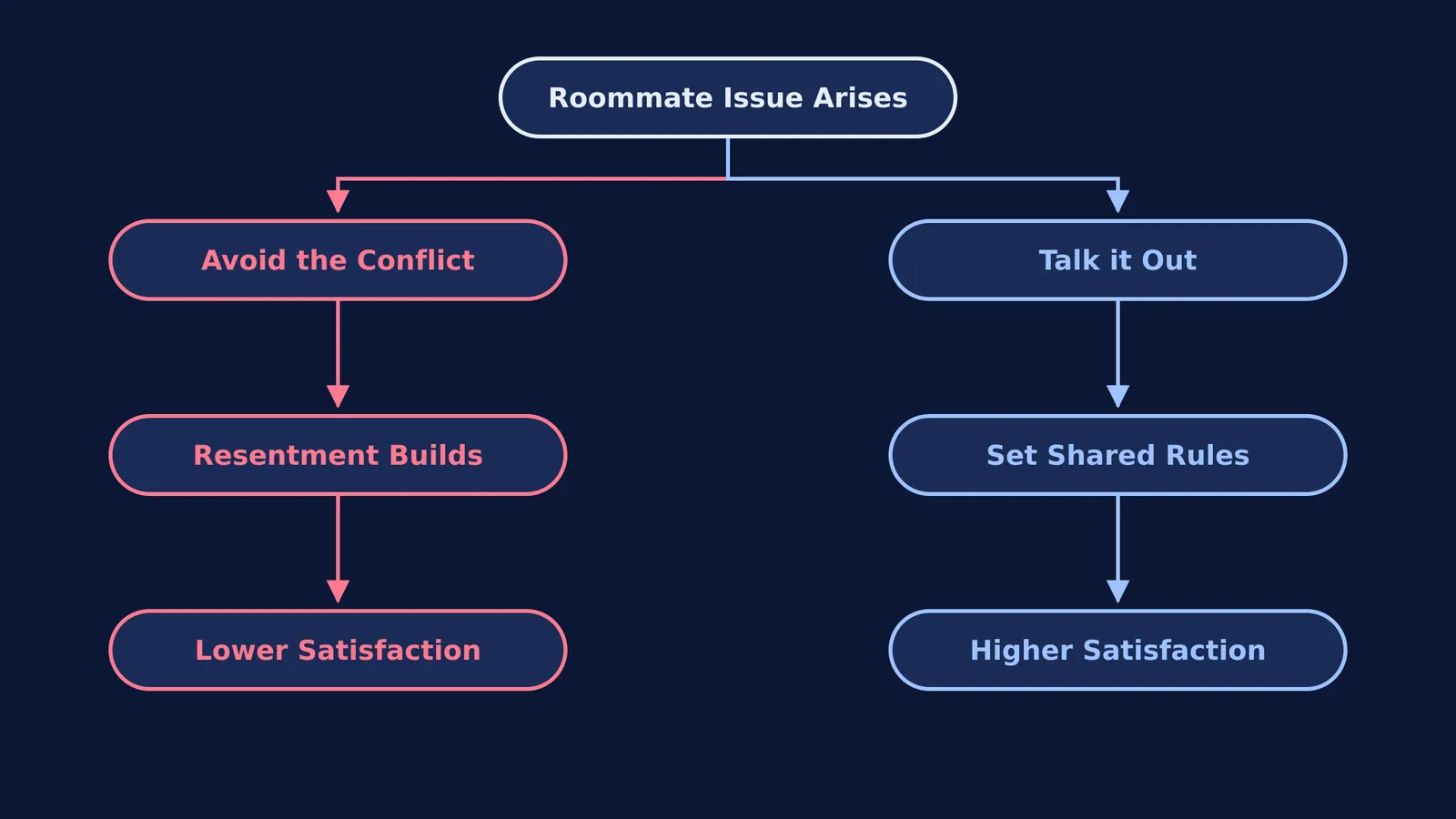
Handling roommate problems in a college hostel requires setting clear boundaries rather than staying silent. A study of 133 first-year students found that avoiding conflict lowers relationship satisfaction, while direct compromise improves it. Address issues like sleep schedules and cleanliness early, and involve the warden only if shared rules fail.
Moving into a college hostel is a major transition, and sharing a small space with a stranger often brings challenges. While minor disagreements are normal, unresolved friction over noise, guests or cleanliness can quickly drain your energy and affect your academic focus. A peaceful environment is the foundation for a study routine that lasts.
Addressing the problem directly is usually the best approach. A study of 133 first-year students living in residence halls found that participants who used avoiding as a conflict style experienced less satisfaction with their roommates (DOI: 10.56816/2471-0032.1030). In contrast, those who integrated and compromised reported more positive relationships.
Why do roommate problems in college hostels happen?
Most hostel conflicts stem from differences in daily routines and unspoken expectations. When two people from different backgrounds share a room, their baseline assumptions about what is acceptable will inevitably clash.
Sleep schedules: One person might be a night owl who studies until 3 AM, while the other prefers to wake up at 6 AM.
Cleanliness and hygiene: Disagreements over who cleans the floor, how often the bin is emptied, or leaving wet towels on the bed are common.
Guests and privacy: Having friends over constantly can make the other person feel like they have no quiet space to recharge.
Borrowing items: Using chargers, clothes or snacks without asking can easily break trust.
How to handle roommate conflicts?
When a problem arises, your first instinct might be to ignore it and hope it goes away. However, staying silent usually leads to building resentment. The key is to communicate your needs clearly and calmly.
If your roommate's late-night studying is keeping you awake, you might find yourself too tired to focus in class the next day. If you are struggling with a concept because you missed it in class, Fermi Concept Library can help you catch up on the theory. But to fix the root cause, you need to address the sleep disruption.
Try these steps to talk it out:
Choose the right time: Do not start a serious conversation when one of you is rushing to a lecture or already frustrated. Pick a quiet weekend afternoon.
Use "I" statements: Frame the issue around how it affects you. Say, "I find it hard to sleep when the main light is on after midnight," instead of "You always keep the lights on and don't care about me."
Listen to their side: Your roommate might not realise their habits are bothering you, or they might have their own grievances.
Find a middle ground: If they must study late, agree that they will use a desk lamp and headphones while you use an eye mask.
What shared rules should you set?
The most effective way to prevent conflicts is to agree on ground rules early in the semester. You do not need a formal contract, but having a clear understanding prevents misunderstandings.
Work through this checklist together:
Quiet hours: What time do the main lights go out? When is it acceptable to play music aloud?
The guest policy: How many friends can visit at once? Should you text before bringing a group over? Are late-night study sessions with classmates allowed in the room?
Sharing belongings: Be explicit about what is shared (like a broom or a kettle) and what is strictly personal (snacks, laptops, toiletries).
The cleaning roster: Decide who sweeps the floor, takes out the rubbish, and dusts the shelves, and rotate the tasks weekly.
If you are both busy preparing for exams and feeling the pressure, maintaining a tidy room can remove one source of stress. For the academic pressure itself, working through questions systematically with the Fermi Problem Library can help you build confidence without needing to leave your desk.
When to involve the warden?
While most roommate problems in a college hostel can be solved between the two of you, some situations require external help. You should escalate the issue if your safety, health or academic performance is seriously compromised.
Approach your resident advisor (RA) or hostel warden if:
Your roommate is engaging in illegal activities or violating major hostel rules (such as substance abuse in the room).
They become verbally or physically aggressive when you try to discuss problems.
They refuse to compromise, and their behaviour is severely affecting your sleep or mental health over a long period.
You have already tried talking to them multiple times and the agreed rules are continuously ignored.
The warden is trained to mediate these disputes. They can facilitate a neutral conversation, enforce hostel policies, or in severe cases, arrange for a room transfer. Your room should be a safe place to rest and study, and if a situation is causing severe exam stress on top of your studies, you do not have to endure a toxic living situation alone.


