

On this page
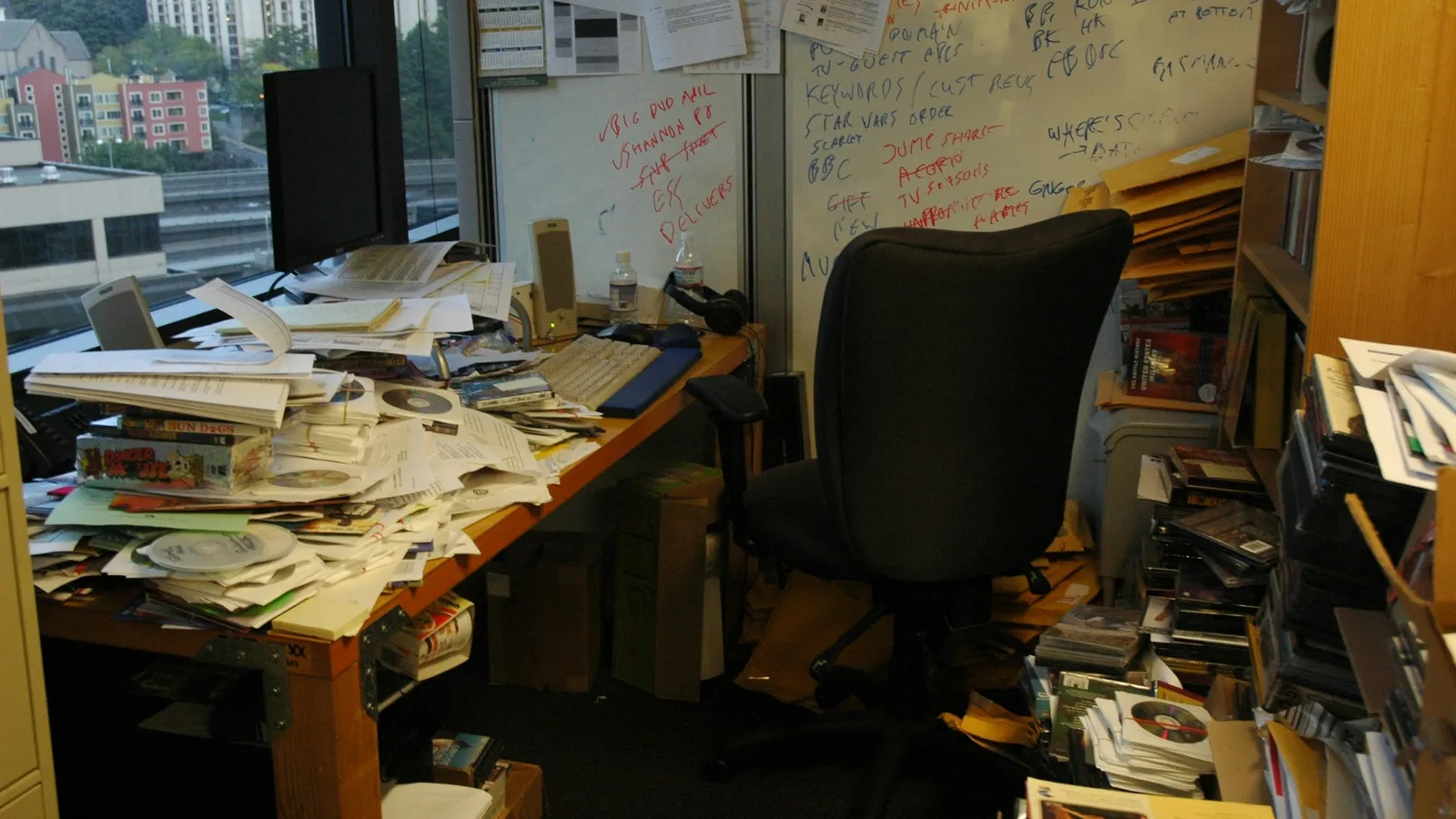
If your child's desk is buried under tuition sheets, wrappers and chargers, the problem is not only how it looks. Clutter can slow the first minute of study: the right book has to be dug out and everything else ignored. The fix is not a weekend clean-up but a short daily reset, a few organisers and a calm conversation.
Why does a messy desk make it harder to start studying?
Your brain cannot take in everything in view at once. Neuroscientists Stephanie McMains and Sabine Kastner wrote in a 2011 study in the Journal of Neuroscience that several things in view at once "compete for neural representation", and that attention is one way the brain counteracts that competition.
There is classroom evidence too. In a 2014 Carnegie Mellon study published in Psychological Science, 24 kindergarten children had science lessons in a lab classroom with heavily decorated walls, and in the same room with the decorations removed. According to the Association for Psychological Science's summary, the children spent 38.6% of lesson time off task in the decorated room and 28.4% in the bare room. They got 42% of test questions right after lessons in the decorated room and 55% after lessons in the bare room.
Keep the limits in mind. These were kindergarten children in a lab, not teenagers at home. A published commentary by Kana Imuta and Damian Scarf re-analysed the data and argued that the children got used to the decorations over time, so novelty may explain part of the effect. The fair conclusion: things in view pull at attention, and clearing them can make settling easier.
Is my child just lazy if the desk is always messy?
Usually not. Desks get messy when nothing has a fixed place and no routine ends the study session, so each day's papers land on top of yesterday's. Psychologist Joseph Ferrari of DePaul University has studied procrastination and clutter in adults and found that people who put things off also tended to report more clutter. That kind of study cannot show which causes which, but it is a reason to tackle both together.
If your child is disorganised in every part of life and seems stressed, low or unable to cope, talk to their school counsellor or a doctor. You can also call the government's free Tele MANAS mental-health helpline on 14416.
What is a five-minute desk reset?
It is a timed routine your child does when they finish studying, so the next session starts on a clear desk. Set a timer for five minutes:
Minute 1, park it. Anything not needed for tomorrow's first task goes into one box. Don't sort it yet.
Minute 2, bin it. Wrappers, cups and rough sheets go out.
Minute 3, send things home. Books go back to the shelf by subject, pens to the cup, chargers to a drawer.
Minute 4, set up tomorrow. Put tomorrow's first book on the desk, open at the right page, with one pen and the rough notebook.
Minute 5, plan the start. Write the first small step on a sticky note ("Physics: redo Q4 from Monday") and put the phone to charge outside the room.
Empty the parking box once a week, on Sunday.
Which simple organisers actually help?
Each organiser should give one kind of thing a fixed home:
One parking box or tray for "deal with later" papers, so they stop spreading.
One folder per subject, the core of our guide to helping your teen organise messy coaching notes.
A pen cup with a few pens, not twenty.
A fixed spot for the school bag, packed the night before, as in this simple system for children who forget books and homework.
A clear wall in front of the desk. Keep one timetable there and move posters and photos to a side wall.
What should I say to my child about the mess?
Talk about getting started, not about character. Instead of "Your desk is a dustbin", try:
"I've noticed it takes you a while to get going when the desk is full. Shall we try a five-minute reset when you finish tonight? I'll set a timer and sort my table at the same time."
Then let your child decide where things go. Praise the routine ("You did the reset three nights in a row"), not how neat the desk looks.
A three-week plan:
Week 1: you do your own reset alongside them every evening.
Week 2: you give one reminder and they do it alone.
Week 3: no reminders. You look at the desk together on Sunday when the parking box is emptied.
Some students clear the desk and still sit there unsure what to do first. Fermi's AI tutor can work out what they already know and build a plan for the session, so the sticky note has a clear next step.
Start tonight: one box, one timer and five minutes after the last page.


